
A Quiet Decision That Reshaped The World
History tends to spotlight loud moments. Product launches. IPOs. Declarations of victory. But some of the most consequential decisions in modern life happened quietly, without an audience, without applause, and without anyone fully grasping what was at stake.
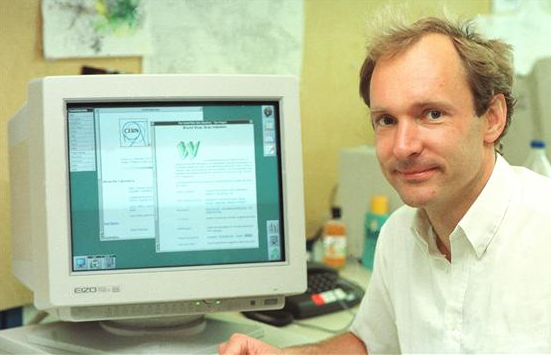
In the early 1990s, inside the institutional calm of CERN, Tim Berners-Lee faced a choice that most builders never get. He had created the architecture for a new way of sharing information. Not a single product, but a system. A framework that allowed documents to link to one another, computers to speak the same language, and information to move freely across borders.
The World Wide Web was not yet the internet as we know it. It was fragile. Experimental. Easy to dismiss. But its potential was obvious to anyone paying attention.
Berners-Lee could have locked it down. He could have patented the protocols. He could have charged for access. He could have become the gatekeeper of something the world would soon be unable to function without.
Instead, he let it go.
The Rule That Everyone Assumes Is Non-Negotiable
There is an assumption baked into modern thinking that rarely gets challenged. If you create something valuable, you are expected to own it. Ownership leads to control. Control leads to monetization. Monetization leads to power.
This logic feels so natural that questioning it sounds naïve.
- Why wouldn’t you protect what you’ve built?
- Why wouldn’t you extract value from your work?
- Why wouldn’t you secure your advantage while you can?
Most of business education, startup culture, and personal ambition is built on this idea. Protect the upside. Defend your position. Move fast before someone else takes it from you.
Tim Berners-Lee saw the same rule. He simply decided that it didn’t apply.
Why Ownership Would Have Broken The Web
The decision to release the web into the public domain is often framed as altruism, but that explanation is too shallow. This was not a moral gesture alone. It was a structural one.
Berners-Lee understood something subtle but critical. The web would only work if it was universal. If anyone could build on it without asking permission. If no company, government, or individual could dictate its terms.
Ownership would have introduced friction. Licensing would have slowed adoption. Competing versions would have fractured the system before it had a chance to grow.
The web needed to be boring, open, and invisible. It needed to disappear into everyday life. That could never happen if someone stood at the entrance with a toll booth.
So the most valuable thing he could do for the web was also the most counterintuitive thing he could do for himself.
He refused to own it.
What The World gained Because He Stepped Aside
It is difficult to overstate the consequences of that refusal. Entire industries were built on top of an open web. Search engines. Social networks. E-commerce. Online education. Digital media. Remote work. Global collaboration.
Trillions of dollars of value were created by people who never had to negotiate access to the underlying system. Innovation exploded precisely because no one had to ask for approval.
Berners-Lee did not become one of the wealthiest people alive. Others built fortunes on what he released. But his influence runs deeper than any balance sheet.
He shaped the environment itself. He designed the stage on which everyone else performed.
Power That Does Not Look Like Power
Modern culture struggles to recognize power when it does not announce itself loudly. We associate power with visibility, dominance, and accumulation. With names on buildings and numbers on screens.
Tim Berners-Lee’s power is quieter. It comes from authorship without ownership. From relevance without control. From having built something so fundamental that it becomes impossible to remove without collapsing the whole structure.
This is the kind of power that does not need defending because it is embedded. It does not rely on enforcement because it relies on adoption. It does not expire when trends shift.
Ironically, by not owning the web, Tim Berners-Lee ensured that no one else could truly own it either.
The Modern Obsession With Monetizing Too Early
If this decision feels alien, it is because the incentives have changed. Today’s creators and founders are pushed toward monetization almost immediately. Platforms reward speed, not patience. Visibility, not depth. Control, not restraint.
The question is no longer “What am I building?” but “How fast can I extract value from it?”
That mindset produces results, but it also produces fragility. Systems optimized for extraction tend to age poorly. Trust erodes. Users resist. Regulators intervene. What once felt powerful begins to feel defensive.
Berners-Lee chose a slower path. He delayed reward in favor of permanence. He traded certainty for scale, and scale for endurance.
A Philosophy Hidden Inside A Technical Choice
At its core, this story is not about technology. It is about how we define success.
Is success the ability to capture value quickly, or the ability to shape outcomes over time? Is it measured in ownership, or in impact? In control, or in contribution?
Berners-Lee’s choice suggests that not all leverage comes from possession. Some leverage comes from being indispensable without being intrusive. From enabling others rather than extracting from them.
This runs against the grain of most modern advice, which is precisely why it is worth examining.
The Lesson Most People Overlook
There is a temptation to reduce this story to a slogan. “Give things away.” ”Be open.” “Don’t chase money.” That would miss the point entirely.
The real lesson is more uncomfortable.
Not everything you build should be owned. Not every advantage should be defended. Not every opportunity should be monetized immediately.
Sometimes the most strategic move is restraint.
Sometimes the decision not to take something is what allows it to grow beyond you.
Tim Berners-Lee did not reject wealth out of purity. He rejected ownership because it would have limited what he was trying to create. He chose influence over income, structure over status, and longevity over applause.
What This Means For Builders, Founders and Creators
If you are building something today, the question is not whether you should copy his decision. Most people shouldn’t. Context matters.
The question is whether you can recognize the moment when control helps you, and the moment when it holds you back.
Ask yourself where openness might create more value than protection. Where patience might outperform speed. Where letting go might increase reach rather than diminish it.
These are not comfortable questions. They do not come with guarantees. But they separate those who build temporary success from those who shape systems.
A Final Thought To Carry Forward
The world rewards plenty of rule-followers. It celebrates those who play the game well. But every so often, someone breaks a deeper rule, quietly and without ceremony, and changes what the game even is.
Tim Berners-Lee did not conquer the internet. He liberated it. And in doing so, he left behind a reminder that still unsettles modern ambition.
Power does not always come from owning more.
Sometimes it comes from choosing what not to own.
That is a lesson worth pondering.
-
-20%

No Rule Book
$9.95Original price was: $9.95.$7.95Current price is: $7.95. -
-35%
No Rule Book + No Rules Start-Up
$22.90Original price was: $22.90.$14.95Current price is: $14.95. -
-50%
No Rules Start-Up
$19.95Original price was: $19.95.$9.95Current price is: $9.95.


 Submitted 1.0
 Manual 5.0