

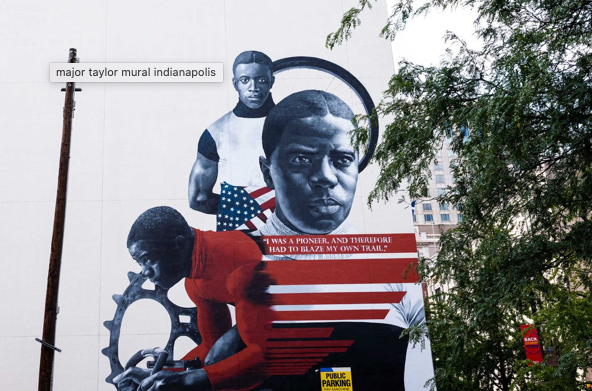
At the turn of the twentieth century, cycling was one of the world’s biggest spectator sports. Velodromes attracted enormous crowds, professional riders became international celebrities and the fastest cyclists could earn substantial prize money travelling between competitions. Into this world came Marshall ‘Major’ Taylor, an African American rider from Indianapolis who would become a world champion and one of the most celebrated athletes of his era.
His achievement would have been remarkable under any circumstances. What made it extraordinary was the America in which he was trying to achieve it.
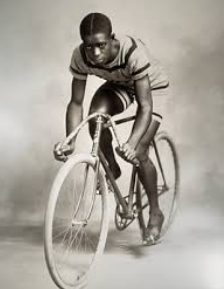
Taylor’s career developed as racial segregation and discrimination were becoming deeply embedded across American society. He was denied access to facilities because he was Black, excluded from some competitions, subjected to racist abuse and caricatures, refused accommodation and service while travelling, and even physically attacked by another competitor. The message surrounding him was difficult to miss: there were places a Black man was not expected to enter, opportunities he was not expected to receive and levels of success he was not supposed to reach.
Taylor could not simply pretend those barriers didn’t exist. Many were real, institutional and capable of restricting where he could train, compete, travel and stay. What he refused to accept was the much bigger assumption hiding behind them — that other people’s prejudice should determine the limits of his ability.
Other people can restrict your opportunities. They should never be allowed to define the limits of your ability.
WHEN SOCIETY HAS ALREADY DECIDED WHAT YOU CAN BECOME
Born in Indianapolis in 1878, Taylor discovered cycling whilst still a child. After receiving a bicycle, he became skilled enough at riding and performing tricks that a local bicycle shop employed him to entertain customers, reportedly dressing him in a military-style uniform that helped give him the nickname ‘Major.’
Yet as his ability developed, Taylor encountered a problem that had nothing to do with how quickly he could ride. When he sought access to training facilities at his local YMCA, he was refused because of his race.
That distinction matters. Taylor wasn’t confronting an imaginary limitation that could be overcome simply by adopting a more positive attitude. The barrier was real. He could not think his way into a building whose administrators refused to admit him, just as determination alone could not force a promoter to allow him into a race from which black competitors were excluded. What remained within his control was what he did next.
Taylor continued racing wherever he could, and his speed began attracting attention. Among those who recognized his potential was Louis ‘Birdie’ Munger, a former bicycle racer, manufacturer and entrepreneur, who became Taylor’s mentor and helped create opportunities for him to develop. In 1895, Taylor moved to Worcester, Massachusetts, where Munger had established a bicycle factory, and this allowed him to train more seriously.
The move did not remove racism from Taylor’s life, but it changed the environment around his talent. Given better opportunities to train and compete, he began demonstrating just how much ability had been sitting behind the barriers others had placed in front of him.
WHEN ABILITY BECOMES IMPOSSIBLE TO IGNORE
Taylor’s rise through competitive cycling was rapid. He won races, broke records and developed a reputation as an exceptional sprinter, eventually becoming known as the ‘Worcester Whirlwind.’ In 1899, at just twenty years old, he won the world one-mile sprint championship, establishing himself at the highest level of international cycling.
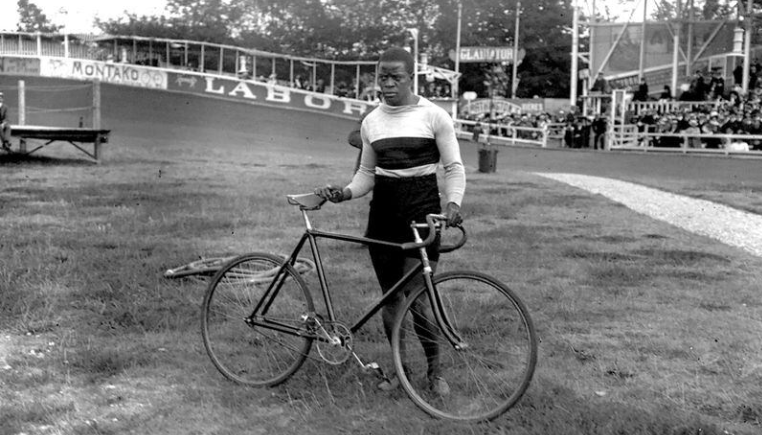
The significance of that achievement went well beyond a championship result. Taylor had reached the top of a major international sport at a time when influential organizations within American cycling had attempted to exclude black riders altogether. His performances created an uncomfortable contradiction between the assumptions being made about his race and the evidence appearing on the track.
Yet success did not make those barriers disappear. Taylor continued to encounter hostility from competitors, spectators and parts of the press. Opponents sometimes worked together tactically to prevent him winning, racist caricatures appeared in newspapers, and during a race in Taunton, Massachusetts, another rider attacked Taylor after the event and choked him until he lost consciousness. As his career required more travel, segregation created additional problems because hotels and restaurants could refuse to serve him.
This is where Taylor’s story becomes more interesting than a simple account of someone ‘refusing to follow the rules.’ He could not personally dismantle every discriminatory rule or institution standing in his way, and pretending otherwise would understate the reality he faced. Instead, he kept looking for the opportunities that remained available and continued producing results when he found them.
Eventually, some of the greatest opportunities came from outside the United States.
THE ATHLETE DIDN'T CHANGE. THE ENVIRONMENT DID.
As Taylor’s reputation grew, promoters invited him to compete in Canada, Europe and Australia, where audiences came in large numbers to watch the American world champion race.
The contrast is one of the most revealing parts of his story. Taylor was still the same athlete. His ability had not suddenly appeared when he crossed an international border, nor had his race changed. What changed was the environment in which that ability was being judged and the opportunities he was given to demonstrate it. In one place, his race was used as a reason to restrict him. In another, spectators paid to watch him compete.
That difference exposes something much larger than Taylor’s sporting career. It shows how easily a limitation imposed by a particular society, organization or group can begin to feel like a limitation inherent in the person experiencing it. When enough doors are closed, it can become tempting to conclude that whatever lies behind those doors was never meant for you in the first place.
Taylor’s international success demonstrated the danger of confusing the two. The restrictions placed around him were evidence of the society in which he lived, not evidence of what he was capable of becoming.
Sometimes the environment is measuring your conformity to its expectations, not the limits of your potential.
SUCCESS DIDN'T MAKE THE BARRIERS DISAPPEAR
There would be an easy version of Taylor’s story in which extraordinary talent eventually defeats prejudice and success removes the barriers that once stood in his way. His life was more complicated than that.
Becoming a world champion gave Taylor recognition, opportunities and international fame, but it did not make him immune to the discrimination around him. Nor did sporting success guarantee an easy life after competition. He retired from racing in 1910, and over the following decades his fame faded. He attempted other ventures, self-published his memoir after struggling to find a publisher, suffered financially and eventually moved to Chicago, where he died in 1932 at the age of 53 with little of the celebrity that had surrounded him during his racing career.
That later decline shouldn’t be used to manufacture a neat tragedy any more than his championships should be turned into a simplistic story in which determination conquers every obstacle. Taylor’s life demonstrates something harder and more useful: Challenging the limits other people place around you does not guarantee that the world will become fair.
What it can prevent is those limits becoming your own definition of what is possible. And that is the part of Marshall ‘Major’ Taylor’s story that still matters.
WHEN OTHER PEOPLE'S LIMITS START BECOMING YOUR OWN
The most dangerous limits are not always the ones other people openly place in front of us. Sometimes they are the ones we encounter so repeatedly that we eventually begin imposing them on ourselves.
Marshall Taylor was confronted with barriers that were unmistakably real, but surrounding those barriers were assumptions about what a black athlete could achieve, where he belonged and how far he should expect to progress. Had Taylor absorbed those judgments as an accurate assessment of his own ability, the people attempting to restrict his opportunities would no longer have needed to stop him. He would have started doing it for them.
This distinction matters because not every obstacle in life can simply be ignored or overcome through determination. Some constraints are real, whether they come from discrimination, money, geography, qualifications, responsibilities or circumstances beyond our control. Pretending otherwise turns a useful idea about personal agency into the empty advice that anyone can achieve anything if they simply believe hard enough.
The better question is whether the obstacle tells you something about your ability, or merely something about the circumstances surrounding you.
Taylor could not control whether a particular organization admitted black athletes, whether a hotel served him, or whether another competitor treated him fairly. What he could continue testing was the assumption underneath those restrictions: Whether he actually possessed the ability to compete at the highest level. His results answered that question.
That same distinction can be useful whenever repeated rejection begins to feel like evidence that an ambition itself is unrealistic. Sometimes rejection genuinely reveals a weakness that needs addressing, and independent thinking requires being willing to recognise that. But sometimes the problem lies with the particular environment, gatekeeper or route you are trying to use.
Before allowing an external barrier to become an internal limit, it is worth working out which one you are actually facing.
THE NORULEBOOK 'BARRIER OR LIMIT' TEST
When something appears to be preventing you from moving forward, ask:
IDENTIFY THE BARRIER
What specifically is stopping me from progressing?
SEPARATE THE EXTERNAL FROM THE INTERNAL
Is the obstacle telling me something about my ability, or about the environment in which I am trying to use it?
LOOK FOR EVIDENCE
What objective evidence do I have about what I can and cannot do, rather than relying solely on somebody else’s judgment?
CHANGE THE ROUTE
If one route is genuinely closed, is there another place, person, market or approach through which I can test the same ability?
REASSESS THE RESULT
Once the environment changes, does the limitation remain?
The purpose of this test isn’t to dismiss every rejection as somebody else’s problem. Sometimes the evidence will show that you need to improve, change direction or reconsider the objective. The point is to make sure you don’t automatically turn “I can’t do it here” into “I can’t do it.”
Taylor’s career provides an unusually powerful example. When opportunities expanded beyond the environment that had restricted him, his ability travelled with him.
WHY MAJOR TAYLOR STILL MATTERS
Marshall Taylor’s achievements belong first and foremost to sporting history. He became a world champion during an era when cycling commanded enormous international audiences, competed successfully across several continents and reached a level of fame that made him one of the most significant Black athletes of his generation.
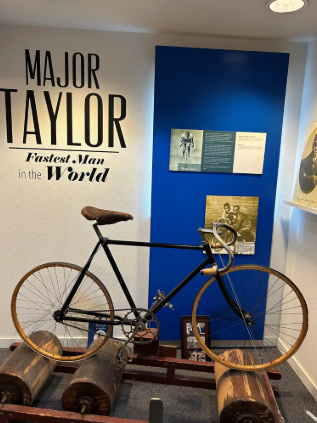
But his story also leaves us with a distinction that reaches well beyond cycling.
There is a difference between recognizing that a barrier exists and allowing that barrier to define what you believe about yourself. Taylor encountered obstacles that courage alone could not remove, yet he continued looking for places where his ability could actually be tested. When those opportunities appeared, the results exposed how little the restrictions surrounding him had said about his potential in the first place.
His story therefore isn’t an argument for pretending that barriers don’t matter. It is an argument for being very careful about whose conclusions you allow those barriers to create.
The world around Taylor repeatedly tried to tell him where he belonged.
His ability told a different story.
Take The Next Step
Most of us will never confront the scale of institutional discrimination Marshall Taylor faced, and it would trivialise his experience to pretend that every everyday obstacle is equivalent. What his story can teach us, however, is the importance of separating a genuine constraint from the conclusions we draw from it.
A rejection, closed opportunity or conventional expectation may tell you that one particular route isn’t available. It does not automatically tell you that the destination is beyond you.
That distinction sits at the heart of NoRuleBook. If Taylor’s story has made you question some of the limits you’ve accepted in your own life, grab a copy of NoRuleBook below. It explores the unwritten assumptions that shape what we believe we’re supposed to do, what we’re capable of doing and which possibilities we stop considering before we’ve properly tested them.
You cannot control every barrier placed in your way.
But you can question whether it deserves the power to define your potential.
The NoRuleBook Collection
-
NoRuleBook
$9.95Original price was: $9.95.$7.95Current price is: $7.95. -
No Rules Start-Up
$19.95Original price was: $19.95.$9.95Current price is: $9.95. -
NoRuleBook Bundle
$22.90Original price was: $22.90.$14.95Current price is: $14.95.