
Woodstock wasn’t supposed to work. That’s the part people forget.
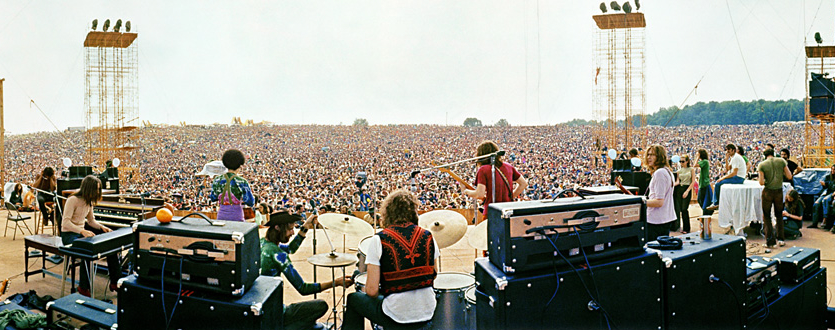
In August 1969, a few young promoters planned a music festival for 50,000 people on a dairy farm in upstate New York. What actually happened was closer to half a million people arriving with no tickets, no clear infrastructure, limited food, failing toilets, and weather that turned the site into mud.
By any conventional standard, the music festival was a disaster.
And yet, it became one of the most important cultural moments of the 20th century.
Not because it was well organized.
Not because it was profitable.
But because it broke almost every rule society said mattered — and still worked.
The World in the Woodstock Era
Woodstock didn’t appear out of nowhere.
The late 1960s were defined by rigid expectations. Go to school. Get a job. Don’t question authority. Don’t question war. Don’t question tradition. The Vietnam War was escalating. Civil rights battles were ongoing. Trust in government and institutions was eroding fast.
Young people felt trapped inside a system that didn’t reflect their values.
Woodstock wasn’t a protest in the traditional sense. There were no speeches demanding reform. No official manifesto. It was something quieter and more dangerous.
It was people choosing a different way to exist, even if only for a weekend.
What Actually Made This Music Festival Radical
From the outside, Woodstock looks like chaos. Mud, crowds, loud music, drug use, and poor logistics. But from the inside, something unexpected happened.
People shared food and strangers helped each other.
Violence was almost nonexistent.
There was no major riots or mass panic.
Half a million people gathered with minimal authority and largely self-regulated.
That alone broke a deeply held belief : That people require constant control to behave decently.
This event suggested something uncomfortable — that maybe the rules weren’t holding society together as much as leaders claimed.
Why Woodstock Still Matters
Woodstock is often reduced to nostalgia. Tie-dye. Music legends. “Peace and love.”
But all this misses the point.
The real legacy of it all wasn’t the lineup. It was the proof that an alternative way of living, even briefly, was possible. People didn’t wait for permission. They didn’t ask for approval. They showed up anyway.
The organizers lost control.
The authorities stepped back and the crowd adapted.
Woodstock worked not because it was planned perfectly, but because people collectively decided to make it work.
That’s deeply NoRuleBook.
The NoRuleBook Philosophy Inside Woodstock
Woodstock wasn’t anti-rules for the sake of rebellion. It was anti-rules that no longer made sense.
No one burned the system down.
They simply chose to ignore it all for three days.
That’s often more threatening.
When people stop asking for approval, systems lose their grip. This event demonstrated that culture doesn’t need formal permission to shift. It moves when enough people decide the old story no longer fits.
That’s why Woodstock scared institutions far more than protests ever did.
Lessons to Learn
1. Not All Chaos Is Destructive
We’re taught to fear disorder. To equate structure with safety and freedom with collapse. Woodstock showed that some chaos is transitional, not destructive.
When old systems stop working, disorder isn’t failure. It’s recalibration.
2. People Are More Capable Than Systems Assume
The event exposed a lie baked into modern life : That people must be controlled to behave responsibly. Left largely alone, hundreds of thousands of people self-organized, shared resources, and avoided widespread violence.
Control isn’t always protection. Sometimes it’s distrust.
3. Cultural Change Happens Before Permission Is Granted
No authority approved Woodstock’s meaning in advance. Its significance was recognized only afterward. That’s how real change works. First, people live differently. Then society tries to explain it.
Waiting for permission is how movements die before they start.
4. Short Moments Can Create Long Shadows
The event only lasted a few days, yet it’s cultural impact lasted decades. You don’t need permanence to create meaning. You need intensity, alignment, and timing.
Most people underestimate how powerful brief, honest moments can be.
5. Not Everything Valuable Is Efficient
Woodstock was inefficient, messy, and economically flawed. It also reshaped music, culture, and identity. Some things are worth more than their metrics.
If you only measure success by clean outcomes, you miss what actually matters.
Final Thoughts
Woodstock wasn’t perfect. It wasn’t sustainable. It wasn’t a blueprint for society.
But that’s exactly why it mattered.
It showed what happens when people stop obeying rules that feel hollow. It wasn’t about escaping responsibility — it was about reclaiming agency. For one muddy weekend, people chose connection over control, curiosity over compliance.
Woodstock didn’t ask the world to change.
It showed that it already could.
And that idea never really went away.
What You Can Take Away
You don’t need to recreate Woodstock.
But you can question which rules you’re following simply because they’ve always been there. Look at your work, your lifestyle, your definitions of success. Ask where order has quietly turned into limitation.
Sometimes the most radical act isn’t rebellion. It’s opting out … even briefly.
That’s how new stories begin.
-
-20%

No Rule Book
$9.95Original price was: $9.95.$7.95Current price is: $7.95. -
-35%
No Rule Book + No Rules Start-Up
$22.90Original price was: $22.90.$14.95Current price is: $14.95. -
-50%
No Rules Start-Up
$19.95Original price was: $19.95.$9.95Current price is: $9.95.


 Submitted 1.0
 Manual 5.0