Are you Becoming Better - Or Just better at Conforming?
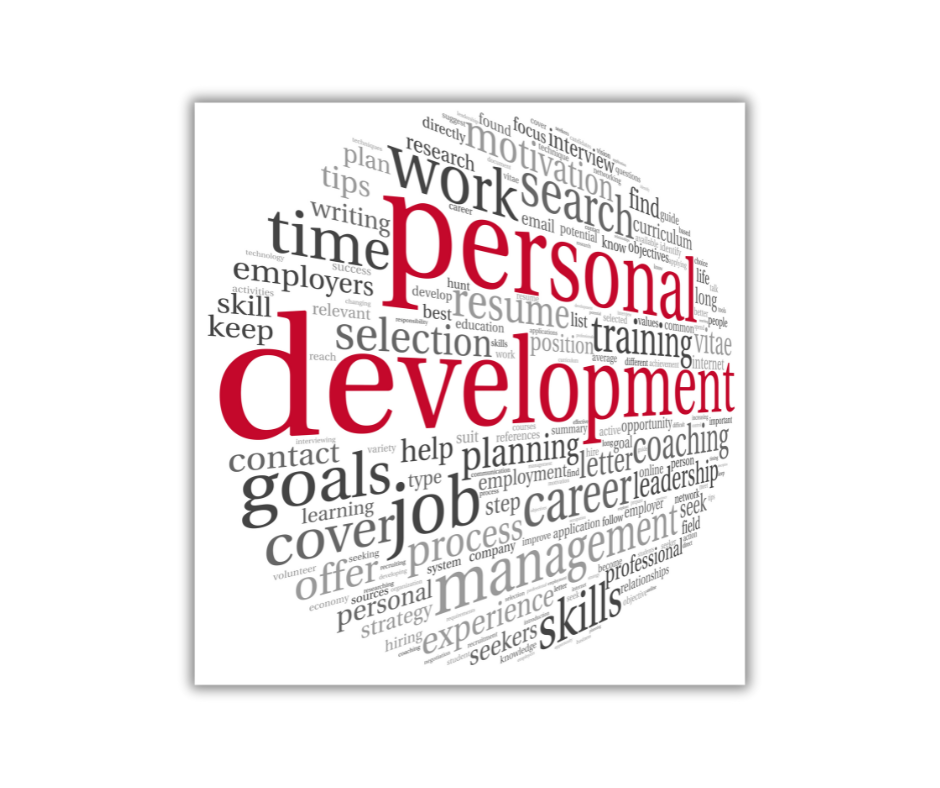
Personal development is supposed to be about becoming more capable of creating the life you want. Somewhere along the way, however, an industry built around individual growth began developing a surprisingly standardised picture of what a successfully developed person should look like.
Wake up earlier. Exercise before breakfast. Meditate. Journal. Read more books. Track your habits. Optimise your sleep. Improve your productivity. Build confidence. Eliminate distractions. Develop multiple income streams. Learn from successful people and adopt the routines that supposedly made them successful.
None of those things is inherently bad. Some of them can be enormously useful, and for the right person at the right time they may genuinely improve a life. The problem begins when personal development stops helping us decide what kind of life we want and starts handing us another template for how a successful person is supposed to behave.
There is an irony in that. Someone can spend years escaping the conventional expectations they grew up with, only to replace them with a newer and more fashionable collection of expectations. The old rulebook might have told them to get good grades, choose a respectable career, buy a house, work hard and steadily climb the ladder. The new one tells them to wake at 5am, optimise every hour, build a side hustle, take cold plunges and turn themselves into a relentlessly improving version of themselves.
The instructions have changed, but something important hasn’t.
Someone else is still defining what improvement is supposed to look like.
There's little value in becoming extraordinarily efficient at living a life you never consciously chose.
When Self Improvement Becomes Another Form Of Conformity
The personal-development industry depends, to some extent, on dissatisfaction. There must always be a gap between who you are and who you could become, because closing that gap is what creates the next book, programme, podcast, productivity system or morning routine.
Again, dissatisfaction itself is not the problem. Recognising that something in your life needs to change can be one of the most constructive realisations you ever have. Learning new skills, becoming healthier, developing confidence or gaining control over your finances can materially expand the choices available to you.
The more interesting question is who decided which improvements you need?
If you are trying to become more confident because fear is preventing you from pursuing something you genuinely want, confidence may be exactly what you need to develop. If you are trying to become more confident because you’ve absorbed the idea that successful people are naturally charismatic, outspoken and comfortable commanding a room, you may be trying to correct something about yourself that was never actually defective.
 The same distinction applies to productivity. Becoming better organised can free enormous amounts of time and mental energy, but productivity becomes a strange objective when efficiency itself becomes the measure of a good life. A person can become exceptionally good at completing tasks without ever asking whether those tasks are moving them toward anything they actually value.
This is where personal development can quietly become another form of conformity. Instead of questioning the scoreboard, we concentrate on improving our score.
NoRuleBook takes a different starting point. Before asking How can I become better at this?, it asks whether this deserves to be the thing you are becoming better at in the first place.
The Assumption That There Is Something Wrong With You
Much of personal-development advice begins with a subtle proposition: the person you are today is somehow insufficient for the life you should be living.
You need more discipline because you procrastinate. You need more confidence because you hesitate. You need better habits because your routine isn’t optimised. You need a stronger mindset because you occasionally doubt yourself. Whatever the problem, there is usually another version of you waiting somewhere in the future who wakes earlier, works harder, thinks more positively and finally has everything under control.
That can be motivating, but it can also turn life into a permanent renovation project.
There will always be something about ourselves that could theoretically be improved. We could become fitter, wealthier, calmer, better read, more productive, more socially confident or more disciplined, and modern technology has given us an extraordinary ability to measure many of those things. Watches can tell us how well we slept, apps can track our habits, social platforms can show us people apparently achieving more before breakfast than we managed all week, while artificial intelligence can produce an endless personalised list of ways we could optimise almost every part of our lives.
The availability of improvement does not mean every improvement deserves pursuing.
Sometimes the most important development is not adding another habit, skill or achievement, but examining why you believed you needed it.
That requires a different relationship with personal growth, because instead of treating yourself as a defective product waiting for the next upgrade, you begin treating your life as something that deserves conscious direction.
Personal development shouldn't begin with “What's wrong with me?” It should begin with “What do I actually want to develop - and why?”
THERE ISN'T AN UNTOUCHED 'REAL YOU' HIDING UNDERNEATH
It would be tempting at this point to say that the solution is simply to ignore everybody else’s expectations and discover the person you were always meant to be. That sounds liberating, but it creates another problem.
None of us develops in isolation.
The person you are today has been shaped by parents, friends, teachers, relationships, culture, opportunities, disappointments, books, work, travel, technology and thousands of experiences you probably no longer remember. Even many of the values you regard as deeply personal have histories. Someone or something helped introduce them to you. That doesn’t make them false.
An ambition does not become illegitimate simply because your parents encouraged it, just as a conventional life does not become unconscious merely because millions of other people have chosen something similar. You might genuinely want marriage, children, a stable career and a house in the suburbs. Somebody else might genuinely want to remain single, build businesses and spend years travelling. Neither life becomes more authentic simply because it is more unconventional. The important distinction is whether the person living it has examined the choice.
Personal development, therefore, isn’t about peeling away every external influence until some untouched version of yourself finally emerges. It is about becoming increasingly aware of the influences that have shaped you and developing enough independence to decide which ones still deserve a place in the person you are becoming.
Some inherited values will survive that examination. Others will change. A few may turn out to have been guiding major decisions for years without ever being consciously chosen at all.
Personal development isn't about removing every influence other people have had on you. It's about becoming conscious enough to decide which influences you want to keep.
THE UNWRITTEN RULES HIDING INSIDE YOUR AMBITIONS
This is where personal development and the wider NoRuleBook philosophy begin to overlap.
We usually think of unwritten rules as external expectations: don’t take unnecessary risks, don’t upset people, choose security over uncertainty, avoid embarrassing failure, act your age and don’t stray too far from what people around you regard as sensible.
But some of the most powerful unwritten rules no longer feel external because we have carried them for so long that they begin sounding like our own voice.
You may believe you need a prestigious job without remembering when prestige became important to you. You may want a larger house without having considered whether the additional space would materially improve your life. You may feel behind because somebody your age earns more, owns more or has reached a milestone you haven’t reached, even though you never consciously agreed that their timeline should become the measurement of yours.
Social media has made this particularly difficult because comparison no longer comes primarily from the people immediately around us. We can now compare our careers, bodies, relationships, homes, businesses, holidays and achievements against thousands of carefully selected lives every day, while algorithms become increasingly skilled at learning which aspirations, insecurities and identities keep our attention.
Personal development can either help protect us from that pressure or intensify it.
If it simply gives us more efficient methods for reaching whatever goals happen to be fashionable, it may make us better performers without making us more independent. But if it teaches us to examine the assumptions underneath those goals, something more valuable begins to happen.
We stop asking only how to reach the destination faster, and begin asking who chose the destination.
FROM INHERITED TO EXAMINED TO CHOSEN
A more useful way of thinking about personal development is not as a journey from an inadequate self toward a perfected self, but as a gradual movement from inherited, to examined, to chosen.
Every life begins with inheritance. Long before we have enough experience to construct our own philosophy, we absorb ideas about success, money, relationships, education, work, appearance, status, risk and what constitutes a respectable life. We need many of those inherited ideas because nobody can begin adulthood by independently rediscovering everything society has already learned.
The problem arises when inheritance is mistaken for conclusion.
As experience accumulates, some of those assumptions deserve to be examined. We can ask where they came from, what problem they were intended to solve, whether that problem still exists and whether following the assumption is helping us create the life we actually want. Importantly, examination does not require rejection. Sometimes the conventional answer survives scrutiny because it is a good answer.
Only after that examination does the choice become genuinely ours.
This is why NoRuleBook isn’t asking you to rebel against every expectation, abandon your career or deliberately choose the strangest available alternative. Automatic rebellion is no more independent than automatic obedience because both allow the existing rule to determine your response.
The objective is something quieter and considerably more demanding: To understand enough about why you are living the way you are living that you can consciously decide whether to continue that way.
Inherited → Examined → Chosen
That may be one of the simplest definitions of personal development we can offer.
The purpose of personal development isn't to become the person you're supposed to be. It's to become conscious enough to decide who you're becoming.
WHAT PERSONAL DEVELOPMENT LOOKS LIKE WHEN YOU STOP TRYING TO FIX YOURSELF
Once personal development stops being a permanent attempt to correct everything supposedly wrong with you, an interesting shift occurs. Growth does not disappear; in many ways, it becomes more demanding, because you can no longer outsource the definition of progress to somebody else’s checklist.
You may still decide that you want to become fitter, more disciplined or financially secure. You may still wake early, meditate, read books, change careers or build a business. The difference is that these things become tools serving a life you have thought about rather than evidence that you are successfully performing personal development.
This also changes how we think about weaknesses. Not every weakness needs correcting, because every life places different demands on the person living it. Someone building a company may genuinely need to become better at difficult conversations, while someone else may spend years trying to become more outgoing simply because they have absorbed the idea that successful people are extroverted. One represents development in service of an objective; the other may simply be an attempt to become more socially acceptable.
The same applies to strengths. We often assume personal development means identifying our deficiencies and working on them, yet sometimes the greater opportunity comes from understanding what is already distinctive about us and developing more of it. A person who thinks differently, works differently or wants something unusual does not necessarily need to be brought closer to the average before they can succeed.
The question becomes less about how many areas of yourself you can improve and more about which changes would genuinely expand the life available to you.
SOMETIMES GROWTH LOOKS NOTHING LIKE SELF-IMPROVEMENT
Consider Burt Munro.
For most of his life, there was little about Munro that resembled the modern image of an optimised high performer. He was not building a personal brand, following a carefully engineered productivity system or trying to transform himself into somebody else’s definition of success. He was an ageing New Zealander working obsessively on an old Indian motorcycle in a shed in Invercargill, modifying components by hand and pursuing an ambition that would have looked increasingly unreasonable to many people around him.
By the time he began travelling to the Bonneville Salt Flats in the United States, Munro was already at an age when conventional expectations might have suggested that his most ambitious years should have been behind him. Instead, he continued developing the knowledge, mechanical ingenuity and determination required to pursue something that mattered enormously to him. His growth was inseparable from the objective.
He did not need to become a generally ‘better’ person according to some universal personal-development scorecard. He needed to become increasingly capable of solving the particular problems standing between himself and what he wanted to accomplish.
That distinction is important because meaningful personal development is often highly specific. If you want to write a novel, growth might mean learning to tolerate rejection and developing the discipline to rewrite something that isn’t working. If you want to travel alone, it might mean becoming comfortable with uncertainty. If you want to leave a secure career and start a business, it might mean learning to make decisions without the reassurance of a predictable salary.
The development follows the life rather than the life following a prescribed development programme.
Munro’s story also reminds us that growth does not always look respectable from the outside. Sometimes it looks inefficient, obsessive or impractical because the person doing it has chosen a destination that makes little sense according to somebody else’s priorities.
That doesn’t automatically make the destination worthwhile, of course. An unconventional objective deserves examination just as much as a conventional one does. But once you have decided that something genuinely matters to you, personal development becomes much more useful when it helps you become capable of pursuing it rather than persuading you to want something else.
FAILURE CHANGES WHEN THE SCOREBOARD CHANGES
The original version of this article used the familiar Thomas Edison quotation about discovering thousands of ways that didn’t work. We don’t need it.
Failure becomes much more interesting when we stop treating it as a motivational slogan and start asking why some failures feel so devastating in the first place. Often, what hurts is not merely that something didn’t work. It is what we believe the failure says about us.
A failed business can feel like evidence that we are not entrepreneurial enough. A relationship ending can become evidence that we are somehow behind everyone else. Missing a promotion can feel like falling behind in life rather than simply not receiving one particular job. These interpretations depend on the scoreboards we have adopted, because failure can only tell us that we have fallen short once we have decided what counts as success.
Personal development therefore requires more than learning to tolerate failure. It requires examining the standards against which failure is being measured.
If you genuinely want to build a company and it subsequently fails, there may be difficult lessons you need to confront. If you never particularly wanted the corporate promotion everybody congratulated you for pursuing, failing to receive it may tell you remarkably little about whether your life is moving in a worthwhile direction.
This does not mean we can escape disappointment simply by inventing a scoreboard on which we always win. That would turn personal development into self-deception. Feedback still matters, results still matter, and sometimes failure is telling us something we would rather not hear.
The difference is that we get to examine whether the game itself deserves to be played before deciding what its score says about us.
Failure becomes more useful when you know which objective you actually failed to achieve—and why that objective mattered to you in the first place.
PERSONAL DEVELOPMENT SHOULD EXPAND YOUR CHOICES, NOT SHRINK THEM
There is a useful test for almost any form of self-improvement: “Is this making more of life available to me, or is it making me increasingly afraid to live outside the system I’ve created?”
A routine that helps you exercise regularly may expand your choices because it improves your health and energy. But if missing one workout produces guilt because you have begun measuring your character through an unbroken habit streak, the same system may have started exerting more control over you than you intended.
Financial discipline can create freedom by reducing debt and giving you greater control over your future, yet money can become another form of confinement if every experience is judged according to whether it maximises long-term financial optimisation. Productivity can create time for the things you value, but it can also reach the absurd point where an afternoon spent doing nothing with someone you love feels inefficient.
The goal is not to reject discipline, routines or goals. We have already explored elsewhere in NoRuleBook why routine itself is not the enemy; unexamined routine is. The same principle applies to personal development.
A useful practice should serve you without quietly becoming your new master.
This is particularly important because the tools available for self-improvement are becoming extraordinarily powerful. Artificial intelligence can already help us create training programmes, analyse spending, plan careers, organise schedules, learn skills and identify patterns in our behaviour, and those capabilities will continue to improve. Used well, that technology can dramatically expand what an individual is capable of learning and doing.
But AI also introduces a new version of an old problem.
If you ask technology how to become more successful without first deciding what success means to you, it can give you increasingly sophisticated instructions for pursuing an objective you never consciously chose. The advice may be personalised, efficient and perfectly reasoned while still taking you in the wrong direction.
The more powerful our tools become, therefore, the more important it becomes to know what we are asking them to optimise.
THE COURAGE TO KEEP A CONVENTIONAL LIFE
There is another side of the NoRuleBook philosophy that is easy to miss.
Questioning society’s expectations can become fashionable enough that unconventionality itself starts functioning as a status symbol. Suddenly the courageous person is assumed to be the one who quits the corporate job, sells the house, starts the business, travels the world or refuses to settle down. But what if you examine those alternatives and still want the conventional life?
Then choose it!
There is nothing inherently more enlightened about entrepreneurship than employment, travelling indefinitely than building a home, or rejecting marriage than wanting a family. A person who has consciously examined their options and chooses a traditional path may be living far more independently than somebody who chooses an unconventional one because their social circle now rewards rebellion.
This is why NoRuleBook cannot simply replace society’s old instructions with a collection of rebellious new ones.
The objective was never to make everybody live differently. It was to help people understand why they are living the way they are.
Chuck Feeney provides an interesting example from the opposite end of the conventional-success spectrum. He became extraordinarily wealthy through Duty Free Shoppers and could easily have spent the rest of his life performing the role society often assigns to billionaires: accumulating assets, displaying status and eventually passing enormous wealth to the next generation. Instead, he quietly spent decades giving almost all of it away during his lifetime.
What makes Feeney interesting from a personal-development perspective is not that everybody should copy his decision. Most people neither could nor should. What matters is that wealth did not automatically dictate what he was supposed to become once he had acquired it. He eventually constructed a definition of enough that made sense according to his own values and then reorganised his life around it.
Munro and Feeney could hardly have lived more different lives, yet both illustrate the same principle.
Personal development becomes meaningful when it increases your ability to live according to values you have actually examined.
YOU DON'T NEED TO BECOME FEARLESS
One of the stranger promises hidden inside some personal-development advice is the idea that sufficiently developed people eventually stop experiencing the emotions that make difficult choices difficult.
They become confident. Decisive. Resilient. Unbothered by criticism and comfortable with uncertainty.
Real people rarely work like that.
Growth often means becoming better at acting while uncomfortable rather than eliminating the discomfort itself. Someone can become more courageous without becoming fearless, more confident without eliminating doubt and more independent without becoming indifferent to what other people think.
That matters because otherwise personal development creates another impossible standard. We wait to feel ready before beginning something difficult because we assume readiness will eventually arrive as a psychological state in which fear and uncertainty have disappeared.
Sometimes the development is learning that they don’t have to disappear.
You can disappoint someone and still care about them. You can make an uncertain decision while wishing you had more certainty. You can begin before feeling ready while still preparing responsibly. You can change direction without pretending the years spent on the previous path meant nothing.
Personal development does not have to turn you into somebody who finds difficult choices easy. It can simply make you more capable of making them consciously.
THE NORULEBOOK CONSCIOUS GROWTH FRAMEWORK
If there is one distinction separating the NoRuleBook approach from the version of personal development we have been questioning throughout this article, it is that growth should not begin with a predetermined picture of the person you are supposed to become.
It should begin with awareness.
Before adding another habit, chasing another milestone or correcting another supposed weakness, examine the assumption underneath it. Ask where the desire came from, what you believe achieving it will change and whether the person you are becoming in pursuit of it resembles someone you actually want to be.
Some answers will surprise you because they reveal how much of your life has been shaped by expectations you barely noticed. Others may confirm that the path you are already following is exactly the one you would choose again. Both are successful outcomes.
NoRuleBook does not need you to reach the unconventional conclusion. It needs the conclusion to have survived examination.
That is why perhaps the most useful model for personal development is also one of the simplest :
Inherited
The beliefs, ambitions and expectations you absorbed before you consciously decided whether they belonged to you.
Examined
The point at which you question where those assumptions came from, what purpose they serve and whether they still make sense for the life you want.
Chosen
The decision to keep, modify or reject what you inherited—not because it is conventional or unconventional, but because you have consciously decided it deserves a place in your life.
The goal isn't to reject what you inherited. It's to make sure what remains has earned its place.
We inherit far more than we realise. We examine what deserves examination. Then, rather than automatically obeying or automatically rejecting what we inherited, we decide what deserves to remain.
Over time, that process may change your career, relationships, routines, ambitions and definition of success. Or it may leave some of them exactly where they are, except that now you understand why they belong there.
That is still development.
In fact, it may be one of the most important forms of development there is.
You can't choose everything that shapes you. But you can become more conscious about what you allow to shape what comes next.
PERSONAL DEVELOPMENT IS NOT A FINISH LINE
One reason personal development can become exhausting is that it is often presented as though there is an improved version of ourselves waiting somewhere in the future, and if we can only develop enough discipline, confidence, knowledge and emotional control, we will eventually arrive there.
But there is no final version.
The person you become at thirty will encounter circumstances the person you were at twenty could not have anticipated, just as the priorities that made perfect sense at forty may look very different at sixty. Careers change, relationships change, technology changes, financial circumstances change, people we care about enter and leave our lives, and experiences alter what we value in ways no personal-development plan could have predicted in advance.
That means conscious personal development cannot simply be a process of deciding what you want once and then spending the rest of your life efficiently pursuing it. The decisions themselves occasionally need to be reopened.
An ambition that genuinely belonged to you ten years ago can stop belonging to you without having been a mistake. A career can have been exactly right for one stage of your life and completely wrong for the next. A routine that once created stability can eventually create confinement, while a definition of success that once motivated you can become increasingly irrelevant as your priorities change.
Changing your mind in those circumstances does not necessarily mean you lacked direction. Sometimes it means you were paying attention.
This is why the Inherited → Examined → Chosen process should never be treated as something we complete once. Even the things we consciously choose can eventually become assumptions if we stop examining them.
The rulebook we need to question tomorrow may be one we wrote ourselves yesterday.
PERSONAL DEVELOPMENT IN THE AGE OF ALGORITHMS
 There is another reason this matters more now than it did even a generation ago. The influences shaping our ambitions are becoming increasingly difficult to see.
For most of human history, the expectations surrounding a person came from relatively identifiable sources. Family, religion, school, employers, friends, neighbors and the broader culture communicated fairly visible ideas about how a respectable life should be lived. You might disagree with those expectations, but at least you usually knew where they were coming from.
Today, some of the most persistent influences on our desires arrive through systems we barely notice.
A social-media platform observes what holds our attention and gradually shows us more of it. We watch people renovating homes and begin thinking ours looks dated. We see entrepreneurs discussing financial freedom and wonder whether employment represents a failure of ambition. Fitness creators redefine what a healthy body is supposed to look like, productivity creators redefine what a well-used morning should contain, while travel feeds can make an ordinary weekend at home feel like evidence that everybody else is experiencing more of life than we are.
None of this requires a conspiracy or even conscious manipulation by another person. Algorithms are largely doing what they were designed to do: finding content likely to keep us engaged. The difficulty is that repeated exposure can make an aspiration feel increasingly natural without us ever noticing the process through which it became important.
Artificial intelligence adds another layer. It can help us think through difficult decisions, expose us to alternatives we had not considered and challenge assumptions we might otherwise leave untouched. Used intelligently, it may become one of the most useful personal-development tools ever created.
But there is a crucial distinction between asking AI to help you examine your thinking and asking it to do your thinking for you.
If an AI system knows your objectives, it can become extraordinarily good at helping you optimize towards them. What it cannot determine on your behalf is whether those objectives deserve to organize your life in the first place.
That responsibility remains yours.
The better technology becomes at helping us get where we're going, the more important it becomes to ask why we're going there.
PERSONAL DEVELOPMENT WITHOUT A GURU
None of this means experts have nothing to teach us. Quite the opposite. Other people’s experience can save us years of unnecessary mistakes, and refusing useful advice merely because somebody else discovered it would be a particularly unhelpful form of independence. The problem arises when learning from someone quietly turns into copying them.
A successful entrepreneur can teach you something about business without their lifestyle becoming the model for yours. An athlete can teach you about discipline without requiring you to adopt their morning routine. A psychologist can help you understand behaviour without possessing a universal formula for what should make your life meaningful.
The NoRuleBook approach is therefore not anti-expert and it certainly isn’t anti-learning. It simply treats advice as input rather than instruction.
Take what somebody else has learned, examine the reasoning and evidence behind it, compare it with your own circumstances and decide whether it belongs in your life. Sometimes the answer will be yes, and adopting another person’s approach may save you enormous time. Sometimes only part of their advice will be useful, while on other occasions the circumstances that made their advice successful will be so different from yours that copying it would make little sense.
The objective is not to become a person who listens to nobody. It is to become someone who can listen widely without surrendering the final decision.
START WITH ONE PART OF YOUR LIFE
If all of this sounds as though personal development requires conducting a philosophical investigation into every decision you have ever made, it doesn’t.
In fact, trying to question everything at once would simply turn NoRuleBook into another exhausting self-improvement programme.
Start with one area of your life that matters. It might be :
- your career.
- your relationship with money.
- the way you spend your time.
- an ambition you have been postponing.
- a routine that has become automatic.
- a milestone you feel strangely anxious about not having reached.
Choose something where there appears to be a gap between what you are doing and what you actually want, particularly if you have difficulty explaining why you continue doing it. Then trace the expectation backwards.
Ask yourself where your idea of the ‘right‘ outcome came from and whether you still agree with it. Consider what you would choose if nobody you knew would ever see the result, whether the objective would still matter without the status attached to it, and what you might do differently if disappointing other people were temporarily removed from the calculation.
The purpose is not to force yourself toward a dramatic answer. You may examine a conventional career and realise you genuinely love it. You may question your desire for financial security and conclude that it reflects your values perfectly. You may scrutinise a relationship, routine or ambition and decide that nothing needs changing.
That is not a failed exercise.
The point is to move something important in your life from inherited, through examined, to chosen.
Once you have done that, you no longer need to wonder whether choosing the conventional answer somehow violates the NoRuleBook philosophy. The philosophy was never about which answer you selected. It was simply about whether you ever asked the question.
Take The Next Step
What would you change in your life if you stopped worrying about disappointing anyone?
That question is powerful because disappointment is one of the ways unwritten rules enforce themselves. We may never be explicitly forbidden from changing careers, ending a commitment, pursuing an unusual ambition or choosing a different version of success, yet the anticipated reaction of people around us can influence the decision before we have even consciously considered what we want.
But the question should not be interpreted as an instruction to ignore everyone else. Other people’s feelings matter, particularly when our decisions affect partners, children, families, employees or people who depend on us. Personal independence is not an excuse for selfishness. Instead, use the question as a thought experiment.
Temporarily remove the fear of disappointing other people and notice whether your answer changes. If it does, you have discovered something worth examining. You can then put the legitimate needs and consequences back into the decision, but this time you will be able to distinguish between responsibilities you consciously accept and expectations you have simply been afraid to challenge.
You may ultimately decide not to change anything. Or you may discover that something you have regarded as your own choice has been shaped far more heavily by approval, comparison or inherited expectation than you realized.
Either outcome gives you something valuable : Clarity.
Personal development does not require you to rebuild your life every time you discover an unwritten rule. Sometimes awareness is enough to confirm that the life you already have is the one you genuinely want. At other times, awareness creates the first uncomfortable recognition that something needs to change.
The important thing is that the next decision becomes yours.
Don't improve yourself according to somebody else's definition of a better life. Become more capable of choosing—and building—the life you actually value.
If these ideas have made you question some of the assumptions shaping your own definition of success, the NoRuleBook collection explores them much further through stories, ideas and practical ways of examining the unwritten rules around us.
Click the NoRuleBook image below to explore the collection.
The NoRuleBook Collection
-
-20%
NoRuleBook
$9.95Original price was: $9.95.$7.95Current price is: $7.95. -
-50%
No Rules Start-Up
$19.95Original price was: $19.95.$9.95Current price is: $9.95. -
-35%
NoRuleBook Bundle
$22.90Original price was: $22.90.$14.95Current price is: $14.95.

 Submitted 1.0
 Manual 5.0