
NoRule Book Banner

Public Enemy: When Hip-Hop Refused to Stay in Its Lane

by Robbie Dellow
Public Enemy image

WHEN MUSIC IS EXPECTED TO KNOW ITS PLACE

The music industry has always been comfortable with artists who understand what is expected of them. Make something people want to hear, build an audience, sell records, fill venues and, if commercial success arrives, try not to make the people helping to sell you unnecessarily uncomfortable.

There is nothing inherently wrong with any of that. Music can exist simply because it makes people dance, laugh, fall in love, forget their problems for three minutes or feel less alone on the drive home. An artist does not need to carry a political message to justify making music, any more than every novelist needs to write about politics or every filmmaker needs to make a documentary.

But an unwritten rule begins to appear when entertainment stops being one possible role for an artist, and becomes the boundary of what the artist is expected to do.

Hip-hop was still a relatively young commercial form when Public Enemy began emerging from Long Island in the mid-1980s, and it would be wrong to suggest that rappers before them had nothing serious to say. Grandmaster Flash and the Furious Five had already released The Message, while artists across the developing culture had used rap to describe poverty, neighbourhood life, inequality and experiences that received little attention elsewhere. Hip-hop had never been quite as politically empty as later versions of its history sometimes suggest. What Public Enemy would do was push the possibilities much further.

At the centre of the group was Carlton Douglas Ridenhour, the man the world would eventually know as Chuck D. Growing up in Roosevelt, Long Island, he became interested not only in music but in the way information was packaged and communicated, eventually studying graphic design at Adelphi University and becoming involved with the university’s radio station, WBAU.

That background matters because Chuck D’s eventual importance was never simply about having a powerful voice. He was becoming interested in the machinery surrounding the voice: how images create meaning, how radio carries ideas, how language frames events and how the people controlling communication can influence which version of reality reaches an audience.

Hip-hop offered another communication system. And Chuck D began to recognize what that system might be capable of doing.

Rather than treating rap simply as a product that could be fitted into the existing music industry, he increasingly saw it as a way for communities to speak about themselves instead of waiting for somebody else to describe them. Music could still entertain, but it could also carry history, argument, anger, humour, identity and political commentary into places that a newspaper editorial or television news programme might never reach.

That possibility would eventually lead Chuck D to describe rap as the “CNN of Black America”—an imperfect analogy, perhaps, but a revealing one. He wasn’t saying that rappers should replace journalists. He was recognising that a culture capable of reaching millions of people could become its own channel of communication.

And once you see music that way, a very different question appears :

Who decided that an artist's job was simply to entertain the audience rather than challenge what the audience had been told?

For Public Enemy, that question would become much bigger than the lyrics of a few songs. It would shape the sound, imagery, performances and identity of a group that seemed almost deliberately designed to be difficult to ignore.

THE GROUP DEF JAM ALMOST FOUND TOO ABRASIVE

Public Enemy’s route to Def Jam is more interesting than a simple story about rebellious musicians battling an industry determined to silence them, because the initial resistance they encountered was not really about censorship or politics. The problem was that what Chuck D and the people around him were creating sounded unusually abrasive, difficult to categorize and considerably removed from the kind of hip-hop that seemed easiest to sell.

Hip Hop recording studioBy the mid-1980s, Chuck had become deeply involved with WBAU, Adelphi University’s radio station, where he was part of a circle of DJs and musicians experimenting with the rapidly developing possibilities of hip-hop. Among the recordings that emerged from this period was Public Enemy No. 1, a track Chuck had originally created in response to another local DJ who had criticized him. When Rick Rubin, who had co-founded the emerging Def Jam label with Russell Simmons, heard Chuck’s work through the WBAU scene, he became convinced that the voice behind it belonged on a record label. Chuck was considerably less convinced.

He was approaching thirty, older than many of the rappers beginning their careers, and he had already developed interests and skills outside music through his graphic-design studies. More importantly, what he was doing had grown out of a group of people rather than a carefully manufactured plan to become a solo recording star. Rubin nevertheless continued pursuing him, believing that Chuck’s extraordinary baritone voice and the ideas behind it could become the center of something Def Jam did not yet have.

Even within the label, however, the potential was not immediately obvious. Russell Simmons was initially far less enthusiastic than Rubin, reportedly finding Chuck and his crew’s sound too abrasive. That hesitation reveals something important about the way genuinely unfamiliar ideas encounter commercial gatekeepers, because a record executive does not need to dislike an idea, fear its politics or deliberately suppress innovation to reject something new. Sometimes the problem is simply that businesses have to make decisions about tomorrow using evidence collected from yesterday.

A record label naturally wants to know whether people will buy what it releases, but when something sounds substantially different from what has succeeded before, the evidence needed to answer that question may not yet exist. The very originality that could eventually make an artist valuable can therefore become the reason that artist initially appears commercially risky.

Public Enemy presented exactly that problem.

Chuck eventually agreed to work with Def Jam, but what emerged was not an attempt to smooth away the characteristics that had made the group difficult to categorise in the first place. Instead, those characteristics became increasingly central to its identity. Chuck’s commanding delivery was surrounded by the Bomb Squad’s dense production, which layered samples, percussion, scratches, fragments of speech and siren-like sounds until some tracks seemed less like conventional songs than broadcasts arriving from the middle of an emergency. Flavor Flav’s humour and unpredictability provided a striking counterweight to Chuck’s seriousness, while Terminator X’s turntable work and the disciplined, military-influenced presence of the S1Ws helped create a visual identity as distinctive as the music.

None of these elements existed independently of the message Public Enemy was developing. If Chuck wanted to talk about racism, media representation, Black history, policing, political power and the way Black communities were portrayed by mainstream institutions, then the urgency of the sound reinforced the urgency of what he was saying. Public Enemy wasn’t simply putting political lyrics over music designed to disappear comfortably into the background; the entire presentation demanded attention, which meant that the qualities that could have been regarded as commercial weaknesses gradually became part of what made the group impossible to confuse with anyone else.

There is an important distinction here, however, because making audiences uncomfortable does not automatically make an artist courageous, insightful or correct. An idea does not become true because somebody objects to it, just as an artist does not become important merely by being controversial. Opposition tells us that a boundary has been crossed, but it tells us very little about whether that boundary deserved to be crossed or whether the argument on the other side of it is any better.

That distinction matters enormously to the Public Enemy story, and we will return to it. For now, what Def Jam had discovered was something simpler: the characteristics that initially made Public Enemy seem difficult to sell were becoming the characteristics that gave the group its identity.

Rather than learning how to fit comfortably inside the existing category, Public Enemy was beginning to change what the category could contain.
WHEN RAP BECAME AN ALTERNATIVE NEWSROOM

By the time Public Enemy released It Takes a Nation of Millions to Hold Us Back in 1988, the group had found a way to turn everything that initially made it difficult to categorize into a coherent identity. The dense production, Chuck D’s commanding delivery, Flavor Flav’s contrasting personality and the group’s confrontational visual presentation were no longer unusual ingredients searching for a purpose; together, they created a form of hip-hop capable of carrying arguments about race, history, policing, media representation and political power without sounding as though those arguments had simply been attached to the music afterwards.

The album’s importance came partly from the way Public Enemy understood the relationship between music and information. Chuck D had spent enough time around radio to recognize that whoever controls the channel has enormous influence over which stories are heard, how those stories are framed and whose experiences are considered important enough to become part of the wider conversation. For Black Americans who frequently saw their communities described from the outside, hip-hop offered the possibility of something different: a communication network in which the people being discussed could also become the people doing the discussing.

That was the idea behind Chuck’s famous description of rap as the ‘CNN of Black America.’ It was never necessary to take the comparison literally to understand what he meant. A rap record was not a replacement for journalism, and an artist expressing an argument did not acquire the evidential responsibilities or reporting standards of a newsroom simply because millions of people were listening. What Chuck recognised, however, was that hip-hop had developed an extraordinary ability to move experiences, ideas and arguments through communities that established media did not always understand particularly well.

This changed what a commercially released record could represent. A song could still be judged by whether it sounded good, but Public Enemy was asking listeners to engage with what it was saying as well, which meant that tracks such as Don’t Believe the Hype were doing something more interesting than simply attacking the media. They were encouraging listeners to become suspicious of the gap between an event and the story constructed around it, while simultaneously creating their own version of that story and asking the audience to consider that too.

That last point matters because alternative media does not become reliable merely by being alternative. Replacing unquestioning faith in an established source with unquestioning faith in an outsider simply transfers authority from one place to another. The more useful lesson from Public Enemy is that people who feel misrepresented do not have to remain passive consumers of somebody else’s description of them; they can create their own channels, challenge the framing and introduce evidence or experiences that the dominant account has overlooked, while accepting that their alternative account must still withstand scrutiny.

This is where Public Enemy’s story begins to extend beyond music. The technology available to Chuck D in the 1980s was radio, records, turntables, samplers and eventually music television, but the principle has become far more powerful in the decades since. The internet, podcasts, social platforms and inexpensive production tools have dramatically reduced the cost of creating an alternative channel, allowing individuals and communities to reach audiences that once required access to a newspaper, television network, record company or broadcasting license.

That democratization has produced extraordinary opportunities, but it has also created a new problem. When everyone can become a broadcaster, bypassing the gatekeeper no longer guarantees that what emerges on the other side is accurate, responsible or worth believing. The ability to challenge an established narrative is therefore only the beginning of independent thinking rather than its conclusion.

Public Enemy demonstrated that you did not necessarily need to wait for an established institution to tell your story for you. But the group’s next major cultural moment would demonstrate something else: once you have the microphone, you have to decide what you are willing to do with it.

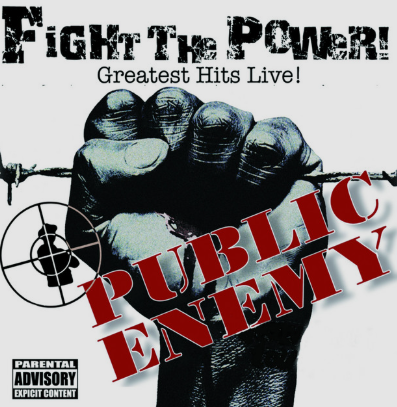
Fight The Power : The Song That Drew The Line

Fight The Power Public Enemy

In 1989, filmmaker Spike Lee was preparing Do the Right Thing, a film built around racial tension during a brutally hot day in Brooklyn, and he wanted a song capable of expressing the energy and conflict running through the story. Rather than choosing an existing track, Lee approached Public Enemy and asked the group to create something specifically for the film.

The result was Fight the Power.

What made the song powerful was not simply that it protested against an abstract idea called “the establishment.” Chuck D understood that power often survives through culture as much as through formal institutions, because societies constantly tell stories about which people deserve admiration, which versions of history deserve remembering and which cultural figures are elevated into symbols that everyone is expected to respect. Fight the Power challenged some of those symbols directly, most famously by questioning the heroic status accorded to figures such as Elvis Presley and John Wayne.

That confrontation was inevitably provocative, but reducing the song to its capacity to offend misses the more interesting question underneath it. Chuck was asking who gets to construct a culture’s heroes and whether people who have experienced that culture differently are required to inherit the same heroes without examination. A national icon can mean one thing to one group of people and something very different to another, particularly when the history surrounding that icon has been simplified by nostalgia.

This is precisely where the NoRuleBook idea becomes more demanding than simply applauding rebellion. An inherited cultural judgement deserves to be questioned, but questioning it does not automatically validate whatever judgement replaces it. If one generation has uncritically elevated someone into a hero, the answer is not necessarily for the next generation to uncritically turn that person into a villain. The better response is to reopen the question, examine the history and decide which parts of the inherited story survive closer inspection.

Fight the Power succeeded partly because it forced that reopening into popular culture. The song became inseparable from Do the Right Thing, but it quickly travelled beyond the film, eventually becoming one of Public Enemy’s defining recordings. What had begun as music written for a particular cinematic moment became a much broader expression of resistance precisely because listeners could attach its central challenge to their own experiences of institutions, history and authority.

Public Enemy had therefore crossed an important boundary. The group was no longer simply demonstrating that politically confrontational hip-hop could find a commercial audience; it was showing that popular music itself could become a place where competing versions of history and national identity were argued over in public.

But there was a danger hidden inside that achievement.

If you build your identity around questioning what other people accept, it becomes very easy to confuse the courage to challenge an idea with evidence that your challenge is correct. Public Enemy was about to encounter that distinction in a way that makes the group’s story more complicated – but also considerably more valuable to NoRuleBook.

BEING CONTROVERSIAL DOESN'T MAKE YOU RIGHT

In 1989, at roughly the same time that Fight the Power was pushing Public Enemy further into the cultural mainstream, the group became engulfed in a controversy that exposed the other side of speaking without seeking permission. Professor Griff, who was closely associated with the S1Ws and had become one of Public Enemy’s most visible members, made antisemitic remarks during an interview, creating a crisis that quickly spread far beyond the group itself.

For Chuck D, the situation was particularly difficult because Public Enemy had built much of its credibility around challenging prejudice, distorted history and the way powerful narratives could reduce entire groups of people to stereotypes. When prejudice appeared within the group’s own orbit, it could not simply be defended as another example of fearless speech without undermining the principles Public Enemy claimed to represent.

What followed was messy rather than heroic. Chuck initially announced Griff’s dismissal, subsequently reconsidered aspects of the decision, and at one stage announced that Public Enemy was breaking up before the group ultimately continued without Griff in his former role. The confusion is worth retaining in the story because real independent thinking rarely produces the clean moral sequence that hindsight encourages us to write. People make decisions under pressure, defend friends, reconsider positions, respond badly, correct themselves and sometimes take longer than they should to recognise that challenging one form of prejudice does not grant immunity from reproducing another.

The episode also exposes a weakness in one of the easiest stories to tell about rule breakers. We often celebrate the person willing to say what everyone else is supposedly afraid to say, as though social disapproval itself were evidence that the speaker has discovered an uncomfortable truth. Yet history is full of unpopular ideas that were unpopular because they were wrong, destructive or based on prejudice, just as it is full of unpopular ideas that eventually proved insightful.

Controversy therefore tells us remarkably little about truth.

What matters is what happens after the accepted position has been challenged: whether the alternative claim survives evidence, whether its assumptions can withstand examination and whether the person making it is willing to apply the same scrutiny to their own side that they demand from everyone else.

Questioning the accepted narrative does not make you right. It makes the accepted narrative a question again. What you believe after that still requires judgement.

That distinction doesn’t weaken the NoRuleBook case for questioning convention. It strengthens it, because the purpose was never to replace obedience with automatic opposition. The objective is to think for yourself—and that includes being willing to discover that the person who needs challenging is sometimes you.

WHO GETS TO DECIDE WHAT MUSIC IS FOR?

Public Enemy bandmembers image

The controversy surrounding Public Enemy makes it tempting to judge the group’s importance according to whether we agree with everything its members said, but that would miss the larger question. Long before anyone could argue about particular lyrics or statements, Public Enemy had already challenged a more fundamental assumption about the role musicians were expected to play: Who gets to decide what music is actually for?

There is an obvious commercial answer. Record companies invest money because they hope audiences will buy or stream music, attend concerts and remain interested in the artists they promote, while radio stations, promoters and other parts of the industry make similar calculations about what their audiences want. None of this is sinister; without some relationship between creativity and an audience willing to support it, a commercial music industry could not exist. The problem begins when the market’s understandable preference for what has worked before quietly becomes a creative boundary around what artists believe they are allowed to attempt.

Public Enemy’s significance was not that it discovered politics could be put into music. Protest music existed long before hip-hop, and socially conscious rap existed before Public Enemy. What the group demonstrated, on an unusually large cultural stage, was that hip-hop could carry dense political arguments and historical references while remaining unmistakably popular music. The audience did not necessarily have to choose between entertainment and argument, because the same record could provide both.

That seems obvious now partly because the boundary Public Enemy helped challenge has become much less visible. Once audiences have become accustomed to musicians speaking about politics, race, inequality, identity or social conflict, it is easy to forget that every expansion of an artistic form begins with somebody discovering that the accepted definition of the form was narrower than it needed to be.

The same principle applies far beyond music. Industries create categories because categories are useful: they help businesses understand products, audiences understand what they are buying and creators understand the environment in which they are working. Yet categories can gradually acquire an authority they were never intended to possess, until a description of what usually happens becomes an instruction about what must happen.

That is where the interesting opportunity often appears. Instead of asking how to succeed within the established definition of a category, somebody asks whether the definition itself is unnecessarily restrictive. A restaurant does not have to look like the restaurants that came before it, a university does not have to deliver education exactly as universities traditionally have, a media company does not have to resemble a newspaper or television network, and a musician does not have to accept that entertainment and serious social commentary occupy separate worlds.

Public Enemy did not escape the commercial system by making that choice. The group still signed to a major independent label, sold records, made videos, toured and depended on the same audience attention every commercial artist needs. This is important because challenging an unwritten rule does not necessarily mean abandoning the system in which the rule exists. Sometimes the more interesting achievement is demonstrating, from inside the system, that the boundaries people assumed were necessary were actually much wider than they thought.

Public Enemy therefore did something more significant than refuse to ‘stay in its lane.’ It helped demonstrate that the lane itself had been drawn by convention rather than necessity.

Sometimes the opportunity isn't finding a better way to compete within the category. It's discovering that the category has been defined too narrowly.

THE DIFFERENCE BETWEEN A VOICE AND THE TRUTH

There is another reason Public Enemy’s story remains relevant decades after the records that made the group famous. The problem Chuck D identified when he described rap as an alternative channel of communication has changed dramatically, because today almost anyone with a smartphone can create the kind of direct relationship with an audience that once required access to a radio station, record label, newspaper or television network.

In one sense, this is exactly the world that earlier independent communicators were pushing toward. Artists no longer have to wait for a record executive to approve every release, writers can publish without convincing an editor that an audience exists, filmmakers can distribute work without securing a cinema screen, and people whose experiences are poorly represented by established media can speak directly to millions of others. The gatekeepers have not disappeared, but their control over who is allowed to speak has weakened enormously.

Yet removing one problem has exposed another. When access to the microphone was scarce, much of the debate concerned who was being denied the opportunity to speak; now that billions of people effectively possess microphones, the more difficult problem is deciding whom we should believe.

Algorithms can amplify a claim before anyone has established whether it is true, communities can form around explanations that reinforce what their members already believe, and an outsider can appear more trustworthy precisely because they are attacking an institution people have learned to distrust. Under those conditions, the language of rule-breaking can itself become dangerous if we begin assuming that the person challenging authority deserves our confidence merely because they are challenging authority.

The lesson from Public Enemy should therefore not be ‘don’t believe the establishment.’ That would merely replace one automatic rule with another. Nor should it be ‘believe the outsider,’ because outsiders are capable of distortion, prejudice and error just as institutions are. A more useful principle is to refuse to grant either side immunity from examination.

That distinction takes us directly back to what we have already explored elsewhere in NoRuleBook through the difference between contrarian and critical thinking. Contrarian thinking can reopen a question that consensus has prematurely closed, but critical thinking still has to examine the alternative answer. Public Enemy’s willingness to challenge established narratives demonstrates the value of the first; some of the controversies surrounding the group demonstrate why we still need the second.

There is enormous power in finding your own voice, particularly when somebody else has been telling your story for you. But having a voice and possessing the truth are not the same thing.

WHAT PUBLIC ENEMY ACTUALLY CHALLENGED

It would be easy to finish the story by turning Chuck D into the familiar NoRuleBook archetype of the fearless individual who ignored everyone, broke the rules and succeeded. The problem is that this would flatten a much more interesting story into exactly the kind of mythology NoRuleBook is supposed to question.

Public Enemy did not succeed because Chuck D refused to listen to anybody. The group depended upon collaboration, from the contrasting presence of Flavor Flav to the production work that created its unmistakable sound, and its breakthrough depended in part on Rick Rubin hearing potential where others were less certain. Nor did Public Enemy demonstrate that commercial considerations were irrelevant, because without distribution, promotion and an audience, its message could never have travelled as far as it did.

What the group challenged was the assumption that accepting those commercial realities required accepting a predetermined creative role.

Chuck D could participate in the music business without allowing the music business to decide the full range of subjects he was entitled to address. Public Enemy could make records people wanted to buy without treating popularity as an obligation to become harmless, and it could use the machinery of commercial culture to question parts of the culture that machinery normally sold.

There is a useful NoRuleBook distinction in that. We often imagine challenging convention as a choice between remaining obediently inside a system or dramatically walking away from it, when many of the most consequential changes happen somewhere between those extremes. People learn how a system works, identify the assumptions that have been mistaken for necessities and then use the system’s own tools to demonstrate that another approach is possible.

Public Enemy used records, radio, music videos, concerts and eventually the enormous reach of popular culture to argue about who was represented, whose history mattered and which cultural narratives deserved another look. Not every argument was right, not every controversy was handled well and not every statement deserves retrospective defence.

It doesn’t need to.

The more enduring achievement was showing that commercial success did not require surrendering the right to decide what your own work was for.

THE NORULEBOOK TRUTH

The most useful lesson in Public Enemy’s story is therefore not that we should admire anyone willing to provoke an audience, because provocation without judgement can be little more than noise. Nor is it that artists should become political, because choosing not to make political art is every bit as legitimate as choosing to make it.

The lesson is that roles often arrive with boundaries nobody formally agreed to.

A musician is supposed to entertain. A businessperson is supposed to maximise growth. A successful employee is supposed to keep climbing. An older person is supposed to become more cautious. A young person is supposed to wait until they have experience. None of these expectations is necessarily wrong, but each becomes an unwritten rule when we stop recognising it as one possible description of a role and begin treating it as the definition of the role itself.

Public Enemy questioned one of those definitions and helped expand what mainstream hip-hop could contain. Yet the group’s more difficult history also reminds us that questioning a boundary is only the beginning of the intellectual responsibility that follows.

Breaking the accepted narrative doesn't make your alternative true. But no accepted narrative should be protected from examination simply because challenging it makes people uncomfortable.

That is a much harder principle than simply telling people to fight the power, because sometimes the power that deserves questioning belongs to an institution, sometimes it belongs to a cultural consensus, and sometimes it belongs to the certainty of the person doing the questioning.

Independent thinking requires being prepared to examine all three.

Take The Next Step

Public Enemy’s story gives us a useful question to carry beyond music: Where in your own life have you accepted somebody else’s definition of what your role is supposed to contain?

Perhaps it is a profession in which people are expected to follow a particular career path, a business that is supposed to operate according to conventions nobody seriously examines anymore, or a stage of life that comes with assumptions about what someone your age should now want, value or stop attempting. Those expectations may exist for good reasons, and some may still deserve to be followed, but the important distinction is whether you have examined them or simply inherited them.

Choose one role you currently occupy – employee, business owner, parent, partner, student, retiree, creator or anything else that matters to you – and think about the boundaries that seem to come with it. Instead of immediately trying to rebel against those boundaries, ask what purpose they serve, whether that purpose still matters and, most importantly, whether the boundary is genuinely necessary to the role or merely something people have become accustomed to associating with it.

Public Enemy did not prove that the opposite of convention is automatically better. The group’s own history provides plenty of reasons to reject such a simplistic conclusion. What it demonstrated was that a category can be much larger than the people inside it have been taught to believe, and sometimes the only way to discover that is for somebody to test the edge.

The same principle applies when you encounter an accepted narrative. Questioning it is valuable because it reopens the possibility that everyone may be working from an assumption rather than a fact, but the responsibility does not end there. Once the question has been reopened, examine the evidence, apply the same scepticism to the alternative explanation and then decide what deserves your belief. That is the difference between independent thinking and opposition for its own sake.

Don't automatically stay in your lane. But before you think about leaving it, make sure you understand why the lane was there - and where you're actually trying to go.

If you want to explore more stories and ideas about identifying the unwritten rules shaping your decisions—and deciding which ones still deserve to be followed—the NoRuleBook collection takes these ideas further.

Click the NoRuleBook image below to explore the collection.

The NoRuleBook Collection

Facebook

Related Articles

Leave a Comment