
NoRule Book Banner

WOODSTOCK 1969: When A Generation Stopped Waiting For Permission

by Robbie Dellow
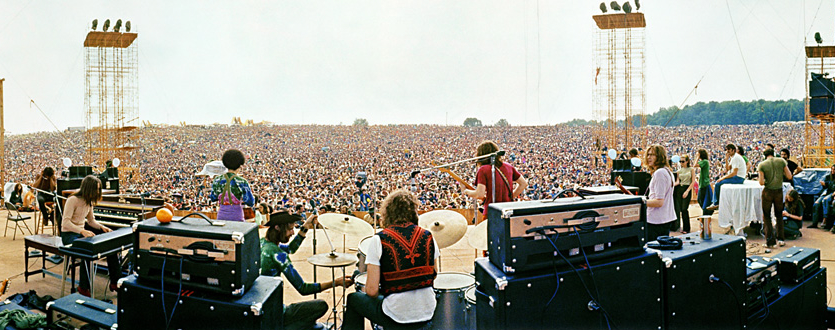
Woodstock 1969 image

By the time Richie Havens walked onto the stage at Woodstock on the afternoon of August 15, 1969, it was already becoming clear that the festival unfolding on Max Yasgur’s dairy farm in Bethel, New York, was going to bear little resemblance to the event its organisers had imagined. The roads surrounding the site were becoming overwhelmed by an extraordinary influx of people, performers and equipment were struggling to get through, and Havens, who had not been scheduled to open the festival, was asked to go on because several of the musicians due to perform before him were still caught in the traffic.
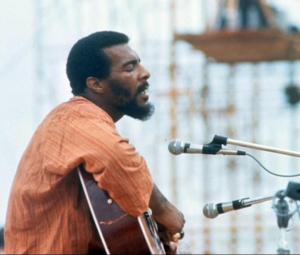
Richie Havens performing “Freedom”Havens continued playing while the organisers tried to get the programme back on track, extending his set until he had exhausted much of the material he had prepared. Searching for something more to give the crowd, he began improvising around an old spiritual, repeatedly singing a word that would become inseparable from the mythology that later grew around Woodstock: “Freedom.”

There is an almost accidental symbolism in that moment. One of the twentieth century’s most enduring symbols of personal and cultural freedom began with a performer improvising because the carefully prepared schedule was already failing, and over the next three days that pattern would repeat on a scale nobody involved had anticipated.

Hundreds of thousands of people converged on a site that was simply not equipped to accommodate a gathering of that size. Roads became so gridlocked that many people abandoned their vehicles and continued towards the farm on foot, while unfinished fencing and overwhelmed ticketing arrangements eventually made any realistic attempt to control admission impossible. Food supplies, toilets and medical facilities came under enormous pressure, rain transformed much of the farmland into mud, and the promoters found themselves trying to manage an event that had grown far beyond the infrastructure they had created for it.

Judged purely as an exercise in event management, much of Woodstock should have ended badly. The conditions were uncomfortable, the logistical problems were serious and the festival was certainly not the perfectly functioning alternative society that later nostalgia sometimes made it appear to be. Yet what happened among the enormous crowd was more complicated than either the romantic legend or the organisational disaster suggests.

Despite the breakdown of many of the systems that were supposed to keep the festival functioning, widespread panic and violence did not take their place. Festivalgoers shared what they had, volunteers and local residents helped provide food and assistance, medical workers treated people under extraordinarily difficult conditions, and strangers who had arrived expecting little more than a weekend of music found themselves having to cooperate with one another simply because the formal organisation around them could no longer do everything for them.

That is where the Woodstock story becomes particularly relevant to NoRuleBook, because the lesson is not that rules, planning or organisation are unnecessary. Woodstock demonstrated very clearly what can happen when those things are inadequate. What makes the weekend remarkable is that the failure of formal systems did not automatically produce the failure of human cooperation.

For three chaotic days in August 1969, an enormous gathering of mostly young people found itself living inside circumstances nobody had properly designed, and rather than proving that freedom required the absence of responsibility, Woodstock offered a glimpse of something much more interesting: what people might do when responsibility could no longer be left entirely to the systems around them.

That story had begun long before anyone arrived at Max Yasgur’s farm, because the generation gathering there had already spent much of the decade questioning whether the institutions, expectations and definitions of a good life inherited from their parents still deserved the authority they had once been given.
A GENERATION ALREADY QUESTIONING THE RULES

The young people who made their way towards Max Yasgur’s farm in August 1969 had not suddenly decided that weekend to question the world they had inherited. Woodstock arrived near the end of a decade in which many of the assumptions that had shaped post-war American life were already being challenged, and for a generation coming of age amid the Vietnam War, the civil rights movement, changing attitudes towards sexuality and relationships, and growing distrust of political authority, the idea that established institutions automatically deserved obedience was becoming increasingly difficult to accept.

This did not mean that an entire generation shared the same politics or rejected everything their parents valued, and Woodstock itself was never a representative gathering of every young American. What it captured was something narrower but culturally significant: A highly visible section of that generation was becoming less willing to accept that there was only one respectable way to live, one reliable route through adulthood, or one set of institutions entitled to define what responsible behavior should look like.

Music had become one of the places where that shift could be expressed most openly. Rock, folk and psychedelic music were not simply providing a soundtrack to changing attitudes; concerts, festivals and the communities surrounding them were creating spaces in which different ideas about clothing, relationships, authority and personal freedom could be experienced rather than merely discussed. By the time Woodstock was announced as ‘Three Days of Peace and Music,’ the counterculture was already well established, which is why it would be misleading to suggest that the festival somehow created the movement associated with it. What Woodstock did was give that movement an extraordinary physical scale.

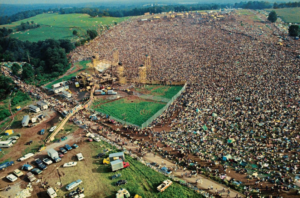
Instead of reading about a changing generation, people could suddenly see hundreds of thousands of its members gathered in one place. The enormous aerial photographs of the crowd stretching across Yasgur’s farm made visible something that had previously been easier for mainstream America to regard as a collection of student protests, unconventional lifestyles, strange clothes and unfamiliar music. Whatever anyone thought of the counterculture itself, it was becoming harder to dismiss as a fringe phenomenon that would simply disappear when its participants grew up.

Yet the most revealing part of Woodstock would emerge not from what the crowd believed, what they wore or which musicians they had come to hear, but from what happened when the practical structures surrounding them began to fail. It is one thing to talk about freedom when food is available, roads are open, toilets work and somebody else is responsible for maintaining order; it is quite another to discover what freedom looks like when those systems can no longer provide what everyone expected from them.

That was the situation Woodstock was rapidly becoming, and it would expose a distinction that remains relevant well beyond the counterculture of the 1960s: 

Removing external control does not remove responsibility. It simply changes where responsibility has to come from.

WHEN THE PLAN STOPPED WORKING

As Woodstock filled far beyond what its infrastructure could comfortably support, the organisers were forced to abandon parts of the plan almost as quickly as they had created them. Roads around Bethel became gridlocked, many festivalgoers abandoned their cars and walked the remaining distance, ticket collection became increasingly impractical, and food, sanitation and medical facilities were placed under enormous pressure. When rain arrived and turned much of the farm into mud, an already difficult logistical situation became harder still.

What happened next is where the Woodstock story becomes more interesting than the familiar image of hundreds of thousands of young people simply living without rules. Formal organization did not disappear: Festival staff kept working, medical teams treated people, the Hog Farm collective helped provide food and support, and local residents contributed supplies when shortages became serious. What changed was that these organized efforts were no longer enough on their own, so the festival increasingly depended upon the willingness of ordinary people to cooperate with one another.

Festivalgoers shared food and water, helped strangers through difficult conditions and generally showed remarkable restraint despite overcrowding and discomfort. Woodstock was certainly not a perfectly peaceful alternative society—there were medical emergencies, sanitation problems, drug-related incidents and fatalities—but neither did the failure of much of the original plan produce the widespread violence or panic that such conditions might easily have encouraged.

That is the part of Woodstock worth remembering. It did not prove that planning, organisation or rules were unnecessary; the problems caused by inadequate infrastructure demonstrated precisely why they matter. What it showed was that formal control and human cooperation are not the same thing, because when the systems designed to manage the festival reached their limits, much of the remaining order came from people accepting responsibility for how their own behaviour affected everyone around them.

This was freedom in a more demanding sense than simply being able to do whatever you wanted. Among hundreds of thousands of people sharing limited space and resources, freedom could continue only if enough individuals exercised restraint, tolerated inconvenience and recognised some obligation towards strangers.

And in doing so, Woodstock gave physical form to an idea that had been developing throughout the decade: perhaps responsible behaviour did not always have to begin with someone in authority telling people how to behave.

Woodstock didn't prove that people didn't need rules. It showed that responsibility didn't always have to be imposed from above.

WHEN A WEEKEND BECAME A SYMBOL

Woodstock aerial imageWoodstock has been remembered for more than fifty years because it became much bigger than a music festival. The performances were extraordinary, and the photographs of endless crowds sitting in fields and standing in the mud became iconic, but those images survived because they seemed to capture something that was already changing inside society.

The festival did not create the counterculture. Young people had already been questioning the Vietnam War, challenging racial segregation, experimenting with different ways of living, and becoming increasingly skeptical of institutions that had long expected unquestioned obedience. Woodstock simply gathered hundreds of thousands of those people into one place and made that cultural shift impossible to ignore.

For many watching from the outside, the festival looked like disorder. For many inside it, it felt like possibility. People saw strangers sharing food, sleeping beside one another, listening to music together and creating temporary communities without caring about job titles, income, status or background. For three days, a different set of values seemed more important than many of the social hierarchies that shaped everyday life.

That does not mean Woodstock was a blueprint for society. Three days on a farm cannot answer the complicated questions of how cities function, governments operate or economies work. But symbols are powerful precisely because they simplify something much larger into a moment people can recognize.

Woodstock became a symbol of a generation saying, “We don’t want to inherit every rule we’ve been given.”

Every generation inherits a rulebook. Some generations become remembered because they decide to rewrite parts of it.

That is why Woodstock still resonates today. It reminds us that cultural change rarely begins with a law being rewritten or an institution granting permission. It usually begins when enough people quietly begin living differently, and only afterwards does the rest of society realise that the old story is beginning to lose its hold.

THE NORULEBOOK TRUTH

It is easy to remember Woodstock as a moment when hundreds of thousands of young people rejected the rules of the society around them, but that interpretation makes the weekend simpler than it really was. The people who gathered at Yasgur’s farm did not demonstrate that society functions better without structure, nor did three days of relative cooperation prove that an entire country could organize itself in the same way. What Woodstock offered was something more modest, but ultimately more useful: A reminder that the rules and institutions surrounding us are not the only things capable of shaping how we behave.

Rules can provide order, infrastructure can make freedom possible, and institutions can solve problems that individuals cannot solve alone. Woodstock itself showed the consequences when those systems were inadequate. Yet the weekend also demonstrated that responsibility can come from somewhere other than authority, because when the formal organisation of the festival could no longer provide everything the crowd needed, thousands of people still made choices that helped rather than harmed those around them.

That distinction matters to NoRuleBook because questioning rules should never mean rejecting responsibility. The purpose is to understand which structures genuinely help people live and work together, which exist because circumstances require them, and which have acquired authority simply because nobody has stopped to ask whether they still deserve it. Freedom becomes meaningful not when every external rule disappears, but when people become capable of making conscious choices without needing every choice to be made for them.

Woodstock lasted only a few days, and the world outside Max Yasgur’s farm did not suddenly abandon its institutions when everyone went home. What remained was the image of a generation that had become increasingly willing to question inherited assumptions about authority, conformity and the kind of life it was expected to accept.

The point of questioning the rules isn't to live without responsibility. It's to decide which responsibilities you are willing to make your own.

Take The Next Step

You do not need to recreate Woodstock, reject every institution or deliberately introduce chaos into your life to take something useful from what happened in that field in 1969. The more relevant question is whether some of the structures surrounding your own life have become so familiar that you no longer distinguish between those that genuinely serve a purpose and those you continue following simply because they were already there.

That might mean questioning an accepted career path, a definition of success inherited from someone else, or an expectation about how your time should be spent. The objective is not to remove structure simply because structure exists, but to become more conscious of the difference between a rule that helps you live the life you want and one that quietly decides what that life should look like.

Woodstock became memorable because, for one extraordinary weekend, a generation already questioning many of society’s assumptions became visible on an enormous scale. The lasting NoRuleBook lesson is not that everyone should opt out.

It is that following a rule and consciously choosing it are not the same thing.

Click the NoRuleBook image below to explore the collection.

The NoRuleBook Collection

Facebook

Related Articles

Leave a Comment