

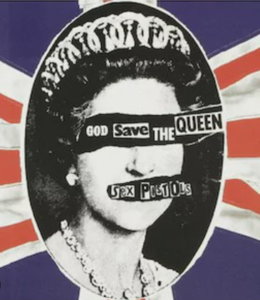
 The Sex Pistols’ God Save the Queen provides one of the clearest examples of what can happen when a song deliberately confronts an institution that is normally treated with deference. Released in 1977 during the year of Queen Elizabeth II’s Silver Jubilee, the song took the title of Britain’s national anthem and turned it into a provocative attack on the monarchy, the political establishment and what the band saw as a society offering little future to many of its young people.
The timing made the confrontation impossible to separate from the national celebrations taking place around it. While Britain was marking 25 years of Elizabeth II’s reign with ceremonies and displays of patriotism, the Sex Pistols were presenting a very different picture of the country, one filled with frustration, alienation and open contempt for institutions that others were celebrating.
The reaction demonstrated why music can become so powerful when it challenges accepted boundaries. The BBC refused to play the record, and other broadcasters and retailers also restricted it, yet attempts to keep the song away from mainstream audiences only added to its notoriety. What might otherwise have remained an angry punk song became part of a much larger argument about authority, censorship, patriotism and whether institutions such as the monarchy should be protected from disrespect simply because respect had traditionally been expected.
The Sex Pistols were not quietly asking listeners to reconsider an unwritten rule. They were deliberately smashing into one: the expectation that certain national institutions should be treated with reverence rather than ridicule.
Whether listeners agreed with them was almost beside the point. By provoking outrage strong enough to get the song banned from major broadcasters, they demonstrated one of music’s most disruptive qualities: an idea does not have to be welcomed by the establishment to become impossible for the establishment to ignore.
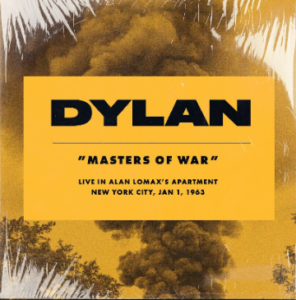 When Bob Dylan released Masters of War in 1963, the Cold War had created an enormous military-industrial system in the United States, the nuclear arms race was accelerating and memories of the Cuban Missile Crisis were still frighteningly fresh. Rather than writing about soldiers or the experience of combat, Dylan aimed his anger at the people behind the machinery of war: those who built weapons, influenced decisions and benefited from conflicts while remaining removed from their consequences.
That distinction gives the song much of its power. Dylan was not presenting war as an unavoidable tragedy that simply happens between nations; he was asking listeners to look beyond the battlefield and consider the interests, institutions and individuals involved in making war possible. In doing so, he challenged the assumption that ordinary citizens should simply trust those in authority to decide when military force is necessary and whose interests are ultimately being served.
The song is unusually direct for Dylan, with little attempt to soften the accusation or make it comfortable for the people being targeted. Its importance to this article, however, is not whether every accusation contained within it was justified. What matters is that Dylan used a popular song to ask questions about power that governments and military institutions would generally prefer citizens to leave to them.
That is one of the recurring strengths of protest music. It can take decisions made in distant government offices and bring them into ordinary people’s lives, turning something presented as official policy into something listeners feel entitled to question for themselves.
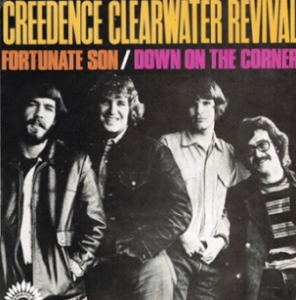 Six years later, Creedence Clearwater Revival approached war from a different direction. Fortunate Son, written by John Fogerty and released in 1969 as the Vietnam War divided American society, focused not simply on the war itself but on the uncomfortable question of who was expected to bear its consequences.
The United States was still using military conscription, but the burden of service was not experienced equally. Deferments and exemptions meant that education, circumstances and connections could affect someone’s likelihood of being sent to fight, contributing to a growing perception that young men from ordinary and working-class backgrounds were paying a disproportionate price for decisions made by people far removed from the battlefield.
Fogerty channelled that resentment into a song about privilege. The target was the contradiction between powerful people publicly embracing patriotism while some of their own families appeared better positioned to avoid the sacrifices demanded of everyone else. Rather than attacking patriotism itself, the song questioned a version of patriotism in which enthusiasm for national sacrifice becomes much easier when somebody else is expected to make it.
That distinction has helped Fortunate Son survive far beyond the particular political circumstances that inspired it. The song asks a question that applies whenever rules or obligations appear universal on paper but operate very differently depending on wealth, status or connections: are the people making and defending the rules actually living under the same rules as everyone else?
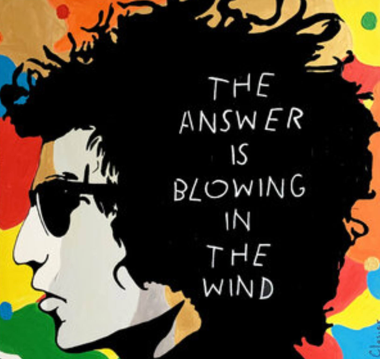
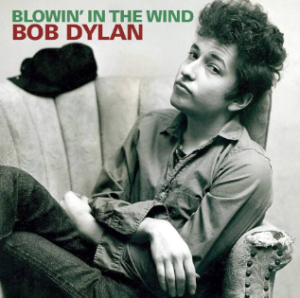 Some protest songs confront their targets directly, but Blowin’ in the Wind demonstrates that music can challenge accepted thinking without telling the listener exactly what to believe. Rather than delivering a political argument, Bob Dylan built the song around a series of questions about war, freedom, suffering and how long people can continue looking away from injustice before they are forced to acknowledge it.
That approach made the song unusually powerful because the questions were broad enough to travel beyond any single political issue. Released in 1963 during the American civil rights movement and a period of growing anxiety about war and nuclear conflict, Blowin’ in the Wind became closely associated with movements demanding social change, yet Dylan resisted providing listeners with a neat explanation of what every line was supposed to mean.
The repeated idea that the answer is ‘blowin’ in the wind’ is part of what gives the song its enduring ambiguity. It can suggest that the answers are already around us if we are willing to recognize them, but it can also convey something more elusive: That humanity keeps asking the same questions while failing to resolve problems it has understood for generations.
For NoRuleBook, that ambiguity is more interesting than trying to extract a specific political instruction from the song. Dylan wasn’t simply telling his audience which rule to break. He was using questions to interrupt complacency, inviting listeners to reconsider things they may have learned to accept as inevitable.
Sometimes changing minds begins not by supplying a better answer, but by making it harder for people to avoid the question.
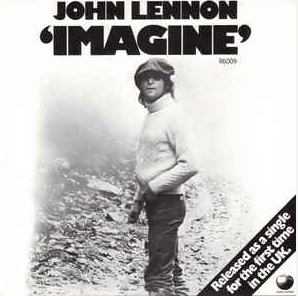 John Lennon took a different approach with Imagine. Rather than confronting one government, conflict or injustice, he asked listeners to conduct a thought experiment: imagine removing some of the structures that human societies normally treat as permanent, including national borders, organised religion and material possessions, and then consider whether a more peaceful world might become possible.
What makes the song relevant to NoRuleBook is not that Lennon’s imagined world should be accepted as a practical blueprint. Some of the institutions he asks listeners to imagine away serve purposes that cannot simply be dismissed, and reasonable people can disagree strongly about whether removing them would produce anything resembling the world Lennon envisioned.
The power of the song lies instead in the act of questioning itself. Countries, religions, possessions and other social structures can feel so permanent that we rarely separate their existence from the assumption that they must exist in their current form. Lennon temporarily removes those assumptions and asks the listener to consider what the world might look like without them.
That is a surprisingly radical thing for a popular song to do. Instead of beginning with the existing world and asking how it might be improved, Imagine starts by removing some of its most fundamental organising ideas and then asks the audience to rebuild the picture in their own minds.
The listener doesn’t have to agree with Lennon’s answers for the exercise to work. Once you have imagined that something could be different, you have already taken the first step toward questioning whether its current form is inevitable.
This is also why Imagine has survived despite repeated criticism of its idealism. Its influence does not depend on providing a workable political programme; it comes from making millions of people briefly suspend assumptions they normally take for granted and consider an alternative.
That is something music can do particularly well. A complicated argument about nationalism, religion, materialism or social organisation might immediately cause people to retreat into established positions, while a song can invite them into the same territory through imagination before they have decided whether they agree.
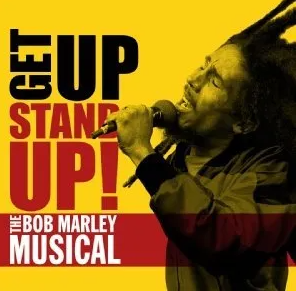 Where Blowin’ in the Wind challenges listeners through questions and Imagine asks them to reconsider the structures around them, Bob Marley’s Get Up, Stand Up is far less interested in contemplation. Its message is about action, particularly the danger of accepting injustice because you have been taught that your circumstances are simply your fate.
Marley co-wrote the song with Peter Tosh after travelling in Haiti, where the poverty they witnessed helped shape its message. But the song reaches beyond that experience, challenging both political oppression and the idea that people should endure suffering in the present while waiting for justice or salvation somewhere beyond this life.
That makes Get Up, Stand Up particularly relevant to the idea of unwritten rules. Oppression does not survive only because somebody has the power to impose it; it can also become stronger when those living under a system begin to believe that resistance is pointless, dangerous or somehow not their place. Once people internalise that expectation, obedience no longer needs to be enforced at every moment because part of the rule has moved inside the person expected to follow it.
Marley and Tosh challenged that resignation by turning resistance into something audiences could sing together. The song does not offer a detailed programme for changing society, but that was never its purpose. Its power lies in reminding listeners that accepting a situation and believing they have no right to challenge it are themselves choices that deserve examination.
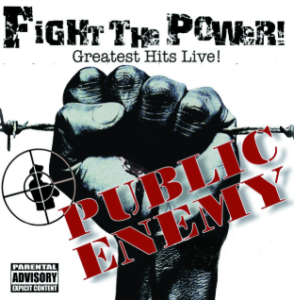 By the time Public Enemy released Fight the Power in 1989, hip-hop had become an increasingly important platform for expressing experiences and frustrations that were often poorly represented in mainstream American culture. Written for Spike Lee’s film Do the Right Thing, the song confronted racial inequality, cultural representation and institutions that Public Enemy believed had marginalised Black Americans while presenting their own values and historical narratives as normal.
What made Fight the Power particularly potent was the combination of message and audience. Public Enemy were not delivering an academic discussion about structural inequality; they were communicating through a form of music that had become deeply connected to the identity and experiences of many young Black Americans. The result was not simply a song describing dissatisfaction, but one that encouraged listeners to recognise power structures around them and question whose interests those structures served.
The song also challenged something subtler: the idea that the cultural figures, institutions and historical narratives celebrated by mainstream society should automatically command everybody’s admiration. Public Enemy were willing to attack established cultural icons and question who gets elevated as a hero, which made the song controversial but also demonstrated the larger principle running through this article.
Rules are not created only through governments and laws. Culture creates its own hierarchy of what should be respected, what should be remembered and which voices should be treated as authoritative. Music can challenge those rules because musicians can speak directly to communities whose experiences may not fit comfortably inside the dominant story.
Fight the Power became closely associated with that challenge, and its title eventually became larger than the song itself: a compact expression of resistance that could be repeated, displayed and carried into situations far removed from the recording studio.
This is one of the ways a song can acquire power beyond entertainment. It gives people language for something they may already feel but have struggled to express.
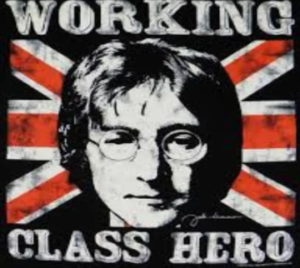 Of all the songs in this article, Working Class Hero may connect most directly with the NoRuleBook philosophy because Lennon was not simply attacking one government or one obvious injustice. He was examining the quieter process through which people can be shaped by expectations long before they realise there is anything to question.
The song follows an individual through family, school, work and the pressures of social advancement, portraying a system in which people learn what behaviour is rewarded, what ambitions are considered respectable and what they must become if they want to succeed. Lennon’s target was not merely poverty or class inequality, but the way institutions and social expectations can gradually mould people into roles that already exist for them.
That idea is considerably more uncomfortable than a simple argument about rich and poor because it raises the possibility that conformity does not always feel like conformity. A person can spend years working toward education, career advancement, status and material success while believing every decision was independently chosen, even though the available definition of a successful life was largely established before they began pursuing it.
This doesn’t mean schools, careers or ambition are inherently oppressive, nor does Lennon’s song provide a balanced analysis of the institutions it attacks. It is deliberately confrontational. What makes it valuable in this context is the question underneath the anger: how much of the person we become is consciously chosen, and how much is shaped by systems and expectations we rarely think to examine?
That question reaches well beyond the working-class Britain Lennon knew. It applies whenever a society provides a ready-made route through life and rewards people for following it without necessarily encouraging them to ask whether the destination is one they personally value.
In that sense, Working Class Hero is not merely a protest song about class. It is a song about the machinery of conformity.
-
-20%
NoRuleBook
Original price was: $9.95.$7.95Current price is: $7.95. -
-50%

No Rules Start-Up
Original price was: $19.95.$9.95Current price is: $9.95. -
-35%
NoRuleBook Bundle
Original price was: $22.90.$14.95Current price is: $14.95.

 Submitted 1.0
 Manual 5.0