

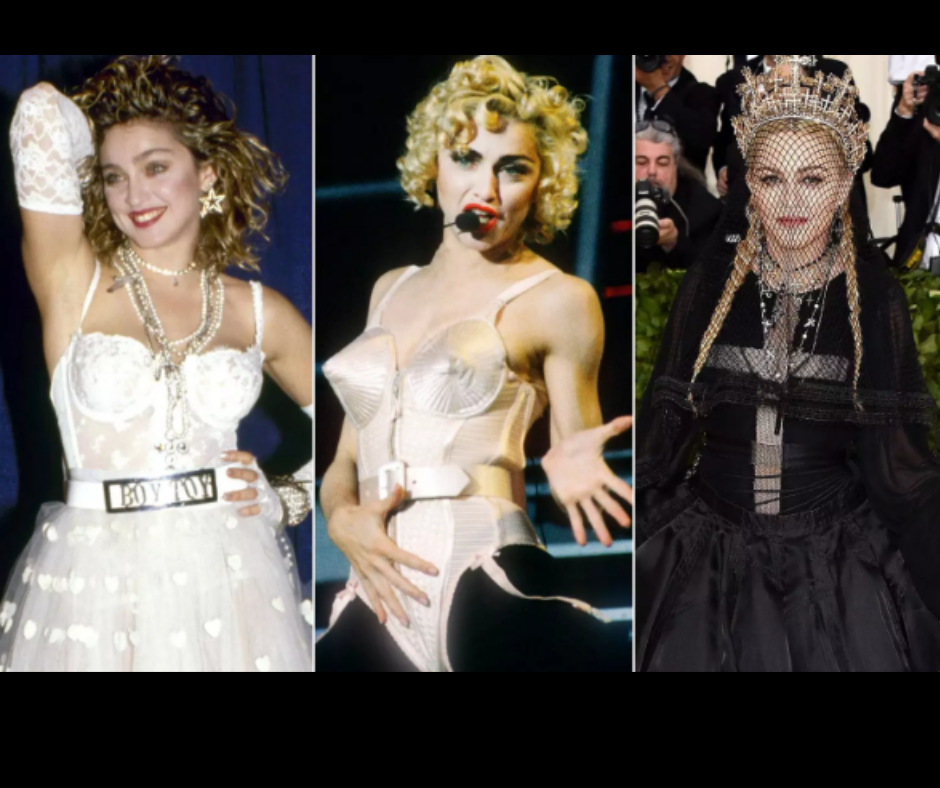
In September 1984, Madonna walked onto the stage at the first MTV Video Music Awards dressed in a white wedding gown to perform Like a Virgin. She was still relatively early in her career, but instead of behaving like an emerging pop star carefully protecting her reputation, she ended the performance rolling around the stage, turning the imagery of the traditional bride into something provocative, sexual and impossible to ignore.
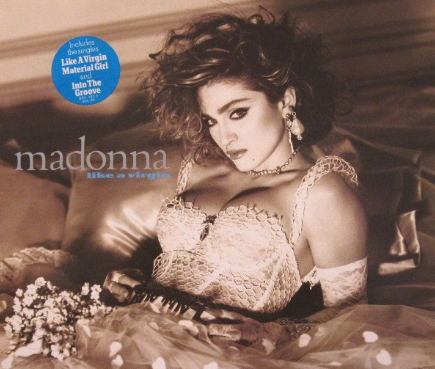 The reaction was enormous. Some people loved it, others thought it was outrageous, and Madonna discovered something that would become central to the next four decades of her career: controversy did not necessarily have to be something a performer avoided. If you were prepared to withstand the criticism that came with challenging expectations, controversy could also make people pay attention.
That didn’t mean every provocation was calculated purely for publicity, nor that everything Madonna did was automatically groundbreaking simply because somebody objected to it. What made her unusual was her willingness to repeatedly test expectations about how a female pop star was supposed to behave, dress, express sexuality, control her image and, eventually, even grow older.
Most successful performers eventually discover what audiences want from them and become careful about disturbing it.
Madonna built much of her career by doing almost the opposite.
By the middle of the 1980s, Madonna was becoming one of the biggest stars in popular music, but greater success did not make her noticeably more cautious. If anything, it gave her a larger platform from which to test the boundaries surrounding female performers, particularly around sexuality, religion and the degree of control a woman could exercise over her own public image. She also began to understand that controversy, while potentially dangerous, did not necessarily have to be something a successful artist avoided. If she was prepared to withstand the criticism that followed, the attempts to censor or condemn her could sometimes draw even greater attention to what she was doing.
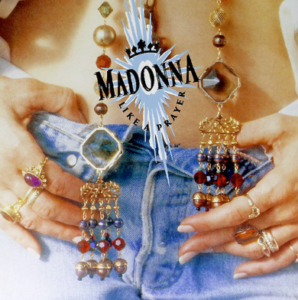 Few episodes demonstrated this more clearly than Like a Prayer. In 1989, Pepsi signed Madonna to a multimillion-dollar endorsement agreement and launched an ambitious television commercial built around the song, giving the company access to one of the world’s biggest pop stars while giving Madonna an enormous global platform. The relationship appeared commercially ideal until the separate music video for Like a Prayer was released and generated immediate controversy with religious imagery that included burning crosses and an interracial storyline involving a saint-like figure.
Religious groups condemned the video, the Vatican criticised it, and Pepsi found itself caught between the safe corporate image it wanted to project and an artist who had never promised to become safer simply because a major company was now associated with her. Pepsi eventually withdrew the advertising campaign, but Madonna did not retreat from the music video or reshape her work to protect the relationship. The episode revealed something that would become increasingly important throughout her career: commercial success had given her more to lose, but she was not prepared to allow the fear of losing it to determine everything she created.
The same pattern appeared again the following year when MTV refused to broadcast the video for Justify My Love because of its sexual content. For another artist, losing access to MTV at the height of the channel’s cultural influence could have been disastrous, yet Madonna and her record company found another route by releasing the uncensored video commercially. The attempt to prevent audiences from seeing it became part of the reason people wanted to see it, turning what might have been a serious restriction into another cultural event.
There was clearly commercial intelligence behind Madonna’s approach, and describing every controversy as an act of artistic courage would oversimplify what made her so effective. She understood publicity exceptionally well and recognised that provocation could attract attention just as effectively as it could express an idea. Yet this combination of artistic instinct and commercial awareness is precisely what makes her story more interesting, because Madonna wasn’t simply breaking rules and hoping for the best. She was learning which expectations had real consequences, which were largely cultural conventions, and which became considerably less powerful once she was prepared to accept the cost of challenging them.
Nowhere was that willingness to challenge expectations more visible than in Madonna’s use of sexuality. Female performers had long been expected to be attractive and desirable, but there was a contradiction built into that expectation: women could be presented as sexual, while often having far less freedom to determine for themselves how openly, aggressively or independently that sexuality should be expressed. Madonna pushed directly into that contradiction by insisting that the image surrounding her would be something she actively created rather than something passively constructed around her.
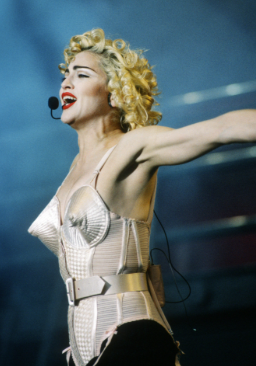 The 1990 Blond Ambition tour became one of the clearest expressions of that approach. Jean Paul Gaultier’s now-famous cone bra transformed an item traditionally hidden beneath women’s clothing into the centerpiece of a stage costume, while the performances around it deliberately mixed sexuality, religion, fashion and theatrical spectacle. The result generated enormous attention and considerable criticism, but it also reinforced Madonna’s position as an artist who wanted control not only over the music she recorded, but over the way her image, body and ideas were presented to the world.
Not everyone interpreted that control in the same way. Some saw Madonna’s sexual imagery as a challenge to restrictive expectations placed upon women, while others questioned whether packaging sexuality for a mass commercial audience could genuinely be considered liberating. That debate has followed much of her career, and there is no need for us to settle it in order to understand why her approach mattered. The more relevant point is that Madonna insisted upon making those decisions herself, even when record executives, broadcasters, religious organizations, critics or sections of her audience believed they should be making them for her.
This is where her rule-breaking becomes more interesting than simple rebellion. Madonna did not need to reject every expectation merely because somebody else held it, any more than she needed to obey an expectation simply because it was widely accepted. What mattered was retaining the freedom to consider the boundaries surrounding her, understand what challenging them might cost and then decide whether those boundaries deserved to determine what she did.
The controversies surrounding sexuality and religion helped make Madonna one of the most recognisable performers in the world, but controversy alone cannot explain why she remained culturally relevant long after many artists from the same era had disappeared from the centre of popular music. Her more enduring form of rule-breaking may have been her refusal to remain inside the version of Madonna that had already proved successful.
Success has a way of creating its own set of rules. Once audiences understand what an artist represents, record companies know how to market it and a particular formula has demonstrated that it can make money, changing that formula becomes increasingly risky. The safest commercial strategy is often to give people another version of what they already liked, which means that the more successful someone becomes, the stronger the incentive can be to protect the identity that produced that success.
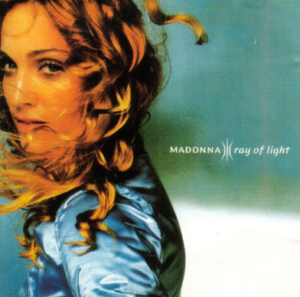 Madonna repeatedly resisted that temptation. Her music, fashion and public persona evolved throughout the 1980s and 1990s, sometimes successfully and sometimes controversially, but one of the clearest examples came with Ray of Light in 1998. By that point she had already achieved the kind of pop career most performers could only imagine, yet instead of simply returning to the musical formula that had built it, she moved deeply into electronic music and produced an album that reflected a markedly different stage in both her life and her artistic interests. Ray of Light went on to achieve substantial commercial and critical success, including multiple Grammy Awards, while presenting audiences with another version of an artist they might reasonably have assumed they already understood.
That willingness to change is important because the identity created by previous success can gradually become as restrictive as any rule imposed from outside. Businesses experience it when a successful product makes them reluctant to develop something that might replace it, professionals experience it when a reputation built over decades makes changing direction feel increasingly dangerous, and individuals experience it when the person everyone expects them to be begins determining the choices they believe they are still allowed to make.
Madonna’s career repeatedly challenged that tendency. Reinvention did not always produce something better, and changing direction simply for the sake of appearing different would be no more useful than refusing to change at all. What mattered was her willingness to reconsider the formula even when the formula was working, rather than allowing yesterday’s success to decide automatically what tomorrow had to look like.
-
-20%

NoRuleBook
Original price was: $9.95.$7.95Current price is: $7.95. -
-50%

No Rules Start-Up
Original price was: $19.95.$9.95Current price is: $9.95. -
-35%

NoRuleBook Bundle
Original price was: $22.90.$14.95Current price is: $14.95.

 Submitted 1.0
 Manual 5.0