Challenge Convention
Just Because It's Always Been Done This Way
Doesn't Mean It's The Best Way
Convention can be useful.
It gives us shortcuts, traditions and ways of doing things that have worked before.
But progress rarely comes from assuming the existing way is the only way.
Sometimes it begins with someone willing to question what everyone else accepts — and then having the courage to try something different.
Start With This Story
If you only explore one NoRuleBook story about challenging convention, make it this one.
It captures one of the biggest ideas behind NoRuleBook:
Just because something has always been done a certain way doesn’t mean it’s the best way.
Sometimes progress begins when someone is willing to look ridiculous doing it differently.

Dick Fosbury — The Jump That Changed Sport Forever
Everyone else was trying to jump higher by perfecting the accepted technique. Dick Fosbury did something more radical: He questioned the technique itself.
His strange backwards jump was mocked, doubted and dismissed — until it carried him to Olympic gold and transformed high jumping forever.
Fosbury’s story is a powerful reminder that sometimes the biggest breakthroughs happen when someone stops asking
“How can I do this better?”
and starts asking
“Why are we doing it this way at all?”
See What Happens When Convention Is Challenged
Every convention was once simply a way of doing things that enough people came to accept.
These stories are about people who refused to assume that accepted meant correct.
They challenged sporting traditions, social expectations and even the promises of one of the world’s biggest companies.
Sometimes the people who look unreasonable today are the ones who make tomorrow seem obvious.
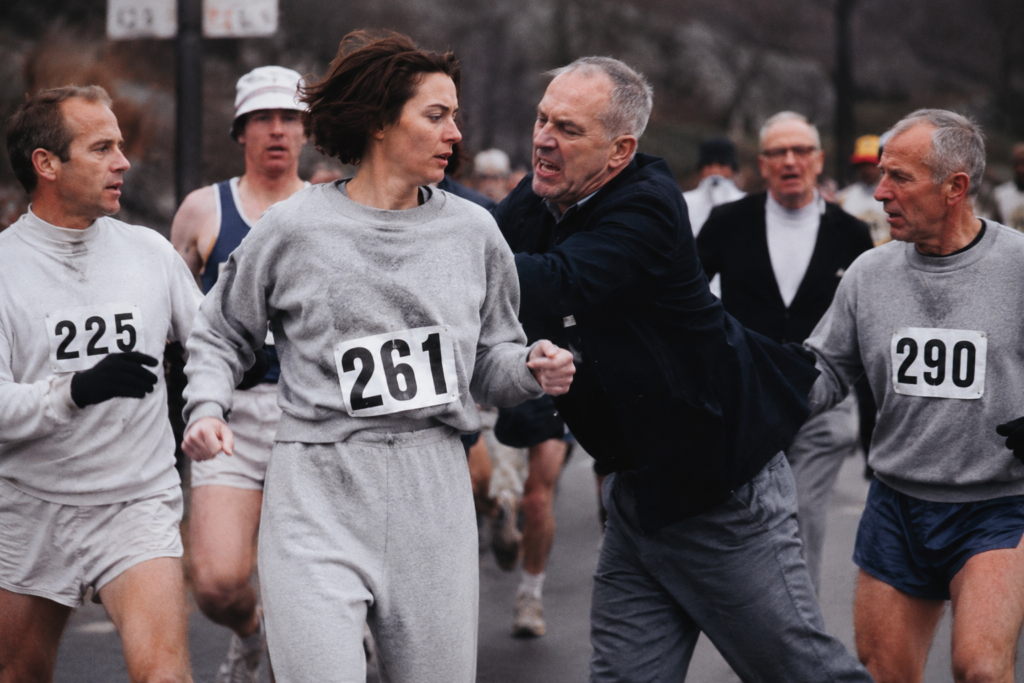
Kathrine Switzer - Challenging the Gender Rules in Sport
Kathrine Switzer entered a race women were never expected to run — and refused to leave when someone tried to physically remove her.
Her 1967 Boston Marathon became far more than a sporting achievement. By challenging an accepted convention about what women could and couldn’t do, she helped change distance running forever.
Sometimes convention survives simply because nobody has forced it to answer the question:
Why not?
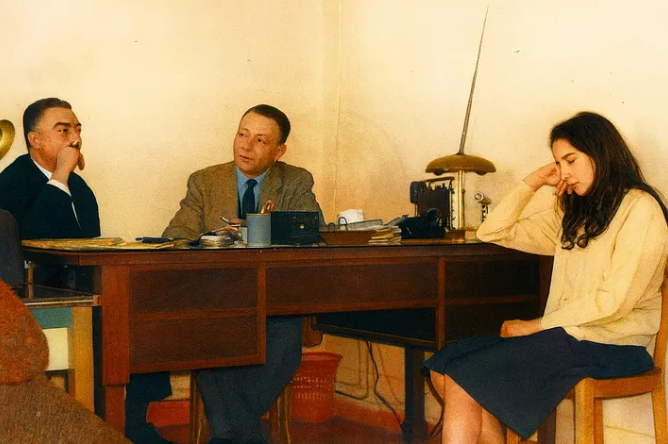
Franca Viola - The Woman Who Refused An Unwritten Rule
In 1960s Sicily, Franca Viola was expected to follow a tradition that generations before her had accepted. She refused.
By rejecting the expectation that she should marry the man who had abducted and assaulted her, Viola challenged a deeply embedded social convention — one supported not only by tradition, but by Italian law.
Her story shows why convention deserves scrutiny simply because something has been accepted for generations.
Sometimes one person’s refusal is enough to expose how wrong an old rule has always been.

Where's My Pepsi Fighter Jet?
Discover what happened when one teenager took a billion-dollar company’s advertising literally—and refused to accept that they didn’t mean it.
All Reviews 5.0 Submitted 1.0
 Manual 5.0
Submitted 1.0Manual 5.0Overall Rating
5.0 8 reviews

Ian Feldman
United States
3/05/2026
If you, like me, have ever found yourself asking "what's the point of it all?" or stating, "there has to be more to life than this," than this is the book for you. The author does an excellent job of laying out the groundwork for letting go of what we are wired to think we are supposed to be doing and shows us ways to make our lives what we want them to be. As the author shows us through his own examples, this doesn't come without being uncomfortable but also shows it is worth it. My biggest takeaway from reading this book is that all it takes is the courage to try.

Rachel Deveroux
Brisbane, Australia
2/10/2026
Can really relate to the thinking in this book. Helped reinforce my belief in living the the now, rather than 'someday' Great value for the insights I have gained. Thanks again.

Mark Murphy
Toronto. Canada
2/08/2026
Great books. Thanks! Deserved of the 5-star review I give both these books. They have helped me out massively.

Sarah Winstanley
Melbourne. Australia
1/07/2026
A friend bought me both books as a gift. I started reading No Rule Book firstly, and, to be honest, couldn't stop. Crammed with wonderful thought that manage to give a great perspective on the importance of living life in the now. Retirement is indeed an illusion, Thanks for the joyful read. No-Rules-Start-Up has helped me develop the on-line business idea I have dreamed (and procrastinated) for at least 3 years. Now I have all the info to start.
Mark Murray
Christchurch. New Zealand
1/04/2026
A Must Read Was a great book showing how to prosper outside the box of living day to day within the tight rules of society. Showing that life can be appreciated within not so much on the outside but what we get taught in the universe growing up. I like how the writer encourages people to embrace the perceived negative feeling that being nervous brings as its shows you are pushing outside your comfort zone.

Terry Thompson
Nelson. New Zealand
11/15/2025
Should Be A Best Seller I have been reading NoRuleBook over the past few days in the gaps of my days and nights. It’s a book that if only I had come across it at the start of my life it would have changed my world. I reckon it should be a mandatory read for everyone, young and old.

Di Stevenson
USA
10/08/2025
This book is the missing link between my desire to start an online hustle and actually finding the resources I need to do it. No Rules Start Up has everything I need, in a very easy to understand writing style, to connect all the dots and get my store created. Recommend this book to anyone that wants to understand what is involved with getting techie-confused. Just buy it!

Tysxun Aiolupotea
Nelson. New Zealand
9/22/2025
Wow. Thanks. Great book! Cool to see someone who has taken the steps outside of there comfort zone in order to free themselves! Travelling is a big WHY for me, so it was even cooler when reading about how he was able to travel to 96 countries so far! Very applicable for someone young like myself.

Melanie Davidson
London
7/11/2025
FiNALLY a book where everything I need to know, to start an online website, is in one easy-to-read book. I have tried to read many of those computer books on this subject but they all seem to have the ability to make it far more confusing than it needs to be. I recommend No Rules StartUp for anyone, like me, that wants to get started step by step.

JOIN THE MOVEMENT
No Rule Book is where you get articles updated regularly about Business, Lifestyle, Health, Travel etc.