

NoRule Book Banner

Millions of Ordinary People Thought This Was Normal — The Franca Viola Story

by Robbie Dellow
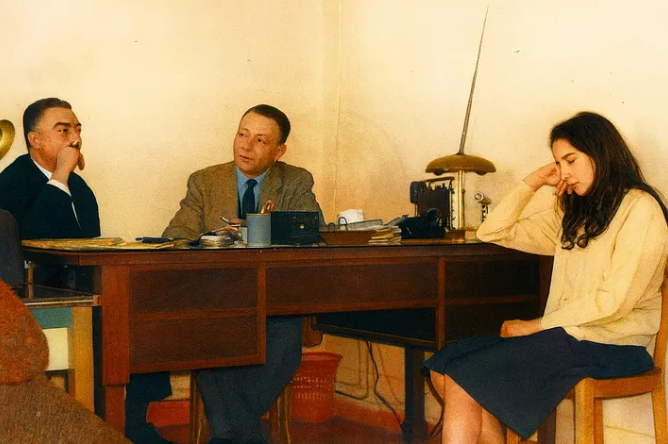
Franca-Viola-and-Sicilian-police

When Society Calls Something “Normal”

History has an uncomfortable habit of exposing the things entire societies once accepted without question. Looking back now, it seems impossible that ordinary people could have defended slavery, child labor, public executions, or the idea that women should not vote. Yet at the time, many people did not see themselves as cruel or immoral. They simply believed they were protecting tradition, stability, and the natural order of society.

That is what makes the story of Franca Viola so disturbing. It was not only that a terrible law existed in Italy during the 1960s. It was that millions of ordinary people accepted it as reasonable.

At the time, a man who kidnapped and raped a woman could avoid prison if he agreed to marry her. The marriage was considered to “restore” the woman’s honor and erase the crime itself. In Italian, this legal loophole was known as matrimonio riparatore – the “rehabilitating marriage.”

Today, the idea sounds grotesque. Most modern readers instinctively recoil from it. But that reaction misses the deeper lesson hidden inside Franca Viola’s story. The truly frightening thing is not that evil men supported the rule. It is that entire communities treated it as normal life.

Parents accepted it. Politicians accepted it. Judges accepted it. Religious figures often accepted it. Even many women accepted it because they had been raised inside a culture where honor mattered more than freedom.

Then, in a small Sicilian town, one teenage girl refused to obey the script society had already written for her.

Growing Up in a Culture of Honor

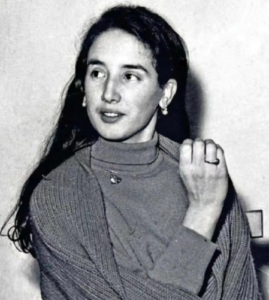
Franca ViolaFranca Viola was born in 1948 in Alcamo, Sicily, a place where family reputation carried enormous weight and where tradition often mattered more than individual happiness. This was not modern Italy as tourists know it today. In many rural communities, honor and shame shaped almost every aspect of social life, especially for women.

A woman’s virginity was treated not simply as something personal, but as a reflection of the family itself. Marriage was not only about love. It was deeply tied to status, reputation, and social survival. If a woman was viewed as having lost her “honor,” whether willingly or through violence, it could stain the standing of the entire family within the community.

Like most social systems, these beliefs were not constantly debated by the people living inside them. They simply existed in the background, absorbed from childhood and reinforced by everyone around them. Parents repeated them to their children. Communities enforced them socially. Religion often strengthened them morally. Over time, people stopped asking whether the rules were still valid, because the rules had become invisible within society.

Franca herself became engaged as a teenager to a man named Filippo Melodia, who reportedly had links to organised crime. After he was arrested for theft, her family ended the engagement, believing they were protecting their daughter from a dangerous future.

But Melodia did not accept rejection.

The Crime Everyone Expected to End in Marriage

In December 1965, when Franca was only 17 years old, Melodia and several accomplices kidnapped her. She was held captive for more than a week and repeatedly raped.

The crime itself was horrific, but what followed reveals even more about the society surrounding it. Melodia believed he could force Franca into marriage because that outcome had become socially accepted. Under the rehabilitating marriage law, marrying the victim could wipe away the criminal consequences and supposedly restore the woman’s honor.

This was not some hidden loophole known only to lawyers. It was a cultural script that many people understood perfectly well.

The expectation was simple. The girl would agree to the marriage. The family would avoid public shame. The man would escape punishment. Society would quietly move on.

That was how the system worked.

And almost everyone expected Franca Viola to cooperate with it.

Today, refusing seems obvious. But in 1960s Sicily, her decision carried enormous risk. A woman who rejected rehabilitating marriage could face social isolation, humiliation, and hostility toward her family. Honor culture did not merely punish individuals. It punished entire households.

Franca’s father reportedly received threats. Their vineyard was damaged. The family faced intense pressure to accept the arrangement and avoid scandal.

This is what makes her story so powerful. Most people do not obey harmful social rules because they are evil. They obey because resistance comes with consequences, and because human beings are deeply afraid of standing outside the group.

The Moment One Person Refused the System

Franca Viola said no.

Not quietly. Not symbolically. Publicly.

That refusal shattered something much larger than one criminal’s plan. It challenged an entire social system that had survived because most people accepted it without questioning it too deeply.

History often celebrates revolutions, protests, and dramatic speeches, but many turning points begin with something far simpler. Sometimes change begins when one ordinary person refuses to cooperate with a rule that everyone else treats as inevitable.

Franca’s refusal forced people across Italy to confront questions they had long avoided. Why should a victim carry shame while the criminal could walk free? Why was preserving appearances considered more important than justice? Why had society accepted the idea that violence could be erased by marriage?

These questions had always existed beneath the surface, but most people had never been forced to look directly at them. Franca Viola’s case dragged those questions into public view.

And once a social rule becomes visible, people begin to realize it is not natural at all. It is simply something human beings invented and continued to enforce.

The Trial That Changed Italy

The case quickly became national news throughout Italy. Newspapers covered the trial extensively, and public opinion began to split between those defending traditional values and those horrified by the law itself.

For the first time, many Italians were forced to see their own culture through fresh eyes. What had once been defended as honor suddenly began to look disturbingly close to institutionalized cruelty.
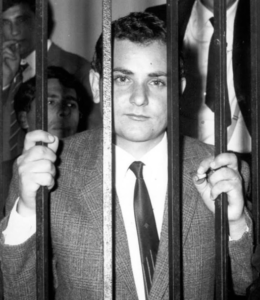
Filippo MelodiaFilippo Melodia was arrested, prosecuted, and eventually sentenced to prison. The significance of the case reached far beyond one conviction. Franca Viola had exposed the moral weakness of an entire social expectation.

Over time, Italy began changing. Public attitudes slowly shifted, especially among younger generations who increasingly questioned the old honor-based traditions that had governed so much of Sicilian life.

Years later, the rehabilitating marriage law was officially abolished.

That legal change did not happen because society gradually evolved on its own. It happened because somebody finally challenged a rule that millions had once accepted as normal.

The Real Lesson Hidden Inside the Story

Many modern retellings of Franca Viola’s story focus narrowly on women’s rights or legal reform, but the deeper lesson is much broader and far more unsettling.

Human beings are extraordinarily good at normalizing harmful systems.

That is unfortunately true in every era.

People often imagine that bad societies are controlled entirely by monsters. Yet history repeatedly shows that ordinary people can adapt to almost anything if enough others around them accept it too. The most dangerous rules are often not enforced through violence alone, but through social pressure, shame, and fear of exclusion.

That mechanism did not disappear with honor culture in Sicily.

It simply takes different forms today.

People still follow paths they never consciously chose because society tells them that success only looks one way. Many stay trapped in careers they hate because security is treated as more important than freedom. Others bury their real interests, personalities, or ambitions because they fear judgment from family, friends, or strangers online.

Every generation inherits invisible rules about status, success, relationships, and identity. Most people follow them automatically because everyone else appears to be doing the same.

That is why Franca Viola’s story still resonates so strongly today. It reminds us that societies are capable of treating deeply irrational ideas as perfectly normal for very long periods of time.

The Courage to Refuse the Script

One of the most important parts of Franca Viola’s story is that she had no guarantee things would work out in her favor.

Modern audiences often consume history backwards. Because we already know she eventually became admired and respected, her courage can appear almost inevitable. But at the time, there was no certainty at all. She was a teenage girl standing against an entire social structure that expected obedience.

She did not know public opinion would later shift. She did not know the law would eventually change. She simply knew that something about the system itself was deeply wrong.

That is what real courage often looks like. Not confidence. Not certainty. Just the willingness to refuse a script that no longer makes sense.

And perhaps that is the reason Franca Viola’s story still matters decades later. It forces us to ask an uncomfortable question about our own time :

What ideas do we accept today simply because everyone else accepts them too?

Because history suggests that future generations will almost certainly look back at some of our own ‘normal’ rules with the same disbelief we now feel toward rehabilitating marriage laws.

What Readers Can Take Away From Franca Viola’s Story

Franca Viola’s story is ultimately not just about one woman or one law in Italy. It is about the frightening power of social conditioning and the courage required to resist it.

Every society creates unwritten rules that people follow automatically. Some are harmless. Others quietly shape lives in destructive ways while appearing perfectly ordinary to the people living inside them.

The people who change history are often not the loudest voices in the room. Sometimes they are simply the people willing to say no when everyone else expects obedience.

Franca Viola’s refusal exposed the weakness of an entire system that had survived for generations because nobody had seriously challenged it.

And that is the real lesson hidden inside her story :

Just because society calls something normal does not mean it is right.

Next Step

If this story inspired you to question the rules that hold you back, you’ll find more rule‑breaking stories and practical tools in our NoRuleBook eBook. Learn how thinkers, creators and activists across history have challenged conventions, and discover how you can apply these lessons to your own life. Click the NoRuleBook image below to grab your copy and join a community of fearless rule breakers.

The NoRuleBook Masterclass Collection

Facebook

Related Articles

Leave a Comment