
In March 2008, Canadian musician Dave Carroll boarded a flight with his band, expecting a routine trip. Like countless other travelers, he checked his baggage ( a guitar) into the cargo hold of the plane operated by United Airlines. What happened next seemed at first like a small inconvenience. It would eventually become one of the most famous examples of consumer revenge on the internet.
From that moment came a protest song called United Breaks Guitars. The song turned a routine airline complaint into a global case study in customer service, brand reputation, and the surprising power of one creative individual with an internet connection.
The story is funny. It’s clever. But it also reveals something deeper about the modern world : The balance of power between large corporations and ordinary people has quietly shifted.
A Routine Flight That Turned Into A Problem
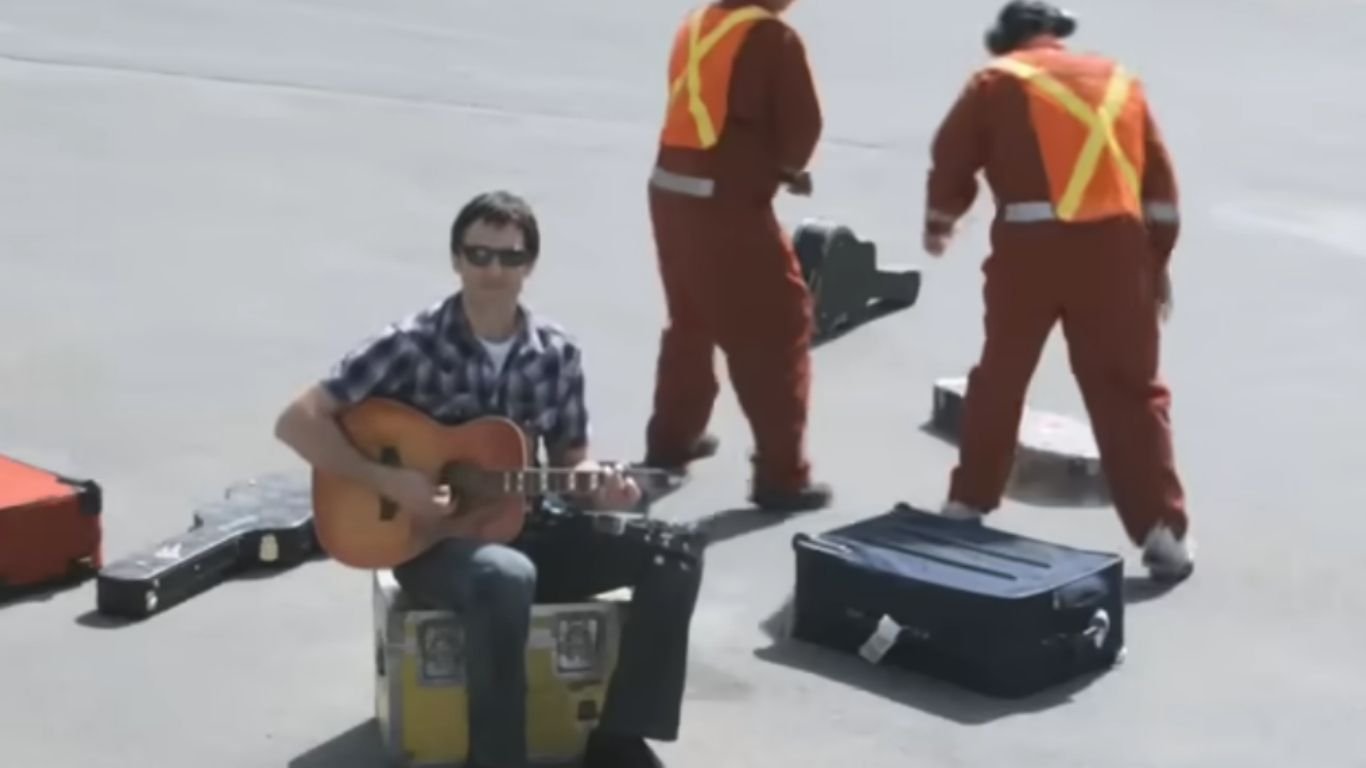
Carroll and his band, Sons of Maxwell, were travelling across America, to a performance, when fellow passengers made an alarming observation. From their window seats they could see baggage handlers throwing guitars across the tarmac.
Someone called out to Carroll: “Those look like your guitars.”
At first he hoped they were mistaken. After all, musicians travel constantly, and airline baggage handling is rarely gentle. But when the band arrived at their destination and opened the guitar case, the truth was obvious.
His expensive Taylor guitar had been severely damaged. The body was cracked and the instrument was effectively ruined.
For a touring musician, a guitar is not just luggage. It is an indispensable tool of the trade.
Carroll immediately approached the airline’s customer service desk to report the damage.
This was the moment when the story could have ended quietly and amicably.
Instead, it was just the beginning.
Nine Months Of Frustration
Most people assume that if an airline damages a valuable item, compensation will follow after a routine claim process.
That was Carroll’s expectation too.
But the process turned into a bureaucratic maze.
Over the next nine months, Carroll repeatedly contacted United Airlines customer service. Each time he attempted to explain the situation, he encountered another layer of corporate procedure.
Forms were required.
Deadlines were cited.
Departments referred him elsewhere.
Eventually he was told that the airline could not compensate him because he had not filed the claim within the required time window.
From the airline’s perspective, the case was closed.
But from Carroll’s perspective, the case was from from closed.
He later explained that during the months of frustration he warned the airline that if they did not resolve the problem, he would write a song about the experience and post it online.
At the time, that threat probably sounded harmless.
After all, millions of songs are uploaded to the internet every year.
Why would one more matter to a big American-wide business like United Airlines?
The Idea That Changed Everything
So Carroll finally stopped trying to negotiate with the airline, and instead, decided to do something unusual.
He wrote a song about the experience.
The song would tell the story of his broken guitar, the frustrating customer service process, and the airline’s refusal to compensate him.
More importantly, it would do so with humor.
Rather than an angry rant, the song would be catchy, upbeat, and entertaining.
He titled it “United Breaks Guitars.”

‘United Breaks Guitars’ music video
Then he uploaded the video to YouTube. (click the image to watch the song).
What happened next surprised everyone, including himself.
The Internet Takes Notice
Within days, the video became viral, spreading across blogs, forums, and social media. Viewers found the story behind the video both funny and relatable. Most travelers had experienced frustrating customer service at some point. Carroll had simply expressed that frustration in a creative way.
The video gained millions of views in a matter of days.
News organizations began reporting on the story.
Television networks interviewed Carroll.
Marketing experts and business schools began analyzing the event as a case study.
For United Airlines, the story quickly became a public relations nightmare.
The airline that had refused to compensate a customer for a damaged guitar worth a few thousand dollars was now watching as ‘United Breaks Guitars’ was reaching millions of people around the world.
A Viral Protest Song
The success of the video turned into one of the earliest examples of viral consumer activism.
Instead of hiring lawyers or launching a formal complaint campaign, Carroll had simply told his story in a way people wanted to share.
The internet did the rest.
The original video eventually accumulated millions of views, and Carroll released additional songs continuing the story.
Meanwhile, the phrase “United Breaks Guitars” became shorthand for corporate customer service failures.
Business schools began using the case to teach reputation management.
Marketing experts pointed to the event as proof that social media had changed the relationship between companies and customers.
A single frustrated traveler had managed to embarrass a global airline.
The Real Cost Of A Broken Guitar
One of the most widely discussed aspects of the story was its potential financial impact.
Around the time the video went viral, commentators noted that United Airlines’ market value briefly dropped by millions of dollars.
Whether the video directly caused that decline remains debated. But the broader point was clear.
The reputational damage far exceeded the cost of the original guitar.
In other words, the company could have solved the problem with a relatively small compensation payment. But instead, the situation was allowed to escalate into a global story about poor customer service.
The lesson is simple but powerful.
In the internet age, small customer complaints can become large public messages very quickly.
A Turning Point In Customer Power
When Carroll posted his video in 2009, social media was still relatively young.
Companies were only beginning to understand how quickly stories could spread online.
Before platforms like YouTube and Twitter, most customer complaints stayed private.
Today, they rarely do.
A single smartphone video or social media post can reach millions of viewers.
Companies now monitor social media closely for exactly this reason.
The balance of power between corporations and customers has changed.
Individuals now have tools that allow them to broadcast their experiences to a global audience.
Carroll’s song demonstrated this powerful shift earlier than most people realized.
The Lesson Behind The Story
At its heart, the United Breaks Guitars story is not really about a guitar. It’s about leverage.
For decades, large organizations controlled the narrative when disputes occurred. Customers had limited ways to challenge them.
The internet quietly rewrote the rulebook.
Now an individual with creativity, persistence, and a compelling story can reach millions of people.
Carroll did not set out to destroy an airline’s reputation. He simply wanted his damaged guitar acknowledged.
But by telling the story in a creative way, he revealed something important about modern systems.
Rules are powerful. But they are not invincible.
Sometimes all it takes to challenge them is imagination.
The NoRuleBook TakeAway
Many people assume that power flows in one direction — From large institutions to individuals. Stories like United Breaks Guitars suggest something different.
Sometimes systems are more fragile than they appear.
A single frustrated musician turned a broken guitar into a viral story seen by millions.
He didn’t hire a lawyer.
He didn’t launch a protest campaign.
He wrote a song.
And the world listened.
-
-20%

No Rule Book
$9.95Original price was: $9.95.$7.95Current price is: $7.95. -
-35%
No Rule Book + No Rules Start-Up
$22.90Original price was: $22.90.$14.95Current price is: $14.95. -
-50%
No Rules Start-Up
$19.95Original price was: $19.95.$9.95Current price is: $9.95.


 Submitted 1.0
 Manual 5.0