
The rulebook teaches a simple lesson.
If enough experts reject your idea, it probably means the idea isn’t good.
Editors, investors, hiring managers, and industry leaders exist for a reason. They are supposed to recognize what will work and what will fail. When they say no repeatedly, the sensible conclusion seems obvious.
Move on.
But history tells a very different story.
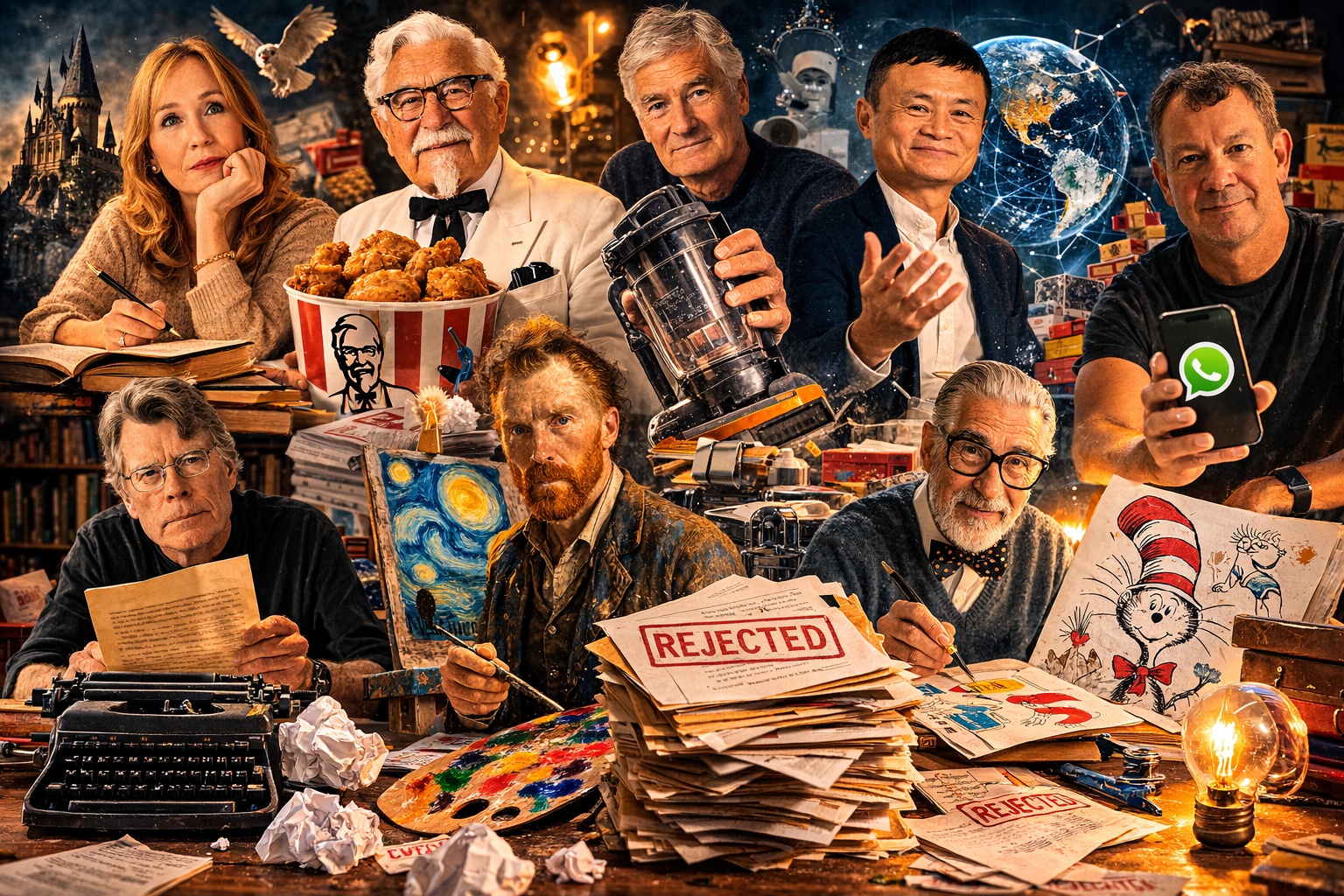
Many ideas, that later became enormously successful, were rejected not once or twice, but dozens—or even thousands—of times before they succeeded. In many cases the same experts who dismissed those ideas later watched them transform entire industries.
This pattern appears so often that it raises an uncomfortable possibility.
What if rejection isn’t a reliable signal of failure at all?
“What if rejection is simply the natural reaction systems have when they encounter something new?”
Across literature, business, technology, and art, the same pattern emerges again and again. Ideas that eventually changed the world often began their lives as proposals nobody wanted.
If you want to understand this pattern more deeply, I’ve broken it down step-by-step in The NoRuleBook Guide to Rejection: Why the World’s Best Ideas Get Rejected First.
The Twelve Publishers
Who Said No
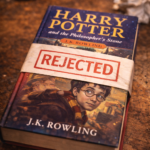
Few rejection stories are as famous as the early struggle of J. K. Rowling.
Before the Harry Potter series became a global cultural phenomenon, Rowling’s manuscript traveled from one publisher to another. Editors reviewed the story about a young wizard attending a magical boarding school and responded with the same verdict.
No.
Some believed the story was too strange. Others doubted that children’s fantasy could succeed commercially. Twelve publishers rejected the manuscript before one small publishing house finally decided to take a chance.
That publisher was Bloomsbury Publishing.
The first book, Harry Potter and the Philosopher’s Stone, was released in 1997. Within a few years the series had become one of the most successful publishing franchises in history, selling hundreds of millions of books and inspiring films, theme parks, and an entire generation of readers.
Looking back, the rejection of Harry Potter seems almost impossible to understand. But that’s precisely the point. Rejection often looks perfectly reasonable at the time. Experts aren’t necessarily foolish; they’re judging something new using patterns established by what has worked before. And occasionally, the idea in front of them doesn’t fit those patterns because it’s about to create a new one. And that same pattern has appeared in countless other stories.
You can read the full story :
12 Publishers Said No — The Rulebook Said Quit — J.K. Rowling Ignored Both

The Chicken Recipe Nobody Wanted
Decades before Rowling’s manuscript circulated through publishing offices, a retired businessman named Colonel Harland Sanders was traveling across the United States with a simple idea.
Sanders had developed a pressure-fried chicken recipe he believed restaurants could sell successfully. He offered restaurant owners a straightforward deal: Use his recipe and pay him a small royalty for every piece of chicken sold.
Most restaurant owners were not interested.
Sanders drove from town to town pitching the idea and hearing the same answer again and again.
Sanders drove from restaurant to restaurant, repeatedly pitching his unusual franchise model and repeatedly hearing no.
Today the fried chicken chain he eventually built – KFC- is now one of the most recognizable brands in the world.
The idea that was rejected hundreds of times became a global business.

"The important lesson isn't that persistence guarantees success. It doesn't. It's that repeated rejection can sometimes tell you more about how unfamiliar an idea is than how valuable it might eventually become."
The 5,126 Failed Prototypes
Rejection does not always arrive in the form of letters or meetings. Sometimes it appears as repeated failure during the creation process itself.
When James Dyson set out to reinvent the vacuum cleaner, he believed the existing design was flawed. Traditional vacuum cleaners relied on dust bags that clogged over time and reduced suction.
Dyson imagined a bagless vacuum using cyclonic technology.
But building such a machine proved extraordinarily difficult.
Prototype after prototype failed. Motors overheated. Designs malfunctioned. Performance fell short of expectations.
Dyson built 5,126 prototypes before the design finally worked.
Even then many manufacturers rejected the product. Vacuum companies made large profits selling replacement dust bags, and Dyson’s design threatened that business model.

It's rejected because it threatens something that already does."
Eventually he launched the product himself.
Today Dyson vacuums are sold worldwide, and the company has become a major technology brand.
Rejected By The Company That Later Paid Him Billions
The career of Brian Acton offers another remarkable twist in the rejection pattern.
Early in his career Acton applied for jobs at two major technology companies: Facebook and Twitter.
Both rejected him.
Not long afterward he co-founded a messaging service called WhatsApp.
The application grew rapidly, eventually attracting hundreds of millions of users around the world.
In 2014 Facebook acquired WhatsApp in a deal ultimately valued at about $22 billion when it closed.
The same company that once rejected Acton later paid billions to acquire his creation.
Facebook’s rejection of Acton wasn’t necessarily a mistake. It was an assessment of whether he fitted a particular job at a particular moment. What it couldn’t measure was what he might create next.

Rejection stories also appear throughout literary history.
When Stephen King wrote his first novel, Carrie, publishers responded with little enthusiasm. The manuscript was rejected repeatedly.
Discouraged, King threw the draft in the trash.
His wife retrieved the pages and encouraged him to keep submitting the story.
Eventually a publisher accepted the book , and Carrie launched one of the most successful writing careers in modern literature.
"Repeated rejection can become especially dangerous when other people's judgement eventually becomes your own."
The Artist The World Ignored
Not every rejection story ends quickly.
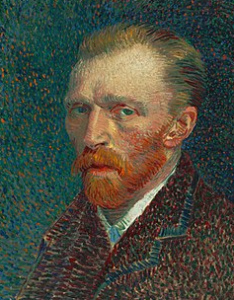
The painter Vincent van Gogh struggled with poverty and obscurity during his lifetime. Despite producing hundreds of paintings, he sold almost none.
His work was largely ignored by the art market of his era.
Today Van Gogh is considered one of the most influential artists in history. His paintings are among the most celebrated and valuable works in the world, while The Starry Night has become one of the most recognizable paintings ever created.
Recognition arrived only after Van Gogh was gone.
And that exposes the uncomfortable limit of every rejection story in this article.

Van Gogh couldn’t use future recognition as reassurance while he was struggling in obscurity. He had to continue creating without knowing how history would judge the work.
That may be the hardest form of independent thinking: Continuing because you believe the work matters, not because success has already proved you right.
twenty-Seven Rejections
And A Children's Classic
Another famous rejection story belongs to Theodor Seuss Geisel.
Before becoming known as Dr. Seuss, Geisel wrote a children’s manuscript called And to Think That I Saw It on Mulberry Street.
Accounts commonly say publishers rejected the book 27 times.
Discouraged, he was preparing to abandon the project when he ran into an old friend who had just begun working in publishing. That chance encounter led to the manuscript finally being accepted.
The book became the beginning of a career that produced some of the most beloved children’s literature ever written.
"The difference between rejection and acceptance wasn't necessarily that the manuscript suddenly became better. Sometimes the idea stays exactly the same while the person judging it changes."
Why The System
Rejects New Ideas
When viewed individually, each of these stories appears extraordinary.
But when viewed together, they reveal a pattern.
New ideas can be rejected because they are bad. But they can also be rejected because they don’t fit the patterns we have learned to recognise as good.
“Systems built to reduce risk can become very good at recognizing what worked yesterday — and very bad at recognizing what might work tomorrow.”
Institutions rely on past success to guide their decisions. Publishers look for books similar to previous bestsellers. Investors look for business models that resemble earlier successes. Companies hire candidates who resemble people already working in their industry.
This approach makes sense.
It reduces risk.
But it also creates blind spots.
Truly original ideas rarely resemble anything that has succeeded before. They appear unusual, impractical, or even foolish when viewed through the lens of past experience.
- A magical boarding school.
- A pressure-fried chicken recipe sold through franchises.
- A bagless vacuum cleaner.
- A messaging app created by someone rejected from major tech companies.
At the beginning these ideas did not look like obvious successes. They looked like outliers.
And systems designed to minimize risk have good reason to be suspicious of outliers.
The same caution that protects institutions from bad ideas can also cause them to overlook great ones. That doesn’t make the institutions foolish. In many cases, rejecting an uncertain idea is the rational decision based on the information available.
The problem is that rational decisions made from yesterday’s evidence can sometimes miss tomorrow’s breakthrough.
The Pattern Behind Rejection
Across these stories, a pattern appears.
Original ideas often pass through an uncomfortable stage where there isn’t enough evidence to prove they will work, yet there is enough difference to make them difficult to judge by conventional standards.
That’s the gap where rejection thrives.
Later, once an idea succeeds, hindsight makes its potential appear obvious. But it wasn’t obvious when the decision had to be made.
Rowling’s manuscript was still just a manuscript. Dyson’s vacuum was still an unproven machine. Sanders was still a man asking restaurant owners to gamble on an unfamiliar model.
Success makes unconventional ideas look inevitable. Before success, they often just look unconventional.
Before success, they often just look unconventional."
The Real Lesson Behind Rejection
The lesson from these stories isn’t that rejection means you’re right.
It doesn’t.
Bad ideas get rejected too.
Nor does persistence guarantee success. You can persist with the wrong idea for years and still be wrong.
The more useful lesson is that rejection is information — not a verdict.
Sometimes it exposes a genuine weakness. Sometimes it tells you the idea needs improving. Sometimes it means you’ve approached the wrong person, market or moment.
And occasionally, rejection tells you something else entirely: your idea doesn’t fit the assumptions being used to judge it.
The challenge is learning to tell the difference.
"Don't ignore rejection. Interrogate it."
Ask what exactly is being rejected. Your idea? Its execution? Its timing? The way you’ve explained it? Or simply the fact that it doesn’t resemble what came before?
That’s where independent thinking begins.
Not by assuming everyone else is wrong. But by refusing to assume they must be right.
Take The Next Step
The stories in this article are remarkable because we already know how they ended. We know Rowling eventually found a publisher, Dyson eventually built a vacuum that worked, and Sanders eventually found people willing to believe in his idea. From the comfortable distance of hindsight, persistence can make their eventual success seem almost inevitable.
But it wasn’t inevitable to them.
At the moment of rejection, they had no way of knowing whether they were protecting an idea worth pursuing or simply refusing to accept that they were wrong. That uncertainty is what makes rejection so difficult — and why the answer isn’t simply to ignore anyone who tells you no.
The more useful habit is to question the verdict. Ask what the rejection is actually telling you, what assumptions sit behind it, whether there is something you genuinely need to change, and whether the person judging your idea is necessarily the right person to decide its value.
NoRuleBook explores that same habit of independent thinking: learning to listen to conventional wisdom without automatically surrendering your own judgement to it.
Click the NoRuleBook image below to explore the collection.
The NoRuleBook Collection
-
NoRuleBook
$9.95Original price was: $9.95.$7.95Current price is: $7.95. -
No Rules Start-Up
$19.95Original price was: $19.95.$9.95Current price is: $9.95. -
NoRuleBook Bundle
$22.90Original price was: $22.90.$14.95Current price is: $14.95.