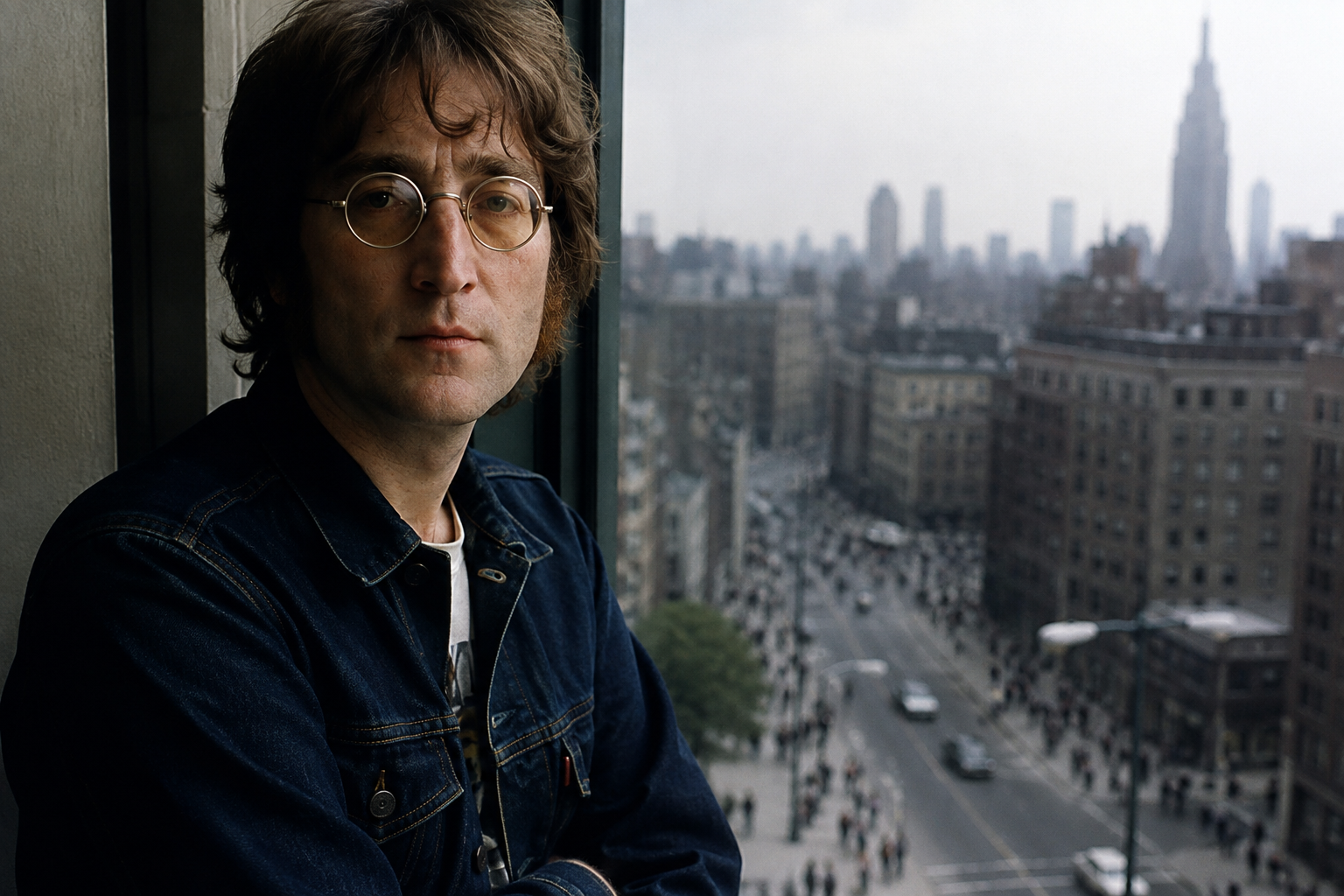
In 1970, John Lennon released Working Class Hero, a stark and deliberately uncomfortable song that sounded very different from much of the music associated with his years in The Beatles. There was little decoration and nowhere for the listener to hide; Lennon was describing, with characteristic bluntness, the pressures that begin shaping people long before they are old enough to recognise what is happening.
It is easy to hear the song simply as an attack on class, education or the establishment, but underneath those themes sits something broader and more interesting. Lennon was describing the gradual process through which people learn what is expected of them — what success should look like, which ambitions are respectable, when to speak, when to conform and eventually how to regulate themselves without anyone needing to tell them.
Seen that way, Working Class Hero isn’t really just about the working class. It is about the invisible process through which a person can inherit a version of life before they have had much opportunity to decide whether it is the version they actually want.
More than half a century later, that idea feels remarkably current. But Lennon stopped at exposing the system.
The more interesting question is what happens once you realise you’re living inside it.
'As Soon As You're Born They Make You Feel Small' - Where It Really Begins
"As soon as you're born they make you feel small.
By giving you no time instead of it all."
Lennon’s argument begins at the very start of life, long before work, careers or even school enter the picture. The pressures he is describing take shape while our ideas about what is normal, desirable and acceptable are still being formed. The pressures he is describing don’t suddenly appear when someone enters the workforce or chooses a career; they begin while ideas about what is normal, desirable and acceptable are still being formed.
Long before most of us are capable of examining those ideas critically, we are absorbing them from family, school, friends, advertising, culture and the behaviour of the people around us. We learn which achievements receive praise, which ambitions sound sensible, which risks provoke concern and which paths appear to lead toward the kind of life a successful person is supposed to want.
School inevitably becomes part of that process. Education can expand a person’s world enormously, introduce ideas they would never encounter otherwise and teach the intellectual tools needed to question what they are told. Yet schooling also requires people to operate within structures: timetables, assessment systems, authority, deadlines, standardised expectations and definitions of achievement that somebody else has established.
The problem isn’t that structure exists; some structure is necessary for almost any society to function. The more interesting question is what happens when we become so accustomed to operating inside structures that we stop noticing which parts are necessary and which parts we have simply learned to accept.
By adulthood, many of those expectations no longer feel as though they came from somewhere else. They feel like common sense.
And that is when an external rule becomes something much more powerful: an internal one.
“They hurt you at home ...” — Pressure Disguised as Normal
"They hurt you at home and they hit you at school. They hate you if you're clever and they despise a fool."
The line sounds harsh, but Lennon’s point reaches beyond its literal meaning. He is describing the steady pressure of expectation, correction and judgement that teaches people, often from a remarkably young age, where the boundaries of acceptable behaviour lie.
You are encouraged to succeed, but usually within a definition of success that already exists. Stand out in the right way and you may be rewarded; stand out too much, challenge too much, or refuse to follow the expected path and the response can change remarkably quickly.
The lesson absorbed from this is rarely stated openly, yet it is powerful: blend in just enough. Be capable, but not disruptive; ambitious, but in recognisable ways; intelligent, but preferably without questioning too many of the assumptions everyone else has agreed to live by.
Over time, something subtle can happen. Instead of asking what you genuinely want from your life, you begin asking which of the available options will work best within the world you have been given. The distinction seems small, but it changes everything, because once you begin optimising your life for acceptance rather than examining what you actually value, you are no longer entirely choosing your path.
You are choosing from paths that were already laid out for you.
“When they've tortured and scared you …” — The Illusion of Freedom
"When they've tortured and scared you for twenty odd years. Then they expect you to pick a career."
This is where Lennon’s argument becomes particularly uncomfortable, because after years of absorbing expectations about education, work, money, status and what a successful life is supposed to look like, adulthood suddenly arrives with an apparently liberating instruction: now decide what you want to do with your life.
We call that freedom, but Lennon was pointing toward a contradiction that deserves much more attention. How completely free can that decision really be when the person making it has spent the previous twenty years learning which choices are respectable, which are risky, which deserve admiration and which are likely to disappoint everyone around them?
Most people do make choices, of course, but those choices are rarely made from an empty page. We choose from careers we know exist, lifestyles we have seen modelled, definitions of success we have inherited and possibilities that feel sufficiently familiar to be realistic. Then, because nobody visibly forced us to choose them, we understandably experience those decisions as entirely our own.
The most powerful rules do not necessarily remove your freedom to choose. They shape the menu you are choosing from.
And if you never question who created that menu, what was left off it, or why certain choices feel sensible while others feel almost unthinkable, influence can become extremely difficult to distinguish from freedom.
“Keep you doped with religion and sex and TV” — The Distraction Layer
"Keep you doped with religion and sex and TV. And you think you're so clever and classless and free."
Lennon was writing in 1970, so the distractions he identified belonged to his time. More than half a century later, the mechanisms have changed dramatically, but his underlying observation may be even more relevant.

Today, distraction rarely feels like something being imposed upon us. It arrives as entertainment, convenience and connection: social media feeds that never end, streaming platforms containing more content than anyone could consume, notifications constantly competing for attention, and a phone capable of filling almost every unoccupied moment of the day.
The result is that boredom — once an unavoidable part of ordinary life — has become remarkably easy to escape. Waiting in a queue, sitting alone, travelling somewhere or simply having nothing to do no longer requires us to be alone with our thoughts, because within seconds we can reach for something designed to occupy them.
That matters because questioning your life requires mental space. It requires moments when there is nothing else demanding your attention and uncomfortable thoughts are allowed to remain long enough to be examined. What am I actually doing? Why am I doing it? Is this really what I want? Who decided that this was the path I should follow?
Lennon was not simply criticizing entertainment, and neither is NoRuleBook. The deeper issue is what happens when distraction becomes so constant that reflection starts to feel unusual.
“A working class hero is something to be” — The Trap Disguised as Identity
The title sounds almost celebratory. A working class hero appears to be someone worthy of admiration, someone who works hard, survives adversity and perhaps even succeeds despite the limitations placed in front of them. But Lennon delivers the phrase with enough irony to make us question what kind of heroism is actually being celebrated.
Because there is another possibility hidden inside the idea. What if becoming successful within a system is not the same thing as becoming free from it?
A person can work harder, earn more money, gain status, receive promotions and climb remarkably high without ever questioning the structure they are climbing through. From the outside, that life may look like success, and perhaps in many ways it genuinely is, but the deeper NoRuleBook question is whether the destination was consciously chosen or simply became the most rewarding option available within an existing set of rules.
That distinction matters. There is nothing inherently wrong with a conventional career, financial success or achieving status inside an established system. The mistake is assuming that success within a structure automatically proves that the structure was right for you.
Lennon’s working class hero therefore raises a question much bigger than class itself :
Where John Lennon Stops — And Where Most People Stay
Lennon does something remarkably powerful in Working Class Hero. He strips away the comforting version of how a life develops and asks us to look instead at the accumulated influence of family, education, work, status, entertainment and social expectation. By the end of the song, the listener has been shown a system that can shape a person for decades without ever needing to announce that this is what it is doing.
But then the song ends.
And perhaps that is where its greatest limitation lies, because recognising the forces that have shaped you is not the same thing as deciding what to do about them.
This is also where many people stop. They reach a point where they recognise that something about their life feels wrong, or that the version of success they have been pursuing no longer feels entirely their own. They may begin noticing the expectations they inherited, the decisions they made because they seemed sensible, and the paths they followed largely because everybody around them appeared to be following them too.
That awareness matters enormously. But awareness without action can eventually become another form of acceptance.
You can understand the system perfectly and still spend the rest of your life living inside it.
The Step Lennon Didn’t Take
Once you recognise that parts of your life may have been shaped by assumptions you never consciously chose, the answer is not to reject everything, abandon your responsibilities or deliberately do the opposite of whatever society expects. That would simply replace one automatic rulebook with another.
The more difficult task is to examine those assumptions individually and decide which ones still deserve a place in your life.
Perhaps the conventional career genuinely suits you. Perhaps financial security matters enormously. Perhaps marriage, home ownership, retirement at 65 or any number of traditional milestones are exactly what you want. There is nothing inherently wrong with any of them.
The question is whether you chose them — or simply inherited them.
Living without a rulebook therefore isn’t about rebellion for its own sake. It means redefining success according to what actually matters to you, becoming less dependent on external approval, creating greater control over your time and choices, and being willing to explore alternatives even when the outcome cannot be guaranteed.
That process rarely happens dramatically. More often, it begins with a single uncomfortable question about something you have always assumed was simply the way life works.
Lennon showed us the cage …
Final Thought
Working Class Hero still resonates more than half a century after Lennon recorded it because the mechanisms he was describing never really disappeared. They evolved. The institutions became more sophisticated, the distractions became more compelling, and many of the paths we are encouraged to follow became more comfortable, but the fundamental question remained: How much of the life you are living was consciously chosen by you?
That question may matter even more today because, paradoxically, we have more apparent freedom than almost any generation before us. We can change careers, build businesses from laptops, work from different countries, find communities beyond our immediate surroundings and explore ways of living that previous generations might never have encountered. Yet having more options does not automatically mean we examine the assumptions guiding which options we choose.
That is where Lennon’s diagnosis remains powerful, but it is also where the conversation needs to continue. Recognising that you have been influenced by family, education, culture, status and expectation does not mean those influences are necessarily wrong, nor does it mean that freedom requires rejecting them. It simply means they deserve to be examined rather than automatically obeyed.
Because awareness is only the beginning.
The more important question is what happens after you become aware.
What are you going to do differently once you realize that some of the rules you have been following were never actually rules at all?
Take The Next Step
Seeing the rules is the first step. Questioning which ones deserve a place in your life is the next.
The NoRuleBook eBook explores the unwritten expectations surrounding work, money, success, identity and the way we are supposed to live — and asks what becomes possible when you stop treating those expectations as instructions.
Explore the NoRuleBook eBook below.
The NoRuleBook Collection
-
NoRuleBook
$9.95Original price was: $9.95.$7.95Current price is: $7.95. -
No Rules Start-Up
$19.95Original price was: $19.95.$9.95Current price is: $9.95. -
NoRuleBook Bundle
$22.90Original price was: $22.90.$14.95Current price is: $14.95.