In March 2008, Canadian musician Dave Carroll was sitting on a United Airlines flight with the other members of his band, Sons of Maxwell, when a passenger looked out of the window and said something no travelling musician wants to hear.
“My God, they’re throwing guitars out there.”
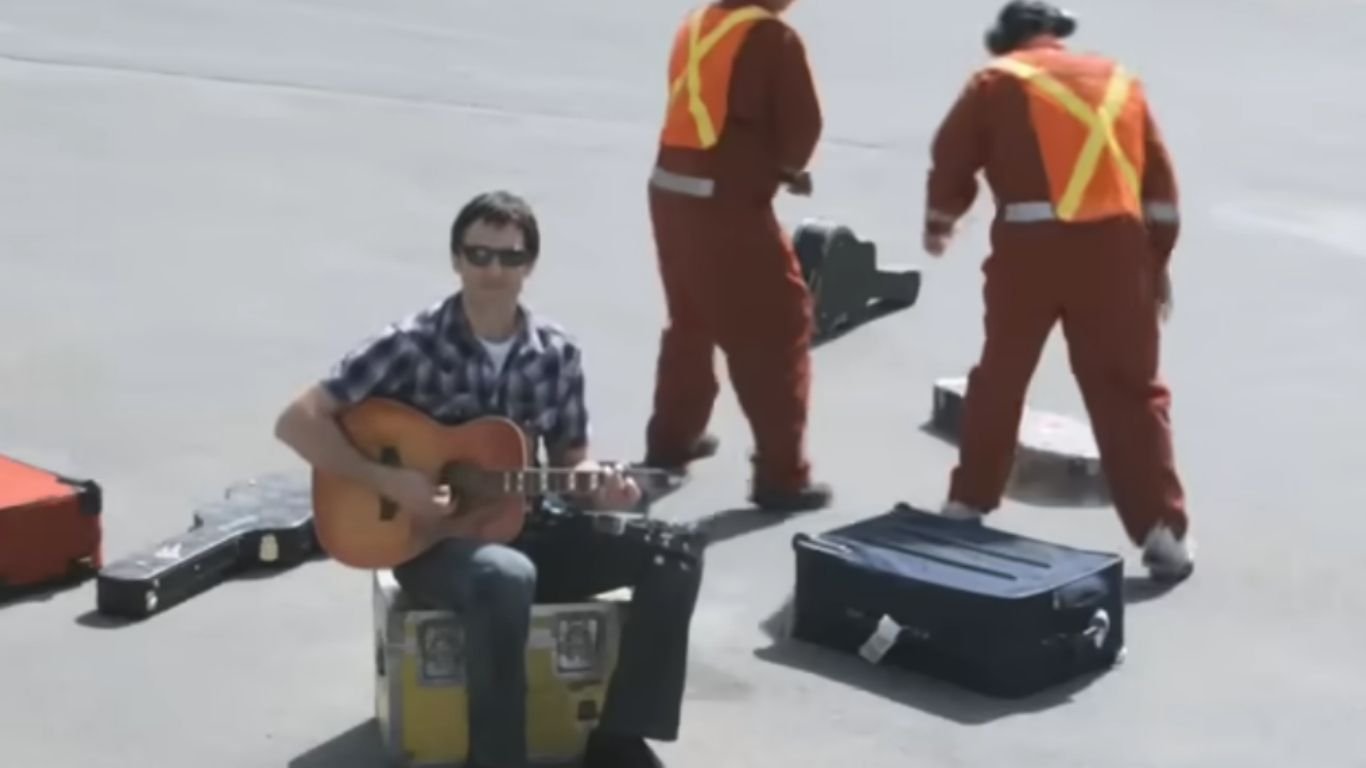
Carroll looked through the window. Down on the tarmac, baggage handlers were tossing guitar cases around as they unloaded the aircraft.
One of those guitars was his.
What followed should have been an ordinary customer-service problem: an airline damages a passenger’s property, the passenger complains, and somebody eventually sorts it out. But that isn’t what happened.
Carroll spent months trying to get United Airlines to take responsibility for his damaged Taylor guitar. He called. He emailed. He worked his way through the company’s complaint system. And eventually, after getting nowhere, United effectively told him the matter was closed.
So Carroll stopped playing by their rules. He picked up his guitar and wrote a song : United Breaks Guitars.
What happened next turned one frustrated passenger into an international story and gave companies everywhere an uncomfortable lesson in what can happen when an ordinary customer no longer needs their permission to be heard.
Watch the NoRuleBook Documentary
Prefer to watch? See the short NoRuleBook documentary below, then continue reading for the deeper story.
UNITED HAD A CHANCE TO MAKE IT RIGHT
When Carroll finally opened his guitar case, there was no longer any doubt about what he had seen from the aircraft window. His $3,500 Taylor guitar had been badly damaged, with the base of the instrument broken after apparently being thrown around with the rest of the luggage.
For a touring musician, this wasn’t the equivalent of finding a dent in a suitcase. The guitar was part of his livelihood, and Carroll reasonably assumed that once he explained what had happened, United would take responsibility for it.
In fact, the airline had already been given an opportunity to prevent the damage. Carroll and other passengers had reportedly alerted flight attendants after seeing the baggage handlers throwing the guitars, but nobody intervened.
Even so, Carroll wasn’t looking for a public fight. He simply wanted United to acknowledge what had happened and compensate him for the damage.
It should have been an ordinary customer-service complaint. Instead, it became a nine-month lesson in what happens when an individual encounters a corporate system that has decided the answer is no.
Nine Months Of Frustration
Over the next nine months, Carroll tried to resolve the problem through the channels United Airlines had provided for customers like him. He contacted employees in Chicago, New York and India, explained what had happened repeatedly, and worked his way through a system in which responsibility always seemed to belong somewhere else.
Eventually, he reached a United customer-relations employee named Ms Irlweg, who gave him the answer he had spent months trying to avoid: the airline would not compensate him because he had failed to make the claim within United’s required 24-hour period.
From United’s perspective, that was the end of it. The procedure had been followed, the deadline had passed, and the file could be closed. Carroll saw it differently.
After nine months of getting nowhere, he told Ms Irlweg that he was going to write three songs about his experience with United Airlines and post videos of them on YouTube, with the aim of reaching a million people.
It must have sounded like an unusual threat. A multinational airline was being warned that an unhappy Canadian musician was going to write a song about them. United declined to change its position.
That turned out to be a spectacular miscalculation.
The Idea That Changed Everything
Carroll kept his promise.
Instead of hiring a lawyer, launching an angry campaign or continuing to argue with United’s customer-service department, he used something the airline couldn’t control: his ability to tell a good story.
He wrote United Breaks Guitars, a deliberately funny country song that turned nine months of frustration into something people actually wanted to watch and share.
That distinction mattered. Carroll wasn’t standing in front of a camera angrily complaining about an airline. He turned the experience into entertainment, complete with humour, musicians, exaggerated baggage handlers and a chorus that was almost impossible to misunderstand.
Then, on July 6, 2009, he uploaded the video to YouTube.
Carroll had originally hoped his three-song campaign might eventually reach a million people. The first video would get there almost immediately.
The Internet Takes Notice
Something about the video connected almost immediately. Within a day it had attracted tens of thousands of views; within days, the audience had climbed into the hundreds of thousands and then beyond a million.
But the numbers were only part of what was happening. People weren’t simply watching Carroll’s complaint — they were passing it to each other. Travellers who had experienced their own battles with airlines recognized the frustration instantly, while journalists saw the irresistible story of one musician achieving with a three-minute song what nine months of conventional complaints had failed to accomplish.
Soon Carroll was being interviewed by major media outlets, marketing experts were discussing the video, and United Breaks Guitars was becoming an international case study in customer service and corporate reputation.
The balance of power had changed remarkably quickly.
For nine months, United had controlled the conversation. It controlled the complaint process, the deadlines and ultimately the decision about whether Carroll would receive compensation.
YouTube removed that advantage.
United could still refuse to pay for the guitar. However, what it could no longer do was decide who heard the story.
The Real Cost Of A Broken Guitar
As the story exploded across the internet, another claim began travelling with it: That United Breaks Guitars had cost United Airlines millions of dollars.
United’s share price did fall in the days after Carroll’s video appeared, and commentators were quick to connect the two events. Some estimates put the apparent loss in market value at an extraordinary figure.
It made for an irresistible headline. There was just one problem: Nobody could prove that Carroll’s song caused the fall. Airline shares move for all kinds of reasons, and the timing alone isn’t enough to establish that a viral YouTube video wiped millions from United’s value.
But focusing too heavily on that disputed number misses the more interesting part of the story.
United had originally been dealing with one damaged guitar and one unhappy customer. By refusing to resolve that relatively small problem, it found itself at the centre of an international story about bad customer service that would be watched, discussed and remembered for years.
The real cost wasn’t a number that could be neatly read from a stock chart. It was losing control of the story.
A Turning Point In Customer Power
Looking back from today’s world of TikTok, Instagram, YouTube and smartphones, it can be difficult to appreciate just how different the relationship between companies and customers was when Carroll uploaded his video in 2009.
For most of the previous century, a dissatisfied customer had relatively few ways to make a large company listen. You could complain to a manager, write to head office, contact a newspaper or perhaps take legal action. But in most cases, the company still had an enormous advantage: it controlled how far the dispute travelled.
The internet was beginning to dismantle that advantage.
Carroll didn’t need a television network to give him airtime or a newspaper editor to decide his story was worth publishing. He didn’t need an advertising budget or a public-relations company. YouTube gave him direct access to an audience, and that audience decided whether his story deserved to spread.
United Breaks Guitars arrived at precisely the moment that this new balance of power was becoming impossible for companies to ignore.
Today, a customer filming an encounter on a smartphone, and reaching millions of people, can seem completely normal. In 2009, Carroll’s experience was an early warning of what was coming.
The NoRuleBook TakeAway
At first glance, United Breaks Guitars is a funny story about an airline, a broken guitar and a customer who refused to go away. But that isn’t really why the story still matters.
For nine months, Carroll did what the system expected him to do. He complained through the proper channels, spoke to the people he was directed to speak to and waited for the organization to reconsider its decision.
Nothing changed.
The breakthrough came when he stopped asking the system to solve the problem and asked a completely different question: What can I do that they can’t control?
His answer was a song.
Carroll didn’t have United’s money, lawyers, employees or corporate influence. What he had was creativity, humour, a guitar and access to an audience. In the old rulebook, those things shouldn’t have been enough to challenge a global airline.
They were.
And perhaps that’s the most useful lesson in the entire story. When a system leaves you powerless, the answer isn’t always to fight harder within that system. Sometimes the better question is whether you need to keep playing by its rules at all.
Take The Next Step
United Breaks Guitars is a reminder that when the usual path gets you nowhere, sometimes the answer is to find a different one.
That idea runs throughout NoRuleBook. The eBook explores the assumptions and unwritten rules that quietly shape our choices, and why questioning them can open possibilities we might otherwise never see.
If this story made you wonder where else you may be following a rule that no longer serves you, NoRuleBook is the next place to explore.
The NoRuleBook Collection
-
-20%
NoRuleBook
$9.95Original price was: $9.95.$7.95Current price is: $7.95. -
-50%
No Rules Start-Up
$19.95Original price was: $19.95.$9.95Current price is: $9.95. -
-35%
NoRuleBook Bundle
$22.90Original price was: $22.90.$14.95Current price is: $14.95.

 Submitted 1.0
 Manual 5.0