Childless and Happy : Redefining What a Full Life Looks Like
For generations, the idea of being childless and happy was treated as a contradiction.
Happiness, we were told, followed a predictable sequence. Love leads to marriage. Marriage leads to children. Children lead to fulfilment. Any deviation from that arc was framed as temporary, selfish, or incomplete.
Yet increasingly, that narrative is being questioned – Not by angry rebels, but by thoughtful, fulfilled individuals who have simply chosen a different path. Some of the most visible examples come from public figures who have lived full, creative, impactful lives without becoming parents, and who now speak openly about that choice.
From a NoRuleBook perspective, this is not a rejection of family or parenthood. It is a rejection of the idea that one life template fits everyone.
The Quiet Confidence Behind Being Childless and Happy
One of the most interesting shifts in recent years is not that more people are choosing to be child-free, but that more people are willing to say they are happy because of it.
For a long time, public conversations around childlessness were framed defensively. Explanations were offered. Justifications were required. There was an assumption that happiness would arrive later, or regret would eventually set in.
That assumption is now being challenged by people who are not apologizing for their lives.
Famous Women Who Chose a Different Path
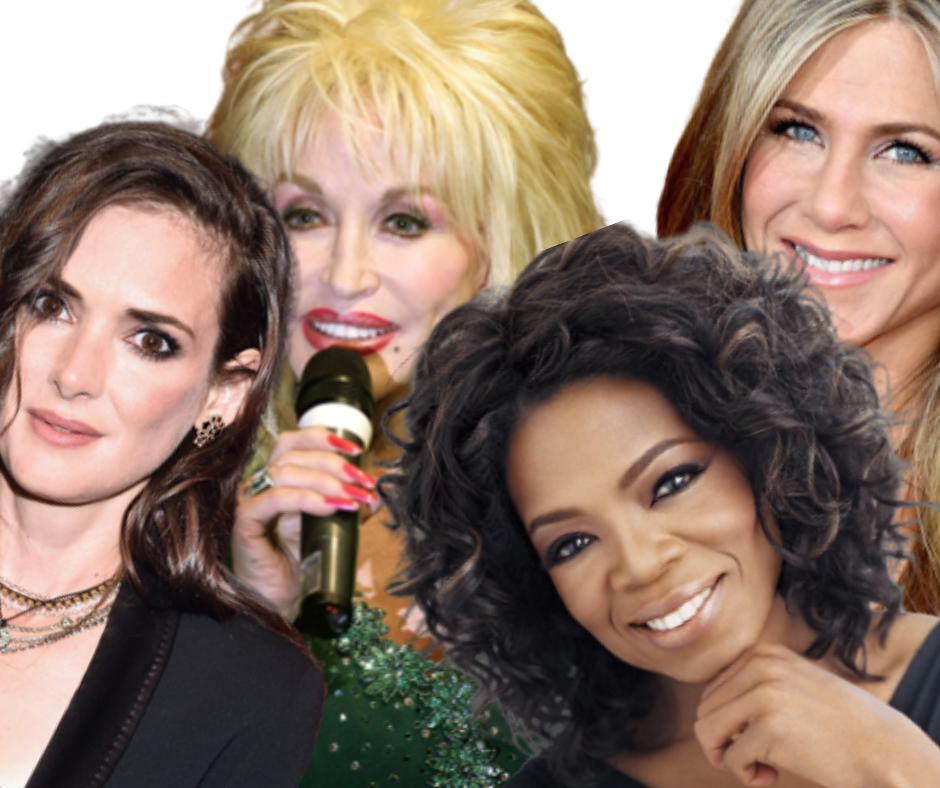
Oprah Winfrey : Motherhood Takes Many Forms
Oprah Winfrey has spoken candidly about why she never had children, explaining that her life’s work—mentoring, building platforms, and supporting millions – would not have coexisted easily with motherhood. Rather than seeing this as a lack, she reframed it as alignment.
Her perspective challenges a deeply ingrained belief: that nurturing only counts if it is biological. Oprah’s life stands as evidence that contribution, care, and legacy are not confined to one role.
Dolly Parton : Freedom, Focus, and Fulfilment
Dolly Parton has been refreshingly honest about her choice to remain childless. She has explained that not having children gave her the freedom to pursue her creativity fully, which in turn allowed her to support countless other children through initiatives like the Imagination Library.
In her words, she did not feel she missed out on motherhood—she simply expressed it differently. This distinction is crucial. Being childless and happy is not about absence; It is about intentional presence elsewhere.
Jennifer Aniston : Rejecting the Pity Narrative
Few public figures have been subjected to as much speculation and pity as Jennifer Aniston. For years, tabloids framed her childlessness as tragedy or failure. Eventually, she addressed it directly, stating that she is not incomplete and does not owe the public an explanation for her life choices.
Her comments resonated widely because they exposed how deeply society equates a woman’s worth with motherhood. Aniston’s refusal to internalize that narrative marked a turning point in how openly this conversation could be had.
Winona Ryder and the Power of Not Explaining Yourself
Winona Ryder has spoken about learning to stop listening to outside noise. Her reflections highlight something many people feel but struggle to articulate : The exhaustion of constantly having to defend a life that already feels right.
The most radical part of her stance is not the decision itself, but the calm certainty behind it. No argument. No manifesto. Just clarity.
Why This Choice Still Makes People Uncomfortable
The discomfort around being childless and happy rarely comes from concern. It comes from threat.
When someone lives well outside the expected script, it forces others to question whether their own choices were truly free, or simply inherited. That discomfort often manifests as unsolicited advice, pity, or subtle judgement.
Social media amplifies this tension. Platforms are filled with curated images of family milestones presented as universal proof of happiness, while alternative paths remain underrepresented or misunderstood.
Here is an article on the responses a social media influencer got when she posted of being childless and happy at 37.
The NoRuleBook View on Being Childless and Happy
NoRuleBook does not promote one life path over another. It promotes authorship.
Choosing to have children can be deeply meaningful. Choosing not to can be equally so. The problem arises when choice disappears and obligation takes its place.
A meaningful life is not measured by conformity, but by alignment. When your actions reflect your values, happiness tends to follow—quietly, without needing validation.
These ideas—about autonomy, resisting default scripts, and designing life deliberately—are explored further in the NoRuleBook eBook. Grab you copy here.
Final Take : Redefining What a Full Life Looks Like
The idea that happiness must follow a single route is not wisdom. It is habit.
Being childless and happy is not a rebellion. It is simply one expression of a life lived consciously. The growing number of people – famous and otherwise – who speak openly about this choice are not asking for approval. They are offering permission.
Permission to question.
Permission to choose.
Permission to stop explaining yourself.
When you remove the pressure to follow someone else’s timeline, something unexpected happens. You begin to hear your own preferences more clearly.
And that, more than any prescribed milestone, is where a fulfilling life begins.

 Submitted 1.0
 Manual 5.0