
Imagine spending decades building a business that makes you extraordinarily wealthy, reaching the point where you possess more money than you could realistically spend in several lifetimes, and then deciding that the real challenge is no longer how much more you can accumulate, but how effectively you can give almost all of it away.
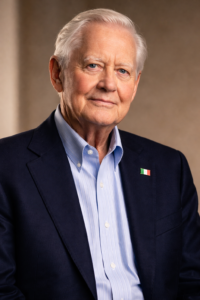
That was the unusual second act of Chuck Feeney’s life.
Feeney became enormously wealthy as the co-founder of Duty Free Shoppers, the retail business that transformed international travel into a lucrative global marketplace. By conventional measures, he had won the game. He had created a hugely successful company, accumulated a multibillion-dollar fortune and reached the level of wealth where almost every material option available in life was suddenly within reach.
Yet Feeney began questioning something that our culture rarely encourages successful people to question: “What was all that money actually for?”
The conventional answer would have been familiar. Keep building the fortune, protect it, invest it, enjoy some of it, pass much of it to the next generation and perhaps establish a charitable legacy towards the end of life. Wealth, once accumulated, is generally treated as something to preserve, and the size of the fortune itself can become another measure of achievement. Feeney chose almost the opposite approach.
Over the decades that followed, he would give away virtually his entire fortune, much of it anonymously, eventually directing more than $8 billion towards universities, healthcare, scientific research, human rights, peace initiatives and other causes around the world. He deliberately lived far below what his wealth could have provided, avoided many of the status symbols normally associated with billionaires and developed a philosophy that became known as Giving While Living.
He wasn’t rejecting money. He understood its value exceptionally well. He was simply questioning the assumption that the highest purpose of accumulating wealth was continuing to own it.
What if the rules for becoming wealthy and the rules for living a successful life are not actually the same?
HE LEARNED HOW TO MAKE MONEY FIRST
Chuck Feeney did not grow up surrounded by wealth. Born in New Jersey in 1931 into a working-class Irish-American family, he served in the United States Air Force before attending Cornell University with assistance from the GI Bill. After graduating, he began looking for business opportunities rather than following a conventional corporate career, and one of those opportunities emerged from the growing number of American military personnel and international travellers moving around the world.
Along with Robert Miller, Feeney began selling duty-free goods and eventually co-founded Duty Free Shoppers, better known as DFS. The business expanded alongside the extraordinary growth of international travel, particularly as increasing numbers of affluent Japanese tourists began travelling overseas, and DFS developed into a global retail operation selling luxury goods to travellers passing through airports and major destinations.
Feeney became exceptionally good at building wealth, but there was an unusual contradiction developing between the success of his business and the way he personally lived. The more money he accumulated, the less interested he appeared to become in demonstrating that he possessed it.
He was known for flying economy rather than surrounding himself with private jets, wearing an inexpensive watch rather than using luxury goods as signals of status, and living relatively modestly despite having access to almost anything money could buy. Those details can easily become charming anecdotes about an eccentric billionaire, but they point towards something more important about the way Feeney thought.
He had begun separating having money from needing to look wealthy.
That distinction would eventually lead him towards a far more radical question. If accumulating another billion dollars would make almost no meaningful difference to the way he wanted to live, why should keeping that billion dollars automatically be considered the sensible thing to do?
THEN HE QUESTIONED WHAT THE MONEY WAS FOR
In 1982, Feeney established what would eventually become The Atlantic Philanthropies, and two years later he made the decision that transformed his approach to wealth from unusual into extraordinary: He transferred virtually all of his ownership interests in Duty Free Shoppers to the foundation.
This was not a pledge promising that most of his fortune would eventually be donated after his death. Feeney was still in his early fifties and had decades of life ahead of him. He was deliberately giving away ownership of the fortune while he was still alive and capable of deciding where it could do the most good.
There was a practical logic behind the decision that went beyond generosity. Feeney believed that problems existing today could be addressed with resources available today, rather than leaving vast fortunes invested for decades so that they could eventually be distributed by somebody else. Giving during his lifetime also allowed him and the people working with him to see what happened to the money, learn from successes and failures, and redirect future funding towards places where it could have greater impact.
This became the philosophy he called Giving While Living.
It challenged one of the most deeply embedded assumptions surrounding wealth: That successful accumulation should naturally be followed by successful preservation. The unwritten progression is familiar enough that we rarely question it. Earn more, accumulate more, protect what you have accumulated, display enough of it to demonstrate success, and eventually leave whatever remains behind.
Feeney had mastered the first part of that process and then questioned why he was required to follow the rest.
He wasn’t suggesting that money had no value. His entire philanthropic strategy depended upon understanding exactly how valuable money could be when placed in the right hands at the right time. What he rejected was the idea that the value of wealth should be measured primarily by how much of it remained attached to his name.
For Feeney, money had gradually stopped being the score.
It had become the tool.
“I had one idea that never changed in my mind — that you should use your wealth to help people.”
Chuck Feeney
THE JAMES BOND OF PHILANTHROPY
Giving away billions of dollars was unusual enough, but Feeney made another decision that separated him from the traditional world of big philanthropy: For years, he didn’t want anyone to know he was the person giving the money away.
Major gifts flowed through The Atlantic Philanthropies to universities, hospitals and social causes around the world without Feeney’s name appearing on buildings or being attached to the donations. While philanthropy has often offered wealthy donors another form of legacy — their names carved into university halls, hospital wings and cultural institutions — Feeney deliberately stepped away from that bargain. If the purpose of the money was to achieve something useful, he saw little reason why public recognition of the donor had to be part of the transaction.
His anonymity became so important that Atlantic operated quietly for years, and Feeney’s role behind the enormous donations remained largely unknown until circumstances surrounding the sale of Duty Free Shoppers eventually brought his philanthropy into public view. By then, he had already transferred away much of the fortune that outsiders still assumed belonged to him.
It was this combination of enormous financial reach and deliberate secrecy that helped earn Feeney the nickname ‘The James Bond of Philanthropy.’ Yet the secrecy wasn’t simply an eccentric billionaire playing at anonymity. It reflected the same philosophy that shaped the rest of his life: If money was a tool for creating change, then attaching his name to everything it touched did nothing to make that tool more effective.
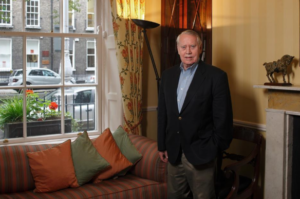
The contrast between his resources and his lifestyle only reinforced the point. Feeney became famous for wearing an inexpensive Casio watch, flying economy and avoiding many of the possessions normally associated with extreme wealth. He eventually lived in rented accommodation rather than maintaining a collection of grand homes, demonstrating that his decision to give away his fortune wasn’t merely something that happened inside a foundation while he continued living like a billionaire everywhere else.
But the significance of those choices can easily be misunderstood. The lesson isn’t that expensive watches, large houses or first-class travel are inherently wrong, nor that living modestly somehow makes a person morally superior. That would simply replace one set of social rules with another.
What made Feeney interesting was that he appeared remarkably uninterested in buying things simply because someone with his wealth was expected to want them. He had reached a financial position where almost every luxury was available to him, yet availability alone wasn’t enough to make those things valuable.
That is a much more challenging idea than simply telling people to spend less. It asks whether the things we pursue are improving our lives because we genuinely value them, or whether some of them have become symbols we accumulate because they are how society has taught us to recognise success.
WHAT $8 BILLION COULD DO
Feeney’s philosophy would mean very little if giving the money away had been the objective in itself. The real test was what happened after the money left his hands.

Over several decades, The Atlantic Philanthropies directed more than $8 billion towards causes across the world, supporting universities and scientific research, healthcare and public health programmes, social initiatives and efforts connected with peace and reconciliation in Northern Ireland. Feeney had spent the first part of his career learning how to allocate capital in ways that built a successful business; he now applied the same underlying question to philanthropy — where could money produce the greatest useful result?
This is where Giving While Living became more than a memorable slogan. Feeney believed there was little sense in preserving an enormous charitable fortune indefinitely when serious problems already existed and the resources to address them were available now. By deploying the money during his lifetime, he could see what it achieved, learn where it worked and where it didn’t, and continue making decisions while there was still time to change course.
That approach also meant accepting something many wealthy people find difficult: Once the money had been given away, it was no longer part of his personal scorecard.
For someone whose success had originally been measured by the value he created and the fortune he accumulated, that represented a profound change in what ‘winning’ meant. The objective was no longer to finish life with the largest possible number beside his name, but to put as much of that number as possible to useful work before he was gone.
Feeney didn't stop understanding the value of money. He changed his mind about where that value should be measured.
THE RULE OF WEALTH FEENEY REFUSED TO FOLLOW
There is an unwritten assumption buried deep inside our idea of financial success : More is Better.
At lower levels of wealth, that assumption often makes perfect sense. More money can provide security, eliminate debt, create choices, protect a family and allow someone to experience things that would otherwise remain beyond reach. Financial independence can dramatically change the quality and freedom of a person’s life.
But Feeney’s story raises a more difficult question about what happens after money has already achieved those things.
At what point does accumulating more stop materially improving your life and start becoming an objective simply because increasing the number is how we have learned to keep score?
Feeney answered that question for himself in an extraordinarily extreme way. He didn’t merely decide that he had enough; he spent decades systematically transferring almost everything beyond what he and his family needed into causes where he believed it could accomplish more.
That doesn’t mean his answer should become everybody else’s answer. Giving away virtually your entire fortune is not a new rule that needs to replace the old one, and the point of his story would be lost if we turned one man’s unconventional choice into another prescription for how everyone else should live. What matters is that Feeney asked the question at all.
He had achieved the outcome that millions of people spend their lives pursuing, yet instead of automatically continuing the game, he questioned whether the score still meant what everyone assumed it meant. He separated the usefulness of money from the status attached to possessing it and decided that, beyond a certain point in his own life, what the money could do mattered more than whether it remained his.
That is where Chuck Feeney’s story becomes much bigger than philanthropy.
Because money is only one thing we accumulate. We can spend decades collecting possessions, status, professional titles and other visible evidence that our lives are progressing, rarely stopping to ask whether those things continue to serve the life we actually want. The danger isn’t in wanting any of them; it is in continuing to pursue them automatically, long after we have forgotten why we wanted them in the first place.
Feeney did something most people never do. Having become extraordinarily successful at playing the game, he stopped to ask whether he still wanted the prize.
WHEN GIVING IT AWAY BECAME THE LEGACY
By the time The Atlantic Philanthropies formally closed in 2020, Feeney had achieved something almost as unusual as becoming a billionaire in the first place: he had succeeded in giving virtually all of his fortune away during his lifetime. More than $8 billion had been distributed, and the foundation itself was deliberately wound down rather than preserved as a permanent institution bearing his legacy into the future.
There was something remarkably consistent about that ending. Feeney had spent decades arguing that money intended to solve problems should be put to work while those problems existed, so leaving behind an enormous foundation designed to continue accumulating and distributing wealth after his death would have contradicted much of what he believed. Even his philanthropy wasn’t something he felt needed to exist forever simply because he had created it.
The irony was that a man who had worked so hard to keep his name away from his giving eventually became influential precisely because other wealthy people discovered what he had done. Warren Buffett described Feeney as his hero and Bill Gates’ hero, while Feeney’s philosophy of Giving While Living became an example for a generation of philanthropists considering whether their fortunes could accomplish more during their lifetimes than after them.
When Feeney died in 2023 at the age of 92, the vast fortune he had once controlled was no longer his. That was not the result of business failure, reckless spending or a financial collapse. It was the outcome he had deliberately spent decades trying to achieve. And perhaps that is the most striking part of his story.
Society had given Feeney a familiar definition of financial success and, by almost every conventional measure, he had achieved it. What made him different was that he didn’t assume achieving the goal meant he had to spend the rest of his life continuing to pursue more of the same. Once he had enough, he allowed himself to ask what the money was actually for, and his answer changed the direction of the rest of his life.
The actual rule Chuck Feeney broke wasn't that wealthy people should keep their money. It was the assumption that having more must always mean wanting more.
Take The Next Step
You don’t need billions of dollars to recognize the question at the heart of Chuck Feeney’s story, because the same pattern can appear at almost any level of success. We spend years pursuing more money, possessions, recognition or status because they once represented something we genuinely wanted, yet rarely stop to ask whether continuing to accumulate them is still making our lives meaningfully better.
Feeney’s answer was extreme and deeply personal, and it doesn’t need to become yours. The lesson isn’t to give everything away or reject the comforts that money can provide. It is simply to make sure that ‘more’ remains a conscious choice rather than becoming a destination with no finish line.
Chuck Feeney spent the first part of his life proving how much he could build. He spent much of the rest deciding what all that success could be used for.
And perhaps his life leaves us with a better measure of wealth. Because the question isn’t how much you can accumulate before you die. The question is :
The NoRuleBook Collection
-
NoRuleBook
$9.95Original price was: $9.95.$7.95Current price is: $7.95. -
No Rules Start-Up
$19.95Original price was: $19.95.$9.95Current price is: $9.95. -
NoRuleBook Bundle
$22.90Original price was: $22.90.$14.95Current price is: $14.95.