
WHEN EVERY EMPTY MOMENT BECAME SOMETHING TO FILL
Watch what happens the next time someone finds themselves with a few unexpected minutes and nothing in particular to do. They might be waiting for a coffee, sitting alone before a meeting begins, standing in a queue or arriving early to meet a friend who hasn’t yet appeared.
For most of human history, moments like these were simply part of the texture of everyday life, small stretches of unoccupied time in which there was nothing to read, watch, answer or consume. You waited, looked around, watched other people, followed wherever your thoughts happened to wander, or simply did nothing at all.
Today, something different often happens.
Within seconds, the phone appears.
There is nothing inherently wrong with that response. A spare moment can be a perfectly good opportunity to answer a message, read the news, listen to something interesting or catch up with somebody halfway around the world, and the technology that allows us to do those things is extraordinary. The more interesting question is whether we are always making a conscious choice to use it, or whether we have gradually become so accustomed to constant stimulation that an unoccupied moment now feels like a problem requiring a solution.
Somewhere along the way, empty time became something to fill.
We put podcasts into walks, music into cooking, television into meals, notifications into conversations and scrolling into almost every pause between one activity and the next. Even when none of those things is demanding our attention, we often go looking for them, not necessarily because what they offer is important, but because doing nothing has begun to feel strangely unnatural.
This is not simply a story about smartphones. Long before social media existed, people used television, radio, newspapers and conversation to occupy their attention, and human beings have probably always found ways to escape boredom when the opportunity presented itself. What has changed is the extraordinary ease with which we can now eliminate almost every remaining pocket of silence. The device in our pocket means stimulation no longer has to be waiting for us somewhere else; we carry an effectively endless supply of it everywhere we go.
That creates a new kind of unwritten rule, one that nobody formally imposed and few of us consciously agreed to:
If nothing is happening, find something.
Yet there is another possibility, one that can feel almost rebellious precisely because modern life makes it so easy to avoid.
What if, occasionally, we allowed nothing to happen?
What might return to our attention if we stopped immediately replacing every empty moment with somebody else’s words, images, opinions or entertainment?
There is a word in Finnish that gives us a useful place to begin exploring that question.
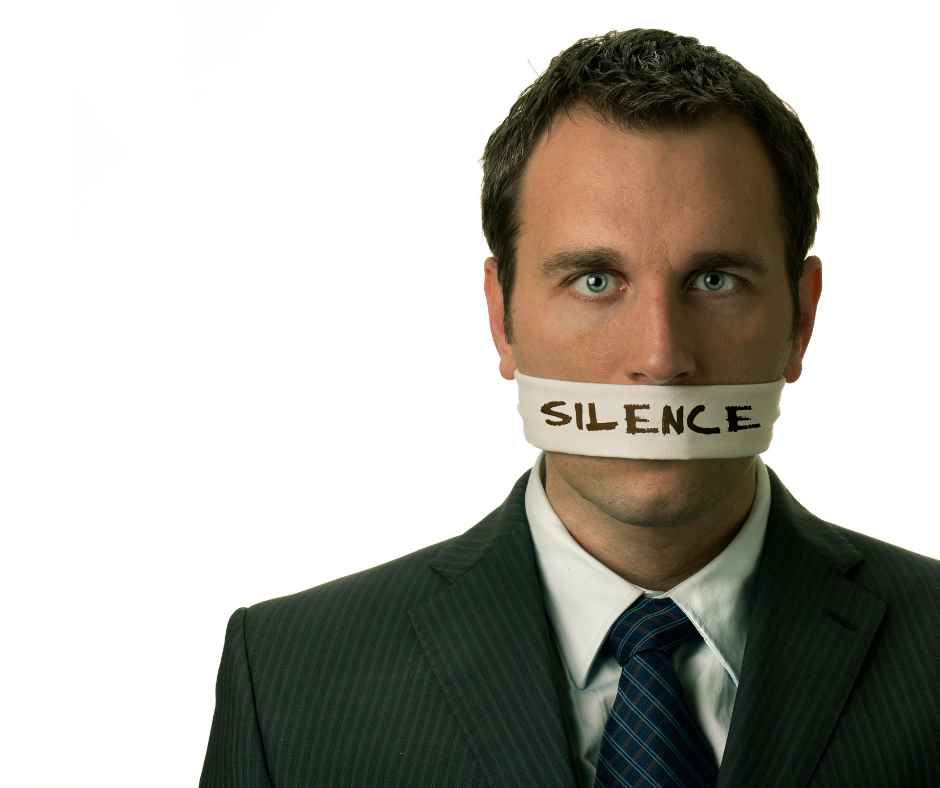
Hiljaisuus. – It means silence.
And the interesting part is not the word itself, but the culture surrounding it.
When did silence become something we feel compelled to fill?
THE FINNISH COMFORT WITH SILENCE
Every culture develops unwritten rules about conversation. We learn when to speak, how quickly to answer, how long to hold someone’s gaze, whether interrupting signals enthusiasm or rudeness, and how much empty space can exist between one person’s words and another’s before somebody feels responsible for filling it.
Because those rules are rarely explained explicitly, we tend to mistake our own version for normal human behaviour.
Silence provides a particularly revealing example.
In many English-speaking social situations, an unexpected pause can feel uncomfortable remarkably quickly. If conversation stops around a dinner table, during a meeting or between two people who have only recently met, somebody will often step in to rescue the moment. We ask another question, make an observation about the weather, reach for a safe piece of small talk or, increasingly, look towards a phone. The silence itself begins to communicate something we may never have intended: perhaps the conversation is failing, perhaps somebody is bored, perhaps we have run out of things to say.
Finnish culture has traditionally allowed more room for a different interpretation.
Finland’s own cultural guides have noted that Finns tend to be comfortable with pauses in conversation and that silence does not necessarily create the same obligation to keep talking simply for the sake of maintaining social momentum. The Finnish word hiljaisuus means silence or quietness; It is not a formal philosophy or prescribed self-improvement practice, but it provides a useful window into a culture in which quiet does not automatically need to be repaired.
That difference is more significant than it first appears, because if one culture can experience a conversational pause as awkward, while another can experience essentially the same pause as perfectly ordinary, then the discomfort cannot belong entirely to the silence itself.
At least part of it has been learned.
We have learned what silence is supposed to mean.
We have learned when a conversation is moving successfully and when it supposedly needs rescuing. We have learned that sociable people keep things moving, that confident people have something to say, that productive people remain occupied and that an idle person should probably find something useful to do. None of these expectations is necessarily unreasonable, but together they can create a world in which quiet gradually becomes associated with absence rather than possibility. And once that assumption extends beyond conversation, something much larger begins to happen.
A quiet room invites us to turn something on. A silent journey invites us to find something to listen to. A few minutes waiting invites us to check something. A walk becomes an opportunity to finish a podcast, a meal becomes an opportunity to watch a video, and even falling asleep can become an activity accompanied by another person’s voice.
Again, none of those choices is inherently a problem. A great podcast can make a walk more interesting, music can transform a journey, and some conversations are infinitely better than silence. NoRuleBook should never replace the rule “You must always be stimulated” with an equally arbitrary rule that says “Silence is morally superior.”
The question is whether we still possess the choice.
Because there is a meaningful difference between deciding that you want to listen to something and discovering that you have become uncomfortable when there is nothing to listen to.
Hiljaisuus gives us a way to notice that difference. Not because Finland has discovered some secret formula for living that everybody else should copy, but because another culture’s comfort with silence exposes something we might otherwise mistake for universal: Our discomfort with quiet may not simply be part of who we are. It may also be one of the habits we have learned.
And once we recognise it as learned, we can begin deciding whether we want to keep following it.
“If one culture experiences silence as awkward while another experiences the same silence as perfectly ordinary, perhaps the discomfort isn't in the silence. Perhaps it's in the rules we've learned about it.”
WHEN SILENCE STARTED FEELING LIKE A PROBLEM
The discomfort many of us experience with silence does not begin and end with conversation. It is part of a much larger change in the way we experience attention, availability and time itself, because modern life has gradually made it possible—and increasingly normal—for almost every moment to contain some form of input.
Consider how many expectations now surround something as ordinary as receiving a message. A letter once travelled for days and nobody considered the delay unusual, while an unanswered telephone call simply meant the person wasn’t available. Today, a message can arrive instantly, carry an indication that it has been delivered or even read, and remain visibly unanswered while the sender wonders why. The technology has changed, but alongside it an unwritten social rule has begun to change as well: If you can respond, perhaps you should respond -and if you don’t, your silence may itself require an explanation.
The same expectation appears in working life. Being reachable can easily become confused with being committed, a full calendar can become evidence of importance, and the person who tells everyone how busy they are may be signalling status as much as workload. None of this requires anyone to issue a formal instruction. It emerges gradually from thousands of small expectations until availability begins to feel normal and withdrawal from it begins to feel unusual.
Silence becomes caught up in that shift because silence represents something increasingly scarce: A period in which nobody else is directing your attention.
For much of the day, our attention is being invited somewhere. A notification wants us to check a message, a headline wants us to read an article, a video platform wants us to watch what comes next, an advertisement wants us to notice a product and a social feed offers an endless sequence of other people’s experiences, arguments, achievements and anxieties. Much of that material can be useful, entertaining or genuinely enriching, but the sheer abundance of it means that we no longer need to decide what to do with an empty moment before somebody else offers to decide for us.
This is why the issue is larger than screen time. You could throw away your smartphone tomorrow and still spend every waking hour surrounded by television, radio, conversation, work and other forms of stimulation. The deeper question is whether we have retained the ability to experience a period in which nothing is competing for our attention without immediately interpreting that absence as boredom.
Boredom itself has acquired a strangely negative reputation. We talk about it as though it represents a failure to find something sufficiently interesting, yet boredom can also be the transitional space between consuming what is already available and discovering what your own mind does when it is no longer being continuously supplied with material. The uncomfortable first few minutes of a quiet walk may therefore tell us something important—not necessarily that the walk needs a podcast, but that we have become accustomed to having our attention occupied.
There is no reason to romanticise this. Silence can be boring. Waiting can be tedious. Some podcasts are brilliant companions on a walk, and sometimes the best possible use of ten spare minutes really is to read something interesting on your phone. The NoRuleBook question is not whether stimulation is bad, but whether the choice to seek it still belongs entirely to us.
Because when an activity changes from something we choose, into something we perform almost automatically, it is worth noticing.
And silence is one of the easiest places to discover the difference.

Silence is not disappearing from modern life because somebody banned it. We are eliminating it ourselves, one empty moment at a time.
WHAT HAPPENS WHEN THE INPUT STOPS
One reason silence can feel unusual is that removing external stimulation does not necessarily produce the peaceful mental blankness suggested by photographs of people meditating beside mountain lakes. Quite often, the opposite happens. Once the outside input disappears, the mind begins supplying material of its own.
A forgotten conversation returns. An unfinished problem reappears. An idea that had been hovering somewhere beyond conscious attention suddenly becomes clearer, or one thought leads unexpectedly to another without an algorithm, agenda or conversation determining where it should go next. At other times, nothing profound happens at all. You notice a bird, remember something you need from the supermarket or spend several minutes thinking about something completely trivial.
All of those outcomes are normal.
The brain does not simply become inactive when it is no longer concentrating on an external task. Research into internally directed thought has identified networks—including what neuroscientists call the default mode network—that participate in processes such as spontaneous thought, autobiographical memory, imagining possible futures and aspects of creative thinking. Creativity itself appears to depend on interaction between more spontaneous forms of thought and networks involved in cognitive control rather than on a simple state in which the brain somehow ‘switches into creativity’ whenever the room becomes quiet.
That distinction is important because silence does not deserve to be turned into another productivity hack.
You do not need to sit quietly for twenty minutes because somebody has promised it will make you more innovative, any more than you need to abandon music, podcasts or conversation in pursuit of an optimized brain. The more useful point is much simpler: internally generated thought needs opportunities in which external input is not continuously deciding what receives your attention next.
Imagine trying to develop an original opinion while spending almost every available moment consuming other people’s opinions. Imagine trying to discover what you actually want while being continuously exposed to what everybody else is buying, achieving, travelling towards, worrying about and presenting as success. The problem is not that those outside voices are necessarily wrong; many of them may be useful. The problem is that their sheer volume can make it surprisingly difficult to identify where they end and your own thinking begins.
This is where silence becomes particularly relevant to NoRuleBook.
Questioning an unwritten rule requires enough distance from it to recognize that the rule exists in the first place. If our attention is continuously occupied by the same culture that created the expectations we are trying to examine, then creating occasional periods without that input is not withdrawal from the world. It can be a way of seeing the world more clearly.
If every unoccupied moment is filled with someone else's words, images, opinions or entertainment, when does your own mind get an uninterrupted turn?
WHY SILENCE CAN BE UNCOMFORTABLE
There is, however, another reason we may resist quiet that has very little to do with technology.
Sometimes we don’t particularly want to hear what appears when everything else becomes quiet.
Silence can create room for useful ideas, but it can also create room for unresolved questions. A career that has felt increasingly wrong is easier to ignore while the days remain full. A relationship we are uncertain about can remain unquestioned when every evening contains another distraction, while anxieties about ageing, money, purpose or the direction of our lives do not necessarily disappear because we have successfully kept ourselves occupied.
This does not mean that everybody who reaches for a phone is secretly avoiding an existential crisis. Most of the time we probably reach for it because it is entertaining, useful and sitting conveniently in our pocket. But there is still value in noticing that constant stimulation can perform another function: It can prevent uncomfortable thoughts from having enough uninterrupted space to develop.
That may explain why deliberately choosing quiet can initially feel less peaceful than expected. When the familiar stream of external input stops, the first thing we encounter is not necessarily clarity but whatever has been waiting underneath it.
The temptation is to interpret that discomfort as evidence that silence isn’t working.
Yet perhaps silence is doing precisely what we needed it to do.
A difficult thought is not automatically a truthful thought, and sitting quietly does not magically reveal some hidden authentic self whose every conclusion should be trusted. Our minds can mislead us in silence just as easily as other people can mislead us through noise. But noticing what repeatedly returns to our attention gives us something we did not have while we were constantly distracting ourselves: the opportunity to examine it.
That is why Hiljaisuus should not be understood as an escape from life. At its most useful, quiet does almost the opposite. It removes enough of the surrounding commentary for us to notice what our own lives have been trying to tell us.
And sometimes what we hear will be reassuring.
Sometimes it won’t.
Either way, we are finally listening.
Silence does not always give you peace. Sometimes it gives you the question the noise was helping you avoid.
THE NORULEBOOK 'SILENCE' TEST
The purpose of this test is not to prove that silence is better than noise, or to persuade you to spend your mornings meditating and your evenings walking through forests without a phone. It is simply to discover how much of the stimulation in your life you are actively choosing, and how much has become an automatic response to any moment in which nothing else is demanding your attention.
For one day, begin by noticing the moments you instinctively try to fill. It might happen when you are waiting for somebody, walking somewhere alone, eating lunch, driving, sitting in an airport or simply finding yourself with five unexpected minutes between one task and the next. Don’t change anything yet. Just notice how quickly the impulse appears to reach for a phone, turn something on, check something or find some other source of input.
Then choose one of those ordinary moments and leave it alone.
Not for an hour. Not as a digital detox. Not because silence is supposedly virtuous. Simply allow one part of your normal day to remain unfilled long enough to notice what happens.
1. WHAT DO YOU AUTOMATICALLY FILL?
Identify the moments in your day when you almost automatically introduce some form of stimulation. The important distinction is not whether you use your phone, listen to music or enjoy a podcast, but whether you remember consciously deciding to do it.
2. WHAT HAPPENS IF YOU DON'T?
Choose one of those moments and resist the usual response. Walk without headphones, eat without watching anything, drive without turning something on or simply wait without reaching for your phone. Pay attention not only to what you think about, but to how the absence of stimulation actually feels.
3. WHAT ARE YOU TRYING TO ESCAPE?
If the quiet becomes uncomfortable, resist the temptation to immediately label that discomfort as boredom. Ask what is actually creating it. Perhaps you simply prefer having something interesting to listen to, but perhaps you are uncomfortable with waiting, with having nothing productive to do, with appearing idle or with being left alone with thoughts that normally receive very little uninterrupted attention.
4. WHAT APPEARS WHEN NOTHING ELSE IS COMPETING FOR YOUR ATTENTION?
Don’t expect revelation. Your mind may wander somewhere useful, somewhere uncomfortable or nowhere particularly interesting at all. The point is not what appears on any particular occasion, but whether you still have spaces in your life where your attention is allowed to find its own direction.
5. WHAT DO YOU CONSCIOUSLY WANT TO PUT BACK?
Now bring the noise back – but choose it. Listen to the podcast because you want to hear it. Play the music because it improves the journey. Answer the message because you have decided it deserves your attention. Silence has done its job if it has helped reveal the difference between stimulation you choose and stimulation you reach for automatically.
The goal isn't to create a quieter life. It's to make sure the noise in your life is there because you chose it.
THE NORULEBOOK TRUTH
Hiljaisuus does not offer an escape from a noisy world, nor does Finland possess some secret relationship with silence that the rest of us need to imitate. Its value to NoRuleBook is much simpler: It reminds us that even something as instinctive as our discomfort with quiet can contain assumptions we have absorbed without ever consciously choosing them.
Technology has given us an extraordinary ability to fill almost every previously empty moment, and there is much to enjoy in that abundance. We can carry music, books, conversations, news, entertainment and the accumulated knowledge of much of humanity in our pockets. The danger is not that these things exist, but that their constant availability can make their absence begin to feel like something is wrong.
Silence gives us an opportunity to discover whether that has happened.
If you can walk without needing something in your ears, wait without needing something in your hands, sit beside someone without needing to rescue every pause and spend a little time without somebody else’s thoughts directing your own, then silence no longer represents an absence that needs to be filled. It becomes another option available to you.
And that is where Hiljaisuus fits NoRuleBook most naturally, because the objective was never to exchange one prescribed way of living for another. It was to recognize the rules operating in the background, examine whether they still deserve to be there, and recover the ability to choose.
Freedom isn't living in silence. It's being able to choose silence without feeling that something is missing.
Take The Next Step
Many of the rules that shape our lives are difficult to see precisely because nobody announces them as rules. They emerge through habits, expectations and behaviours that gradually become so normal that we stop noticing we are following them at all. The expectation that every empty moment should contain something is only one example.
NoRuleBook is about learning to recognise those invisible expectations before deciding which deserve to remain part of your life. If Hiljaisuus has encouraged you to question one automatic habit, the next step is to start looking for the others—the assumptions surrounding work, success, relationships, money, ageing and the way a life is supposedly meant to unfold.
Click the NoRuleBook image below to explore the collection.
The NoRuleBook Collection
-
NoRuleBook
$9.95Original price was: $9.95.$7.95Current price is: $7.95. -
No Rules Start-Up
$19.95Original price was: $19.95.$9.95Current price is: $9.95. -
NoRuleBook Bundle
$22.90Original price was: $22.90.$14.95Current price is: $14.95.