
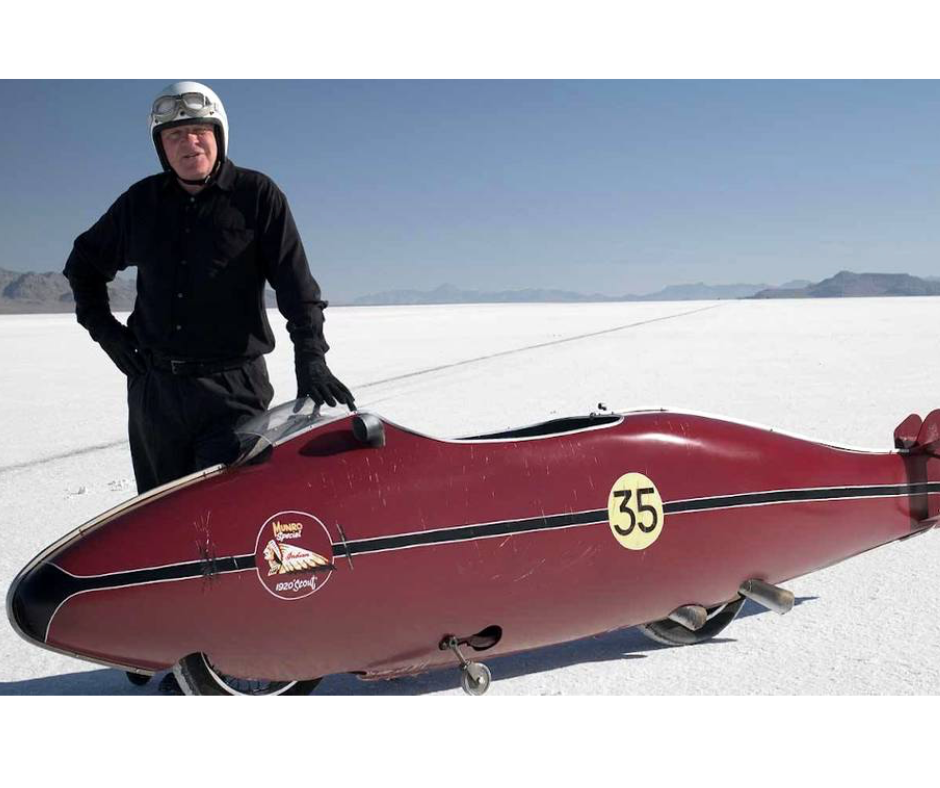
For most people, improving a motorcycle eventually reaches a logical stopping point. You make it faster, replace it with something newer, or simply move on. Burt Munro spent decades doing the opposite.
The Indian became a constantly evolving experiment. He would modify it, race it, discover its weaknesses, take it apart and begin again. When commercially manufactured racing components were unavailable or too expensive, he found ways to make his own.
He fashioned connecting rods from Ford truck axles. He cast his own pistons. He modified cylinders, lubrication systems and almost every other part of the engine as he searched for more speed and greater reliability. Components would sometimes fail spectacularly, but a broken part wasn’t treated as proof that the experiment had failed. It simply showed him what needed to be redesigned next.

By the time the Indian became the machine that would eventually race at Bonneville, very little about it remained as the manufacturer had originally intended. And still Munro wasn’t finished.
By the 1940s and 1950s, Munro had already become well known within New Zealand motorcycle racing, setting speed records on beaches and other courses, whilst continuing to push his Indian far beyond anything its original designers could have imagined. Yet the faster the motorcycle became, the more difficult it was to find somewhere in New Zealand that would allow him to discover what it could really do.
His attention increasingly turned to a place almost impossibly far from his Invercargill workshop: The Bonneville Salt Flats in Utah.
The author at The Salt Flats
Bonneville was unlike the roads, beaches and grass tracks on which Munro had spent much of his racing life. Its enormous, flat expanse of salt provided the distance required for the world’s fastest machines to accelerate to speeds that would be impossible on conventional racing circuits. For someone who had spent decades trying to discover how fast his Indian could become, Bonneville represented the ultimate test.
The problem was getting there.
Munro lived about as far from Utah as it was possible to be, and he certainly didn’t have the financial resources of an international racing team. Travelling from New Zealand to America with a heavily modified motorcycle required money he didn’t have readily available, so he saved, borrowed and took whatever work he could find to make the journey possible.
In 1962, at the age of 63, he finally set off for America with the Indian aboard a cargo ship, reportedly working as a cook during the voyage to help pay his way.
That detail says almost everything necessary about Munro. He had spent decades building the motorcycle, but when the next stage of the dream required crossing the Pacific, he didn’t treat distance or lack of money as reasons the idea was unrealistic. He worked out what was required and found a way to get himself and the Indian there.
By 1967, Munro was 68 years old and his Indian Scout was 47. Both had long since passed the point at which conventional thinking might have suggested replacing one and retiring the other.
Instead, they produced their most famous result together.

The numbers are extraordinary, but they matter here for a reason beyond motorcycle history. Munro’s greatest achievement did not arrive when he was young, when the motorcycle was new or when circumstances were easiest. It came after nearly half a century of experimenting with the same machine and at an age when the conventional script for life would have had him preparing to stop rather than still asking what might be possible.
That is what makes Burt Munro’s story much bigger than a speed record. He had not defeated ageing. He had simply refused to let age make the decision for him.
For much of his life, Burt Munro was far better known among motorcycle enthusiasts than to the wider world. He was an eccentric New Zealander working in a modest Invercargill shed, continually rebuilding an ageing motorcycle and travelling enormous distances whenever he could afford another attempt at going faster.
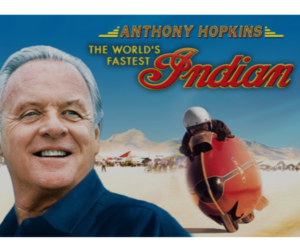 His story reached a much larger audience decades later through the 2005 film The World’s Fastest Indian, starring Anthony Hopkins. Although the film took some liberties with events, it captured the essential character of Munro’s journey: An older man from a remote corner of New Zealand arriving in America with an ancient, heavily modified motorcycle, and an ambition that looked improbable to almost everyone except him.
The film helped turn Munro into an international symbol of persistence, but there is a danger in remembering his story only through the triumphant ending. The record at Bonneville makes a great final scene, yet Munro’s real achievement was everything required to reach that moment.
He spent decades working on the same dream without knowing that anyone would eventually make a film about him, celebrate his achievements, or even regard his life as inspirational. For most of those years, there was no audience waiting for the ending.
There was simply Burt, the Indian and the next problem to solve.
-
-20%
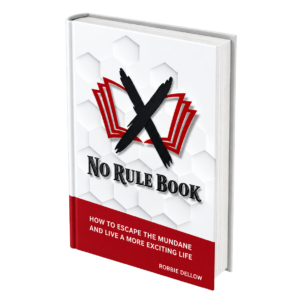
NoRuleBook
Original price was: $9.95.$7.95Current price is: $7.95. -
-50%

No Rules Start-Up
Original price was: $19.95.$9.95Current price is: $9.95. -
-35%

NoRuleBook Bundle
Original price was: $22.90.$14.95Current price is: $14.95.

 Submitted 1.0
 Manual 5.0