
Rudy Ray Moore and the Power of Ignoring the Rules Entirely
Rudy Ray Moore did not arrive early to success. He didn’t arrive smoothly either. His life reads less like a career plan and more like a long stretch of trial, drift, frustration, and stubborn refusal to quit. Born in 1927, Moore spent decades moving sideways through life. He worked factory jobs, sang rhythm and blues, tried comedy, failed publicly, and started again. There was no breakout moment waiting in his twenties or thirties. By the time most people quietly accept that their chance has passed, Moore was still searching for something that felt like his own.
Hollywood, meanwhile, had very clear ideas about who belonged. Young faces. Clean material. Safe edges. Moore was none of those things. He was older, rougher, and openly out of sync with the polite version of entertainment that studios preferred to sell. That mismatch is usually where careers die. For Moore, it became the point where everything finally started.
The Accidental Discovery That Changed Everything
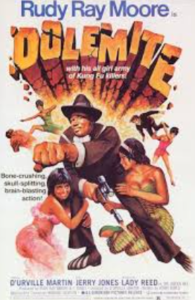
The shift didn’t happen on a stage or in a studio. It happened in a record store. While working there, Moore noticed customers repeatedly asking for the same kind of content – Raunchy, exaggerated street stories passed around orally, often ignored or dismissed by mainstream culture. These stories were raw, funny, vulgar, and alive in a way that polished comedy wasn’t. One character kept reappearing in different versions of these tales. His name was Dolemite.
Moore understood something important in that moment. This wasn’t just comedy. It was unmet demand.
Instead of asking for permission, Moore acted. He adapted the character, recorded comedy albums himself, and sold them directly to the people who already wanted that voice. No executives. No focus groups. No concern for respectability. The albums sold remarkably well, not because they were refined, but because they felt honest to the audience buying them.
That success wasn’t theoretical. It was cash in hand. And it proved something Moore would lean on for the rest of his life : If people are already buying what you’re making, the gatekeepers are irrelevant.
Turning Rejection Into a Business Model
Album success might have been enough for most people. For Moore, it wasn’t. He saw something larger. If people loved the character on vinyl, they would show up for him on screen. So he approached film studios with the idea of turning Dolemite into a movie.
They said no … Repeatedly.
The reasons were predictable. The content was too crude. The audience too narrow. Moore himself too old and too risky. These were not unreasonable objections by industry standards. They were also fatal only if you believed studios were the only way forward.
Moore didn’t argue. He didn’t soften the concept. He didn’t wait for tastes to change. He funded the film himself.
Dolemite, released in 1975, was not technically impressive. Scenes didn’t match. Dialogue drifted. Mistakes stayed in the final cut. But none of that stopped people from buying tickets. Moore rented theaters directly, promoted screenings himself, and treated each showing like a live event. The movie made money. Enough to fund the next one, and the one after that.
What Moore understood, instinctively, was that owning distribution matters more than winning approval. He wasn’t building a résumé. He was building a loop between his work and his audience.
Why Being “Unpolished” Was the Advantage
Critics mocked his films. Reviewers laughed at their roughness. Moore became an easy punchline for people who confused polish with value. But audiences didn’t care. They recognized themselves in his work. It spoke to them directly, without apology.
Moore never tried to be safe. He never tried to be polite. And he never tried to make his work easier for outsiders to digest. That was the point.
Rule-breakers are rarely polite or safe. They usually look wrong before they look right. Moore accepted that trade-off. He didn’t dilute his voice to attract everyone. He sharpened it to serve the people already listening.
The Quiet Cost of Not Playing Along
There was a cost to this path. Moore was never fully embraced by mainstream Hollywood during his peak. Awards passed him by. Prestige never arrived when it might have helped. Financial success came in waves, not guarantees. He lived without the safety nets that institutions provide.
But he also lived without their constraints.
He kept creating into old age. He owned his image. He worked on his terms. And he built something real long before culture decided it was acceptable to celebrate him.
Decades later, the tone changed. Filmmakers cited his influence. Audiences rediscovered his work. His story was finally retold with admiration rather than mockery. Recognition arrived safely, once the risk had already been taken by someone else.
That delay is common. Rule-breakers are rarely thanked in real time.
Influence on Modern Rap Music
Rudy Ray Moore is considered the grandfather of modern-day rap.
He came to be regarded as a major influence by many later rap stars. Snoop Dogg said that “Without Rudy Ray Moore, there would be no Snoop Dogg, and that’s for real.”
What Rudy Ray Moore’s Life Teaches
Moore’s life isn’t a neat success story. It’s better than that. It’s a reminder that momentum often comes after rejection, not before it. That age is less limiting than permission. And that culture doesn’t lead—it follows.
He didn’t wait to be chosen. He paid attention to what people wanted, built around that truth, and accepted the consequences of doing it his way. His work was imperfect, loud, and sometimes uncomfortable. It was also alive.
If there is a lesson here, it’s not about comedy or film. It’s about direction. Moore moved forward while others waited to be approved. He built demand before he sought validation. And he understood that safety and originality rarely coexist.
Lessons Readers Can Take From His Life
Rudy Ray Moore shows what happens when you stop asking whether something is allowed and start asking whether anyone wants it. He proves that owning your audience is more powerful than impressing gatekeepers, and that being late, rough, or unfashionable does not disqualify you from building something meaningful.
Most importantly, his life makes one thing clear : Breaking rules isn’t about rebellion for its own sake. It’s about refusing to let outdated standards decide when your time is over.
That idea sits at the core of NoRuleBook.