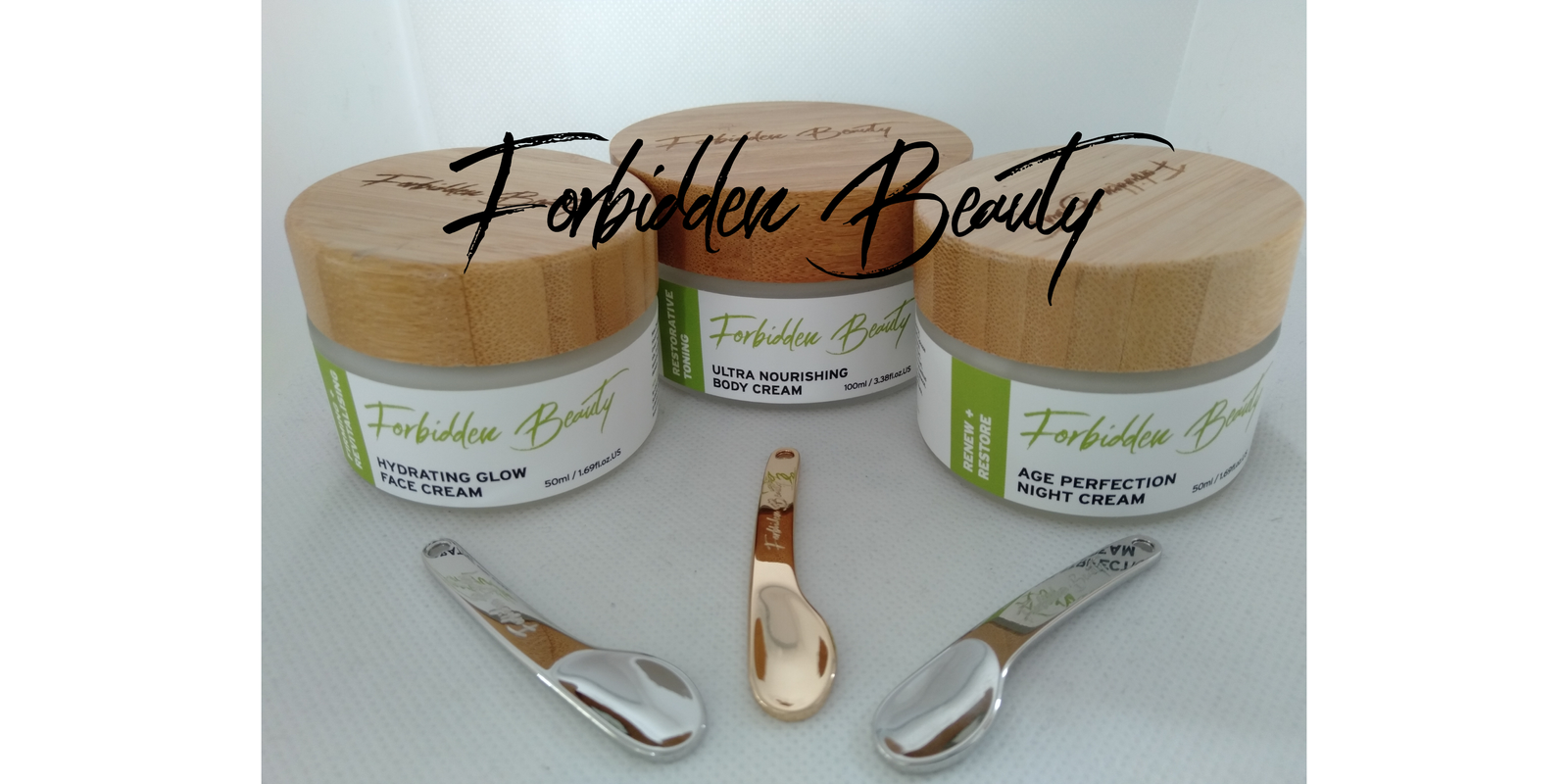
When I decided to start a skincare company, there was one fairly obvious problem: I knew almost nothing about skincare.
My working background had been in IT, an industry where I understood the terminology, the technology and the way things generally worked. Skincare and beauty could hardly have been further removed from that world. I knew nothing about developing cosmetic products, manufacturing creams, choosing ingredients, packaging skincare or navigating the regulations involved in eventually putting those products into customers’ hands.

To make the idea even less obvious, I was entering an industry whose customers were predominantly women and in which I had no existing contacts, reputation or experience to fall back on.
When I told a friend what I intended to do, her reaction was fairly predictable.
She wasn’t trying to discourage me for the sake of it. From the conventional way we think about expertise, her argument made perfect sense. If you want to build a business in an industry, surely you should understand that industry first. You gain experience, develop expertise and establish credibility, and only then are you qualified to start something of your own. Except I had begun wondering whether we sometimes have that sequence backwards.
I wasn’t claiming that expertise didn’t matter. Clearly it did. If I wanted skincare products developed safely and properly, there were people whose specialist knowledge I would absolutely need. What I questioned was whether I personally needed to possess all that knowledge before I was allowed to begin.
There was only one practical way to find out. I started.
The question wasn't whether expertise mattered. It was whether I needed to possess all of it before I was allowed to begin.
YOU DON'T KNOW WHAT YOU DON'T KNOW
Starting with very little knowledge of an industry creates an uncomfortable problem almost immediately. You don’t simply lack the answers; at first, you don’t even know which questions you should be asking.
As I began investigating what it would actually take to create a beauty company, the simplicity of the original idea quickly disappeared. A skincare product isn’t merely a cream inside an attractive jar. Behind it sits formulation, ingredient selection, manufacturing, testing, packaging, labelling, regulatory requirements, logistics, pricing, branding, ecommerce and dozens of smaller decisions that aren’t particularly visible when you’re standing on the customer side of the counter.
I could have looked at that growing list as evidence that perhaps my friend had been right. Perhaps this was exactly why people were supposed to spend years inside an industry before attempting to build a company within it. Instead, something else became apparent.
I realized that I didn’t need to become an expert in everything. I needed to understand enough about each part of the business to know where my own knowledge was sufficient and where somebody else’s expertise was essential. That distinction changed the challenge completely.
There are areas of a business where learning as you go is perfectly reasonable, and others where pretending to know what you don’t know can become expensive or dangerous. I could learn how ecommerce worked, investigate packaging options, understand margins, develop the brand and gradually become familiar with the industry. I did not need to become a cosmetic chemist and start formulating skincare products myself simply to prove that I was capable of founding a skincare company.
Expertise still mattered enormously. It just didn’t all have to belong to me.
SOMETIMES EXPERIENCE CAN ALSO TEACH YOU THE RULES
There was another consequence of arriving in an industry without years of experience that I hadn’t really considered when I began. I didn’t know how things were supposed to be done.
Normally, we think of that as a disadvantage, and much of the time it is. Experience allows people to recognize problems earlier, avoid mistakes others have already made and understand why certain practices exist. There is little value in ignoring decades of accumulated knowledge simply because you want to call yourself a rule breaker.
But experience can do something else as well. It can teach people the conventions of an industry so thoroughly that eventually those conventions stop looking like choices. They simply become the way things are done.
Coming from outside an industry doesn’t magically make someone more innovative, nor does ignorance somehow become an advantage in itself. What it can provide is a brief period before the assumptions of that industry become your assumptions too. You are more likely to ask basic questions because you genuinely don’t know the answers, and occasionally one of those questions exposes a practice that exists more because of convention than necessity. The challenge is knowing the difference.
Some industry rules exist because experienced people discovered, often painfully, why they were necessary. Others survive because everybody entering the industry learns to accept them before thinking to ask whether they still make sense. An outsider doesn’t automatically know which is which. But they may be more inclined to ask.
STARTING CHANGED WHAT I NEEDED TO LEARN
One of the biggest misconceptions I had before building this beauty company was that I should prepare myself until I knew enough to begin. What I discovered, though, was that the information I actually needed became much clearer after I started.
Before taking action, almost everything seemed potentially important. I could have spent months reading about skincare, ecommerce, digital marketing, packaging, manufacturing and business strategy without knowing which pieces of information would eventually matter. Once I began making real decisions, learning became much more specific because actual problems were determining what I needed to understand next.

A manufacturer asks a question you cannot answer, so you learn enough to answer it. Packaging creates a problem you hadn’t anticipated, so you investigate the alternatives. The website needs to perform a particular function, so you work out how to make it happen or find somebody who can. Each stage exposes the next gap in your knowledge, and suddenly education has a purpose that abstract preparation often lacks.
That doesn’t mean planning is unnecessary or that somebody should recklessly launch a business without understanding what they are getting into. It means there is a limit to how much you can learn about building something while remaining outside the process of actually building it.
At some point, preparation stops reducing uncertainty because the next thing you need to learn can only be revealed by moving forward.
That was probably the most important thing this beauty journey taught me about expertise. I had assumed knowledge would give me the confidence to act. Much of the time, action was what showed me which knowledge I needed.
THE REAL DANGER ISN'T STARTING WITHOUT EXPERTISE
Looking back, I don’t think starting without experience in the beauty industry was the reckless part. The reckless version would have been entering the industry without experience and assuming that didn’t matter.
There is an enormous difference between being willing to start as a beginner and being unwilling to recognize that you are one. The first creates an opportunity to learn. The second creates confidence without competence.
That distinction matters because “you don’t need experience” can easily become terrible advice when stripped of context. There are industries where mistakes have serious financial, legal or safety consequences, and there are areas of almost every business where specialist knowledge should not be replaced by enthusiasm and a few hours of internet research.
Starting before you are an expert therefore doesn’t mean pretending expertise is unnecessary. It means becoming comfortable saying, “I don’t know this yet,” and then deciding what follows from that admission. Sometimes the answer is to learn it yourself. Sometimes it is to find someone who already knows it. Sometimes discovering what you don’t know should cause you to change direction entirely.
Independent thinking is not believing you can do everything yourself. Sometimes it is having enough independence from your own ego to recognize that you can’t.
SO HOW MUCH DO YOU REALLY NEED TO KNOW BEFORE YOU BEGIN?
I don’t think there is a universal answer, and perhaps that is exactly the point.
The conventional sequence tells us to become qualified first and act afterwards, but real life is rarely that orderly. Sometimes years of training are essential before beginning. Sometimes a basic foundation is enough because most of the necessary learning will happen along the way. In many cases, the real skill is not knowing everything before you start, but knowing how to recognize the boundaries of your own knowledge as those boundaries become important.
My journey did not prove that expertise doesn’t matter. If anything, building the company taught me how much expertise sits behind things customers rarely have reason to think about. What it challenged was the assumption that expertise always has to come first.
Had I waited until I understood the skincare industry as well as people who had spent years working within it, my beauty business probably would never have existed. Instead, I began with what I knew, learned what I could, sought expertise where I needed it and gradually became considerably less of an outsider than the person who had started. That experience changed the way I think about being ‘qualified’ to begin something.
We often imagine there is a point at which uncertainty disappears and we finally feel ready, but for many worthwhile projects that moment never arrives. There is simply a point where you know enough to take the next sensible step and are willing to learn what the step after that requires.
You don't always need expertise to begin. Sometimes beginning is how you discover which expertise you actually need.
That doesn’t guarantee that the business will succeed, and it certainly doesn’t mean every idea deserves pursuing. But it does remove one particularly powerful excuse for never finding out.

The experience of building a business in an industry I knew nothing about eventually became part of the reason I wrote No Rules Start-Up. Rather than presenting entrepreneurship as a formula that anyone can follow, the book looks at the practical decisions, mistakes and lessons involved in turning an idea into an online business, including many of the things I had to learn only because I actually started.
If you have an idea but keep telling yourself you need to know more before you can begin, the question may not be whether you are already an expert.
It may be whether you know enough to take the next sensible step.
The No Rules Start-Up eBook explores what that step can involve and how to start building without pretending you already have all the answers.
The NoRuleBook Collection
-
NoRuleBook
$9.95Original price was: $9.95.$7.95Current price is: $7.95. -
No Rules Start-Up
$19.95Original price was: $19.95.$9.95Current price is: $9.95. -
NoRuleBook Bundle
$22.90Original price was: $22.90.$14.95Current price is: $14.95.