

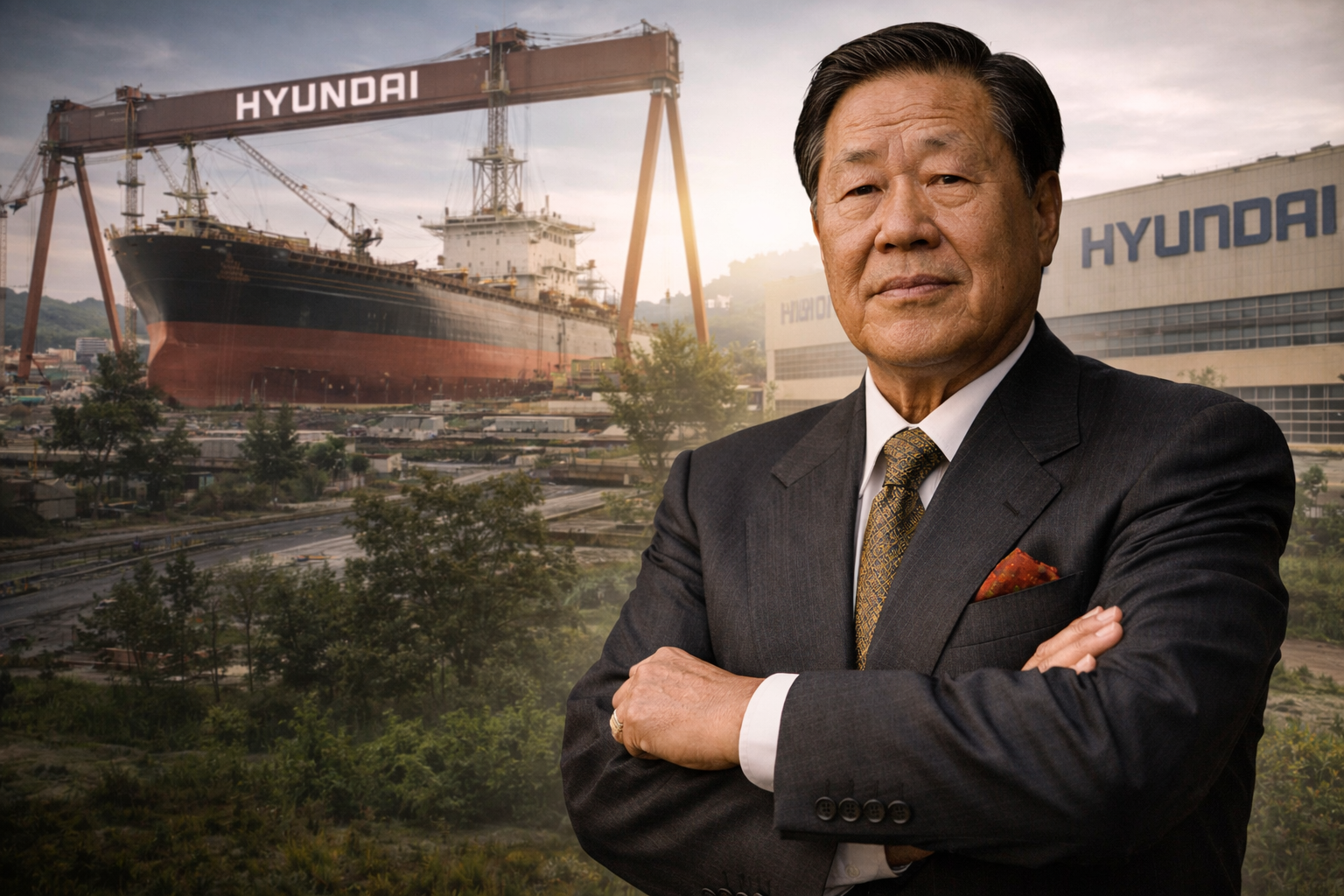
Chung Ju-Yung - The Man Who refused To Stay Where He Was Born
Chung Ju-yung was born in 1915 in Asan, a poor farming village that now sits in what we call North Korea. At the time, it wasn’t a geopolitical concept. It was simply a place where life was already decided for you.
You were born poor. You stayed poor. You worked the land. You listened. You didn’t dream out loud.
Chung tried to escape that life early. He ran away from home more than once. Each time, he was caught and dragged back. Each return carried the same message: this is where you belong. The rules were not subtle.
By his late teens, he understood something crucial. Waiting for permission would cost him his entire life.
The Cow That Changed Everything
In 1933, Chung did something desperate and irreversible.
He stole one of his father’s cows.
Not to survive the winter. Not to eat. He sold it to buy a train ticket to Seoul. That single decision broke every rule he had been raised to obey. In rural Korea, stealing a cow was not a small offence. It was a betrayal. It carried shame. It burned bridges permanently.
Chung knew that. But he left anyway.
Seoul didn’t welcome him. There was no transformation montage. No sudden success. He took whatever work he could find. Manual labor. Repair jobs. Anything that allowed him to stay one more day without returning home defeated.
What’s often left out of the story is what happened next.
Years later, after Chung had begun to stabilize his life, he returned to his family. Not with apologies, but with accountability. He repaid the debt for the stolen cow. Fully. Quietly.
That moment matters more than the theft itself. Chung wasn’t running from responsibility. He was delaying it until he had the power to carry it.
learning Without Credentials
Chung had no formal education that impressed anyone. What he did have was relentless observation. He watched how businesses actually worked. Where money flowed. Where it got stuck. Why projects failed. Why people overpromised and underdelivered.
He started small ventures. Some failed quickly. Others collapsed slowly. None of them made him retreat.
Failure wasn’t interpreted as evidence he didn’t belong. It was treated as tuition.
By the time Korea began rebuilding after war, Chung saw something most people missed. Destruction wasn’t just loss. It was demand.
Hyundai Begins As A Bet On Action
In 1947, Chung founded Hyundai as a construction company.
The timing was brutal. Korea was unstable. Capital was scarce. Infrastructure barely existed. The safe strategy was to wait, to copy, to stay small.
Chung didn’t wait.
He took contracts that were too big. Promised timelines that scared people. Said yes to projects before he had the tools to execute them. His method was consistent: commit publicly, then make reality catch up.
This wasn’t recklessness. It was a refusal to let caution become paralysis.
The Collapse That Built A Reputation
Hyundai’s defining moment came when a bridge Chung’s company was contracted to rebuild collapsed during construction.
This should have ended him.
Instead, Chung rebuilt it at his own expense.
No excuses or legal maneuvering. No blame. He absorbed the loss and delivered the result.
That single decision echoed far beyond the bridge itself. The South Korean government didn’t just see a contractor. They saw someone who treated responsibility as absolute.
Hyundai became trusted not because it never failed, but because failure didn’t stop it from finishing the job.
Expanding Before The World Was Ready
As South Korea industrialized, Chung moved faster than the rules could keep up with.
He didn’t believe in staying in one lane. Construction turned into shipbuilding. Shipbuilding turned into automobiles. Heavy industry followed.
When Hyundai built its first shipyard, the company had never built a ship.
When questioned, Chung didn’t defend the logic. He dismissed the fear. If they could build the shipyard, they would learn to build the ship. Infrastructure first. Capability second.
This pattern repeated again and again. Hyundai grew not because it waited to be qualified, but because it forced itself to become qualified through action.
A Man Who Outran His Origins
Chung Ju-yung was born in what is now North Korea. He built one of South Korea’s most powerful conglomerates.
That alone tells you everything you need to know about how seriously he took borders, labels, and inherited limits.
He didn’t debate systems. He moved faster than them. He didn’t ask to be legitimized. He created results that forced legitimacy after the fact.
What The Reader Can Take Away
Chung Ju-yung’s life offers a hard lesson, not a comfortable one.
Rules are often designed to preserve order, not potential. If you follow them perfectly, you may live safely — and never leave the place you were born into, physically or psychologically.
Chung stole a cow not because he was immoral, but because staying was a slower kind of theft. He repaid the debt later because integrity mattered — just not at the cost of his future.
He failed publicly. He rebuilt anyway. He expanded before he was ready and learned by doing instead of waiting.
If something in your life feels like a fixed boundary, question whether it’s truly immovable — or just socially enforced.
And if you’re waiting until the rules make sense before you act, understand this: Chung Ju-yung never waited for the rules to catch up.
He moved first. The world adjusted later.
-
-20%

No Rule Book
$9.95Original price was: $9.95.$7.95Current price is: $7.95. -
-35%
No Rule Book + No Rules Start-Up
$22.90Original price was: $22.90.$14.95Current price is: $14.95. -
-50%
No Rules Start-Up
$19.95Original price was: $19.95.$9.95Current price is: $9.95.


 Submitted 1.0
 Manual 5.0