
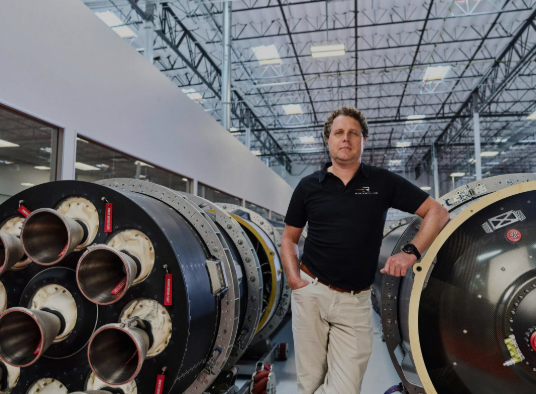
If you were trying to design the conventional route to becoming the founder of a rocket company, Peter Beck‘s early life probably wouldn’t feature in it.
He grew up in Invercargill, near the bottom of New Zealand’s South Island, thousands of kilometres from the great centres of the aerospace industry. There was no nearby NASA, no established New Zealand space industry waiting to employ him, and no obvious career ladder that could eventually lead from Invercargill to launching satellites into orbit.
Beck didn’t even have the university degree most people would assume was essential for such an ambition. What he did have, however, was an intense curiosity about how things worked, combined with something that would ultimately prove more important than following the expected path: He was prepared to start building things before anyone had given him the qualifications, resources or permission that supposedly came first.
As a teenager, Beck experimented with machines, modified cars and became fascinated by propulsion. Rockets weren’t something he encountered through a university aerospace programme. They were something he wanted to understand by actually making them. That distinction would come to define much of his life.
Peter Beck didn’t begin with the credentials and then look for somewhere to apply them. He began with the obsession and built the capabilities he needed around it.
THE WORKSHOP BECAME HIS UNIVERSITY
After leaving school, Beck took a tool-and-die-making apprenticeship with Fisher & Paykel rather than going to university. On paper, it hardly looked like the first step towards creating a space company. In practice, it gave him something enormously valuable.
He learned how materials behaved when they were actually cut, shaped, stressed and assembled. He worked with precision machinery and developed the practical engineering skills that allowed him to turn ideas into physical objects, test them, discover why they failed and try again.
His experiments continued outside work. Beck built rockets and propulsion systems in his spare time, including a rocket-powered bicycle that looked more like the creation of an ambitious backyard inventor than the early work of a future aerospace CEO. But underneath those experiments was a pattern that would stay with him for decades: Build it, test it, learn from it, improve it.
The point isn’t that university education doesn’t matter, or that Beck somehow succeeded because he avoided it. His apprenticeship and later engineering work gave him serious technical experience.
The more interesting point is that he refused to confuse The Recognized Pathway with The Only Pathway.
He didn’t have an aerospace degree, so he learned through apprenticeship, experimentation and engineering work. He didn’t have access to a sophisticated rocket laboratory, so he used the workshops and materials available to him. Most importantly, he didn’t wait until somebody else considered him qualified to begin pursuing the thing that fascinated him. He simply started.
The absence of a conventional path doesn't necessarily mean the destination is impossible. Sometimes it simply means you'll have to find another way there.
THE TRIP THAT CHANGED EVERYTHING
As Beck’s engineering career developed, so did his knowledge of advanced materials, composites and other technologies that could be applied to aerospace. But the rockets never disappeared.
Eventually, he travelled to the United States on what he described as a kind of ‘rocket pilgrimage.’
America seemed like the obvious destination. This was the home of NASA, major aerospace companies and generations of rocket expertise. If there was a place where Beck could finally find the path into the industry he had spent years moving towards, surely this was it. Instead, he came home with a very different idea.
Beck believed a growing generation of small satellites needed better access to space. At the time, they often had to hitch rides aboard much larger rockets, launching according to somebody else’s schedule and destination. Beck saw an opportunity for smaller rockets designed specifically around their needs.
If nobody else was going to build what he believed was needed, perhaps he would.
On the flight back to New Zealand, he began sketching out the idea that would become Rocket Lab.
Consider what that decision actually meant.
Beck wasn’t returning to a country with an established commercial space industry. He didn’t have an aerospace degree, a giant corporation behind him or an obvious infrastructure from which to build and launch rockets. Most people would have looked at everything that was missing and interpreted it as evidence that the ambition was unrealistic. But Peter Beck saw something different.
The problem wasn’t necessarily that the destination was impossible. The problem was that the path to it didn’t exist yet.
SO HE STARTED BUILDING THE PATH
Beck founded Rocket Lab in Auckland in 2006. At first, the company was a long way from the Rocket Lab we know today. Funding was limited, the team was small and New Zealand didn’t have a mature aerospace ecosystem sitting around waiting to support them. But Beck had spent much of his life working this way. Start with what you have. Build something. Test it. Solve the next problem. Then move forward again.
In 2009, Rocket Lab launched Ātea-1 from Great Mercury Island, becoming the first private company in the Southern Hemisphere to reach space. It was only a suborbital rocket, but that almost misses the point.
For years, Beck had been pursuing something that looked improbable largely because so many of the things normally associated with achieving it were absent. Ātea-1 provided the first undeniable evidence that those missing ingredients did not automatically make the goal impossible.
A New Zealand company had built a rocket and reached space.
Beck didn’t need to prove the entire dream at once. He had proved the next part of it.
And then he kept going.
FROM PROVING IT POSSIBLE TO MAKING IT WORK
The much greater challenge was to turn those early achievements into a rocket capable of regularly carrying satellites into orbit. That would became known as Electron.
Rocket Lab wasn’t trying to compete by simply building another enormous rocket. Beck had identified a particular problem — small satellites needed more flexible access to orbit — and designed around that problem rather than simply copying the industry that already existed.
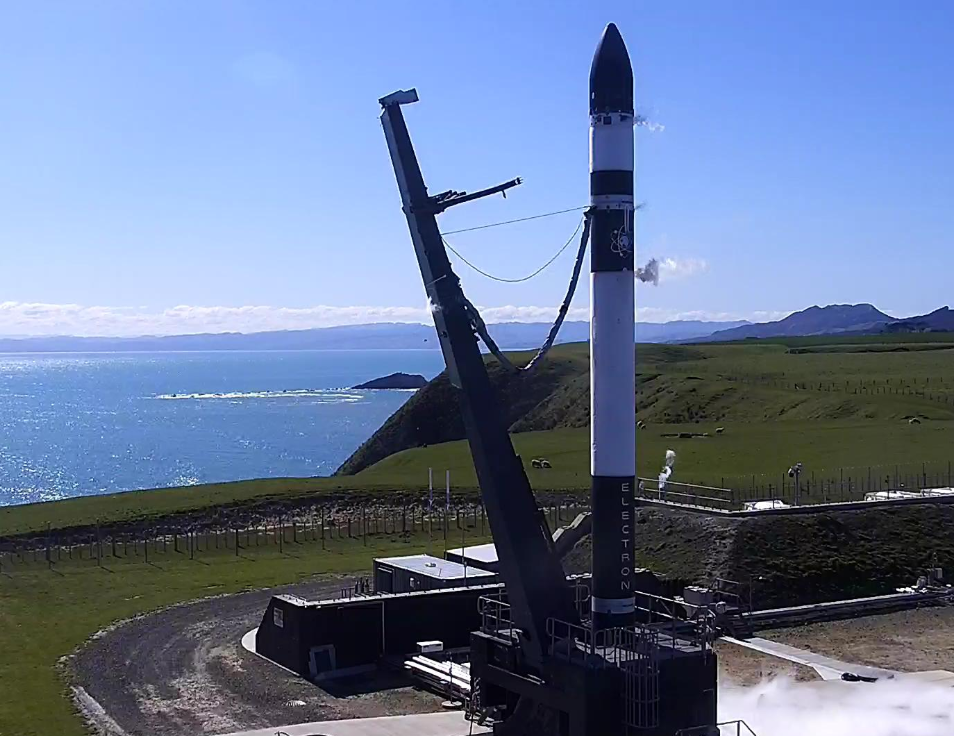
Electron eventually reached orbit successfully in 2018, carrying satellites into space from Rocket Lab’s own launch facility at Māhia.
 That sentence is easy to read now without appreciating how extraordinary the journey behind it had been.
The teenager experimenting with machines in Invercargill had become an engineer without a university degree. The engineer had become a backyard rocket builder. The rocket builder had founded a company in a country with virtually no commercial space industry. And that company was now launching satellites into orbit from New Zealand.
There had never been a clear path connecting those things. Peter Beck had created one step by step.
THE RULE THAT PETER BECK NEVER ACCEPTED
Looking back at Peter Beck’s journey now, it is easy to arrange everything into a sequence that makes his success seem almost inevitable. His apprenticeship gave him practical engineering skills, his years of experimentation taught him how to build and test increasingly ambitious ideas, those experiments eventually led to Rocket Lab, and Rocket Lab went on to put satellites into orbit. From the comfortable perspective of hindsight, one step appears to lead naturally to the next.
But that pathway wasn’t visible when Beck started.
There was no obvious route connecting a tool-and-die apprenticeship at Fisher & Paykel with founding a company capable of launching satellites into space. Beck had no university degree in engineering or aerospace, New Zealand had virtually no commercial space industry, and there was no established career ladder he could simply climb until he eventually arrived at the position he wanted.
That is what makes his story so relevant to NoRuleBook, because Beck’s achievement wasn’t built on the belief that rules, qualifications or expertise don’t matter. In an industry as unforgiving as aerospace, that would have been disastrous. Rockets have to obey physics, engineering tolerances exist for very good reasons, and no amount of unconventional thinking can compensate for a machine that simply doesn’t work.
What Beck appears to have understood particularly well was the difference between those genuine constraints and the assumptions we often mistake for constraints. He couldn’t change the laws of physics, but he could question the assumption that a university degree was the only legitimate route to becoming an accomplished engineer. He couldn’t ignore the enormous technical difficulty of reaching orbit, but he could reject the idea that someone from Invercargill had to move into an established aerospace career before he could seriously participate in the space industry. And when New Zealand lacked much of the infrastructure and ecosystem normally associated with commercial spaceflight, he didn’t automatically interpret that absence as proof that a space company couldn’t be built there.
This is an important distinction, because many ambitions are abandoned long before reality has actually ruled them out. We encounter an obstacle, look around for the recognized route past it and, when we can’t find one, conclude that the destination itself must be unrealistic. Yet sometimes what is missing isn’t the possibility of getting there; it is simply the familiar pathway that other people have already created and approved.
Beck’s journey suggests a different way of looking at that problem. Instead of asking only, “What is the normal way to get from here to there?”, it can be far more useful to ask whether the normal way is actually necessary in the first place. If it is, follow it. If it isn’t, then the absence of a conventional route may be an inconvenience, a risk and an enormous amount of additional work, but it doesn’t automatically make the destination impossible.
If the path to where you want to go doesn’t exist, that doesn’t necessarily mean you’re going the wrong way.
Peter Beck didn’t reach space by discovering an easy shortcut around the difficult parts. He spent years acquiring the skills he needed, finding people willing to back an improbable idea, building technology that had to work in the real world and solving problems that became larger as his ambition grew. What made his path unconventional was not that he avoided the hard work required to reach the destination, but that he refused to accept that the established route was the only legitimate way of getting there.
That may be the most useful lesson in the entire Rocket Lab story. When there is no obvious route between where you are today and where you want to be, the first question shouldn’t necessarily be whether you should abandon the destination.
It may simply be worth asking :
Or is there just no established way forward yet?”

Take The Next Step
Peter Beck’s story is extraordinary because very few of us will ever attempt to build a rocket company, but the question at the centre of his journey is surprisingly ordinary. At different points in our lives, most of us encounter something we want to do but cannot see an obvious path towards, and it is easy to interpret that uncertainty as evidence that the idea itself is unrealistic.
Before you do that, look more closely at what is actually stopping you. Is it a genuine constraint that cannot be changed, or are you simply looking for a conventional pathway that doesn’t exist? You may need to learn new skills, start much smaller than you imagined, find people who know things you don’t, or spend years building towards something that initially seems well beyond your reach.
The important thing is not to confuse “I don’t know how to get there yet” with “I can’t get there.”
That distinction took Peter Beck from experimenting with rockets in New Zealand workshops to building a company capable of launching satellites into orbit.
Your destination will almost certainly be different.
But the question is the same :
The NoRuleBook Collection
-
-20%
NoRuleBook
$9.95Original price was: $9.95.$7.95Current price is: $7.95. -
-50%
No Rules Start-Up
$19.95Original price was: $19.95.$9.95Current price is: $9.95. -
-35%
NoRuleBook Bundle
$22.90Original price was: $22.90.$14.95Current price is: $14.95.

 Submitted 1.0
 Manual 5.0