

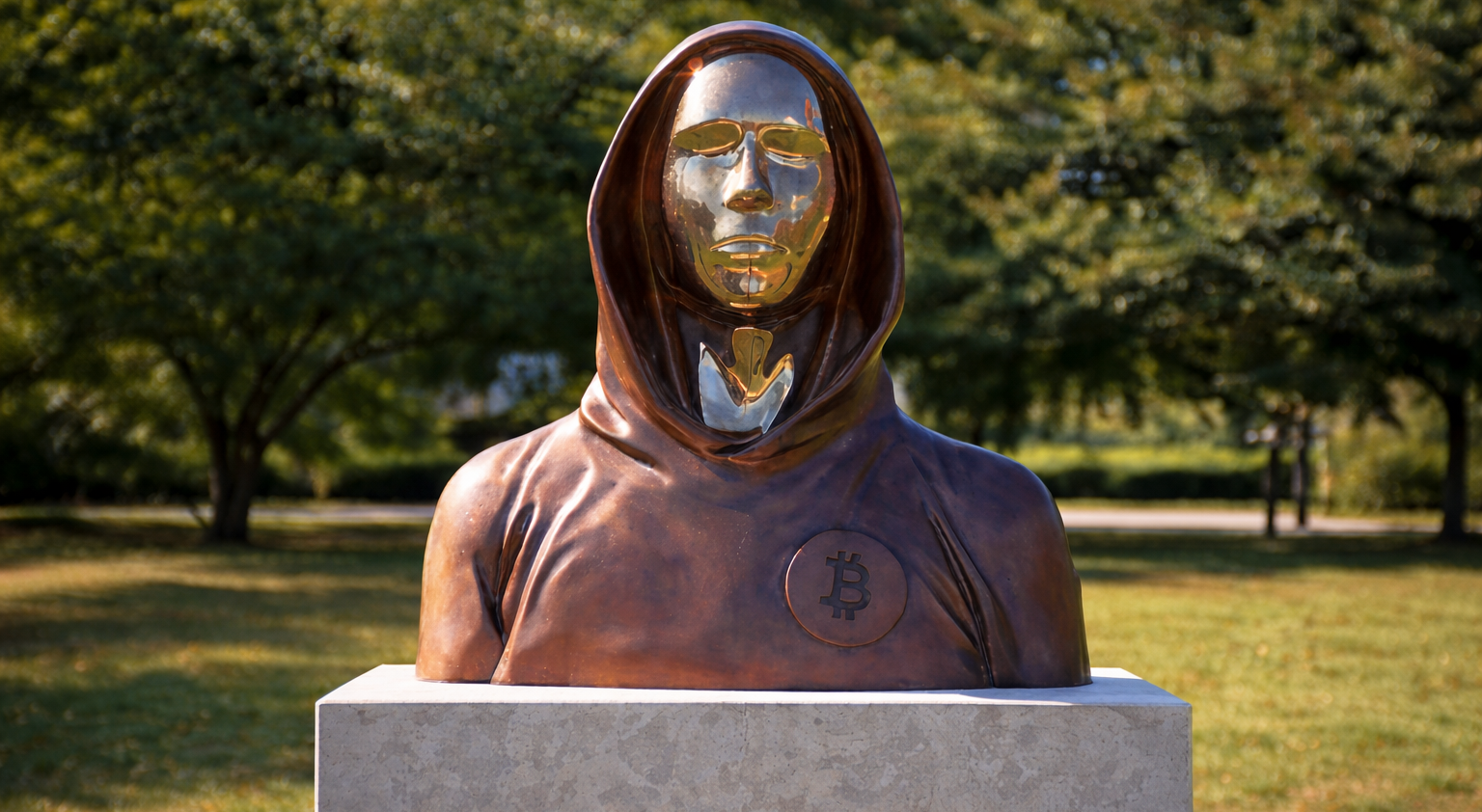

On the evening of October 31, 2008, while much of the world was still trying to understand the financial chaos unfolding around it, an obscure message appeared on a cryptography mailing list from someone nobody knew.
There was no company announcement, no polished website, no venture capital launch and no photograph of an ambitious founder standing in front of a logo. Instead, the sender simply introduced themselves as Satoshi Nakamoto and explained that they had been working on a new electronic cash system that was completely peer-to-peer, allowing people to send money directly to one another without relying on a trusted financial intermediary. Attached to the message was a nine-page document that would eventually become one of the most influential technical papers of the twenty-first century.
At the time, almost nobody outside a small community of cryptographers paid much attention.
That is often how genuinely disruptive ideas begin. Not with applause, but with silence.
The world would later become fascinated by Bitcoin’s extraordinary rise, its spectacular booms and crashes, its passionate supporters and equally passionate critics, yet those debates can sometimes obscure the far more interesting question that existed before Bitcoin had a market value, before anyone had bought pizza with it, and before millions of people had even heard the word cryptocurrency.
The real story begins with a much simpler question.
Why did digital money need someone in the middle to be trusted at all?
That question, rather than Bitcoin itself, is what makes Satoshi Nakamoto one of the most compelling NoRuleBook figures in modern history.
An Email From Somebody Who Didn't Exist
Imagine receiving an email from a stranger claiming they had solved one of the oldest problems in computer science.
Digital information is remarkably easy to copy. A photograph can be duplicated endlessly without changing the original. A document can be emailed to thousands of people while remaining identical on every screen. Music, software and videos can all exist in countless places simultaneously because copying information is precisely what computers are exceptionally good at doing. Money presents a completely different challenge.
If digital money were simply a computer file, there would be nothing stopping someone from copying it and spending the same unit twice. You could send one hundred digital dollars to one person, duplicate the file and send the identical hundred dollars somewhere else, creating an impossible situation where two people both believed they had received the same money. This became known as the double-spending problem.
For decades, the practical solution had been to introduce a trusted intermediary—a bank, payment processor or central organization responsible for maintaining the official record of who owned what. Whenever money moved, that central authority updated its ledger and prevented the same funds from being spent twice. It worked.
But Satoshi’s whitepaper began from a different philosophical position. Instead of asking how a trusted institution could become more efficient, it asked whether cryptography and distributed computing could allow strangers to agree on a shared history of transactions without requiring one institution to sit permanently in the middle. The proposal combined existing ideas from digital signatures, peer-to-peer networking, timestamping and proof-of-work into a system designed specifically to solve double spending through collective verification rather than central trust. That distinction matters enormously.
Most innovation improves an existing rule. Occasionally someone questions why the rule exists in the first place. Satoshi was doing the latter.

The Rule Didgital Money Had never Escaped
It is tempting today to imagine that Bitcoin appeared suddenly from nowhere, as though one mysterious genius woke up and invented an entirely new discipline.
That isn’t what happened.
Long before Bitcoin, a loose community of cryptographers known as the Cypherpunks had spent years exploring privacy, digital identity and electronic cash. Researchers including Wei Dai, Nick Szabo, Adam Back and Hal Finney had proposed ideas involving decentralized money, proof-of-work and cryptographic scarcity, each contributing pieces to a much larger puzzle that nobody had completely solved.
Their challenge wasn’t simply creating digital tokens. It was creating a system where nobody needed permission from a central operator to verify ownership while still preventing fraudulent duplication.
Think of it like trying to organise a stadium containing fifty thousand strangers without appointing anyone as referee. Everybody needs to agree which goal was scored first, which foul actually happened and what the final score is, yet there is no trusted official whose decision automatically becomes reality. That is remarkably difficult.
The brilliance of Bitcoin wasn’t that it invented trustlessness as an abstract ideal, but that it proposed a practical mechanism through which participants could continually agree on one chronological version of events. Every transaction would be publicly recorded, grouped into blocks, linked together cryptographically and protected through computational proof-of-work, creating a history that became increasingly difficult to alter as more work accumulated behind it.
It wasn’t magic. It was engineering. And engineering, unlike mythology, depends upon countless ideas arriving before the final breakthrough.
The revolutionary question wasn't “How can we build a better bank?” It was “Why does this transaction require a bank at all?”
That single shift in perspective would eventually create an entirely new financial architecture.
Then The World's Financial System Started Cracking
The timing of Bitcoin’s arrival has become almost impossible to separate from the global financial crisis.
During 2008, banks failed, governments intervened, confidence in financial institutions collapsed and ordinary people watched enormous organisations receive extraordinary levels of public support while economies around the world entered recession. It was against that backdrop that Satoshi published the Bitcoin whitepaper.
However, this is where the story deserves nuance.
Many articles confidently declare that Bitcoin was created because of the financial crisis, yet the historical evidence is more restrained than that. The whitepaper itself focuses overwhelmingly on the weaknesses of trust-based electronic payments and the double-spending problem rather than presenting a political manifesto about governments or central banking. It is certainly reasonable to recognise the crisis as important context, but it is less accurate to claim we know every motivation behind Satoshi’s work.
What we do know is considerably more intriguing.
On January 3, 2009, when Bitcoin’s first block—the Genesis Block—was created, Satoshi embedded the headline from that day’s edition of The Times newspaper :
Chancellor on brink of second bailout for banks.
Satoshi Nakamoto
The headline permanently linked Bitcoin’s beginning with one of the defining moments of the financial crisis, and while historians continue debating exactly how much interpretation should be placed upon it, there is little doubt that Satoshi deliberately chose a newspaper reference that captured the historical atmosphere into which Bitcoin was born.
Rather than proving ideology, it did something arguably more powerful. It preserved context.
More than fifteen years later, anyone examining Bitcoin’s first block can still see the world into which the experiment quietly entered.
Block Zero Was Only The Beginning

Ideas do not become important merely because somebody writes them elegantly.
They become important when other people begin testing whether they actually survive contact with reality.
On January 9, 2009, Satoshi released the first public version of the Bitcoin software through SourceForge, making the code available for anyone curious enough to download it and participate in the network. It was not a polished global product. It was an experimental Windows program written for technically minded early adopters who were willing to tolerate bugs, crashes and unfinished features because they were more interested in the possibility than the convenience.
One of those people was Hal Finney.
Finney had already spent years exploring cryptographic money and had developed an earlier proof-of-work concept that influenced the broader field. He downloaded the software almost immediately, communicated regularly with Satoshi about technical problems and became one of the first people to run the network beyond its creator.
Three days after the software was publicly released, Satoshi sent Finney ten Bitcoin in what is recognized as the first recorded person-to-person Bitcoin transaction.
Ten coins.
Not ten million. Not ten thousand. Just ten units inside an experiment that almost nobody believed would ever become historically significant.
That detail is worth pausing on because it reminds us how different innovation feels while it is happening.
Nobody involved knew they were participating in financial history; they were simply debugging software, fixing crashes and testing whether distributed computers could agree on the same ledger. That detail is worth remembering because innovation feels very different while it is happening from the way it eventually appears in biographies and documentaries, where history tends to look dramatic only after we know which experiments survived.
History usually looks dramatic only after we know which experiments survived.
For A While Almost Nobody Cared
This is perhaps the least glamorous chapter of Bitcoin’s history.
There were no television interviews with Satoshi because nobody knew who Satoshi was. There were no celebrity investors, no enormous conferences and no billion-dollar valuations dominating financial news. The early community consisted largely of programmers exchanging technical ideas through mailing lists and forums, gradually improving the software while experimenting with what this strange digital currency might actually be useful for.
That is important because successful inventions often appear inevitable only after millions of people begin using them.
Before that moment, they usually look rather ordinary.
Bitcoin’s early value wasn’t measured in fortunes. It was measured in curiosity.
- Could the network continue running?
- Would strangers maintain it?
- Could digital coins actually be exchanged for something outside the internet?
These questions mattered far more than speculation because the experiment had not yet proved it possessed any practical economic meaning.
That proof would arrive in an unexpectedly delicious form.
When 10,000 Bitcoin Bought Two Pizzas
On May 18, 2010, a Florida programmer named Laszlo Hanyecz posted a simple request on the Bitcoin forum.
He wanted somebody to arrange delivery of two large pizzas.
In exchange, he offered 10,000 Bitcoin.

The request wasn’t intended as a stunt. Hanyecz genuinely wanted to know whether these digital coins could purchase something physical, allowing him to receive dinner without converting them into conventional money first. After several days, another early Bitcoin enthusiast accepted the arrangement and ordered two pizzas to Hanyecz’s home, receiving the 10,000 Bitcoin in return. On May 22, Hanyecz confirmed that the exchange had worked.
Today, the transaction is famous because of what those coins would later become worth. But focusing only on hindsight misses the point.
The extraordinary thing wasn’t the pizzas. It was that somebody had finally demonstrated that an invisible string of cryptographic records could persuade two strangers to exchange something tangible in the real world.
Dinner became evidence.
Not evidence that Bitcoin would conquer finance.
Not evidence that it would become a trillion-dollar asset.
Simply evidence that the idea had crossed an important boundary.
It had left the computer. And entered ordinary life.
Every world-changing invention eventually has to survive an ordinary Tuesday. Bitcoin's happened to involve pizza.
That is much more interesting than calculating what the meal would be worth today.
The Creator Started Disappearing
Most founders spend their careers becoming increasingly visible.
They appear on magazine covers, publish memoirs, speak at conferences, give interviews and gradually become inseparable from the companies or inventions they created. Their identity becomes part of the product itself because people like attaching extraordinary ideas to recognisable human beings.
Satoshi moved in the opposite direction.
During 2010, communication gradually reduced as other developers became increasingly involved in maintaining Bitcoin. The final public BitcoinTalk activity came in December 2010, while private correspondence continued for several more months. Then, in April 2011, Satoshi wrote to developer Mike Hearn explaining that he had moved on to other things and that he felt Bitcoin was in good hands with Gavin Andresen and the growing development community.

There was no farewell speech. No press release. No dramatic explanation of where they were going. Just a quiet withdrawal from something that was beginning to gather momentum without needing its creator to remain at the center.
That decision has become almost as fascinating as Bitcoin itself. Because nobody knows whether Satoshi disappeared deliberately to protect privacy, avoid attention, preserve decentralization, or simply because he genuinely wanted another life. We can speculate endlessly, but speculation isn’t evidence.
What matters is what followed.
Bitcoin continued developing. Other programmers wrote code. New contributors fixed vulnerabilities. Arguments continued. Ideas evolved. The protocol survived without requiring its creator to settle every disagreement.
That doesn’t prove the disappearance made Bitcoin stronger. It raises a far more interesting possibility :
Could an invention designed to remove central authority ultimately become more faithful to its own philosophy once even its founder stopped being the central authority?
Who Was Satoshi?
This is the part most documentaries become obsessed with.
Was Satoshi one person? Several people? A British cryptographer? A Japanese programmer? An American computer scientist?
Over the years, journalists and internet detectives have proposed numerous candidates, often with impressive-looking evidence, linguistic analysis or technical coincidences that appear convincing until somebody produces an equally persuasive counterargument.
The truth is considerably less satisfying. Nobody has conclusively established Satoshi Nakamoto’s identity.
Even the name itself is widely understood to be a pseudonym rather than a verified real identity, and the historical record does not allow us to confidently identify the person—or potentially people—behind it.
But perhaps our obsession with discovering the face behind Bitcoin reveals something about us rather than something about Satoshi.
We are accustomed to believing every extraordinary creation must have an extraordinary personality attached to it :
- We want the biography
- The childhood
- The interviews
- The favorite food
- The flaws
- The redemption arc
Bitcoin refuses to give us any of those. Instead, it leaves behind software, emails, forum posts and a whitepaper.
The work survived. The author became optional.
Perhaps the most remarkable thing about Satoshi Nakamoto isn't that nobody knows who they were. It's that the idea eventually didn't require us to know.
The Danger Of Turning Bitcoin Into A Religion
Every revolutionary idea eventually attracts believers. And Bitcoin is no exception.
To some people it represents financial freedom, technological elegance and protection against institutional failure. To others it represents speculation, volatility, environmental concerns and a financial system filled with risks of an entirely different kind.
Both perspectives contain arguments worth examining.
NoRuleBook should resist the temptation to replace one unquestioned orthodoxy with another.
Questioning banks does not automatically make every decentralised alternative superior.
Challenging trusted intermediaries does not mean trust disappears from human life.
Bitcoin still depends upon software, mathematics, network participants, exchanges, wallets, developers and the behaviour of millions of people making decisions inside a constantly evolving ecosystem. The whitepaper proposed a solution to a specific technical problem—not a guarantee that every future application of cryptocurrency would become wise, ethical or successful.
That distinction matters because independent thinking isn’t about choosing the unconventional side of every argument. It’s about understanding which assumptions deserve to be questioned and which conclusions still require evidence.
Bitcoin deserves criticism where criticism is justified. It also deserves recognition for introducing one of the most important technological challenges to conventional financial architecture in generations.
Those two ideas are perfectly capable of existing together.
The Question Satoshi Really Left Us
Imagine working inside an industry where everyone complains about the same problems :
- Customers hate unnecessary delays.
- Employees complain about bureaucracy.
- Entrepreneurs become frustrated by middlemen.
- Entire professions develop complicated workarounds for systems nobody particularly likes, yet because those systems have existed for decades, people begin treating them almost as laws of nature rather than temporary human inventions.
This is where Satoshi’s thinking becomes useful far beyond money.
The conventional response is usually :
- How do we improve this system?
- Make it faster.
- Cheaper.
- More efficient.
- Digitise the paperwork.
- Reduce waiting times.
- Create better customer service.
Those improvements are valuable. But occasionally the more powerful question sits one layer deeper.
What assumption makes this entire system necessary?
That is a much harder question because it requires challenging foundations rather than decorations.
Perhaps the middleman genuinely is essential. Perhaps the rule exists because removing it creates greater problems. Or perhaps technology, changing behavior or new knowledge has quietly made the original assumption less necessary than it once was.
You cannot know without examining it. And that is precisely the point.
NoRuleBook doesn't require the unconventional answer. It requires you to have examined the assumption everyone else stopped noticing.
Satoshi’s achievement wasn’t proving that every institution should disappear. It was demonstrating what can happen when someone becomes curious enough to question one that almost everybody else had accepted as unavoidable.
The NoRuleBook Test
Think about an industry, workplace or part of everyday life that regularly frustrates you. Not because somebody is behaving badly, but because the system itself seems unnecessarily complicated.
Perhaps customers must repeatedly provide the same information to different departments.
Perhaps professionals spend more time proving they followed procedures than actually solving problems.
Perhaps an entire business model depends upon an intermediary whose role nobody has seriously questioned for years.
Before jumping to solutions, ask yourself three questions :
- What assumption is holding this system together?
- If that assumption disappeared tomorrow, what genuine problem would suddenly emerge?
- Could technology, behavior or a different structure solve that problem without recreating the same middle layer in another form?
Those questions don’t guarantee revolutionary ideas. Most of the time they simply produce a better understanding of why something exists. But occasionally they reveal that the rule everyone protects is actually solving yesterday’s problem. And yesterday’s solutions eventually become today’s limitations.
The NoRuleBook Truth
Satoshi Nakamoto never asked the world for permission.
He didn’t launch a company promising to disrupt banking. He didn’t build a personal brand around being a visionary. He didn’t spend years explaining why everyone else was wrong through interviews and conferences.
Instead, somebody hiding behind an unknown name quietly released an idea, published the code, invited other people to test it and gradually allowed the work to stand on its own.
That doesn’t mean anonymity is the secret to greatness. Nor does it mean every founder should disappear once their idea succeeds.
The deeper lesson is much less dramatic.
Sometimes we become so busy improving the visible parts of a system that we forget to question the invisible assumption underneath it. We redesign forms without asking why the form exists. We optimise bureaucracy without asking whether bureaucracy is still solving the problem it was originally created to solve. We argue endlessly about which institution should hold power instead of considering whether technology has made that concentration of power less necessary than before.
Satoshi’s greatest contribution may ultimately have been philosophical before it became financial.
The whitepaper challenged the idea that trust must always be placed inside an institution rather than distributed through a network of participants following transparent rules. Whether Bitcoin becomes the future of money is a different debate entirely.
The question that created it is the part worth keeping.
The most powerful way to challenge a rule isn't always to break it. Sometimes it's to discover that the rule was solving a problem that no longer needs to exist.
That is the kind of question capable of changing far more than money.
It can change industries. It can change governments. It can change the way we build businesses.
And occasionally, it can begin with nothing more than an email from somebody nobody has ever met.
Take The Next Step
Choose one system in your own life that you regularly complain about.
It might be something at work, an industry you operate within, a government process, customer experience or even a habit you’ve accepted simply because “that’s how it’s always done.”
Instead of immediately writing down how you would improve it, spend fifteen minutes identifying the assumption underneath it.
Ask yourself :
- What problem was this system originally created to solve?
- Does that problem still exist in the same form today?
- Which parts are genuinely necessary, and which survive mostly because nobody has questioned them?
- If you were designing this from scratch today, would you build it the same way?
You may conclude the existing rule is entirely justified. That conclusion is still valuable.
Independent thinking is not about rejecting every established structure. It is about becoming aware of the structures that quietly shape our lives before deciding whether they still deserve to remain.
Because sometimes the idea that changes everything isn’t a better answer. It’s a better question.
The NoRuleBook Collection
-
NoRuleBook
$9.95Original price was: $9.95.$7.95Current price is: $7.95. -
No Rules Start-Up
$19.95Original price was: $19.95.$9.95Current price is: $9.95. -
NoRuleBook Bundle
$22.90Original price was: $22.90.$14.95Current price is: $14.95.