

THE PROBLEM EVERYONE HAD LEARNED TO LIVE WITH
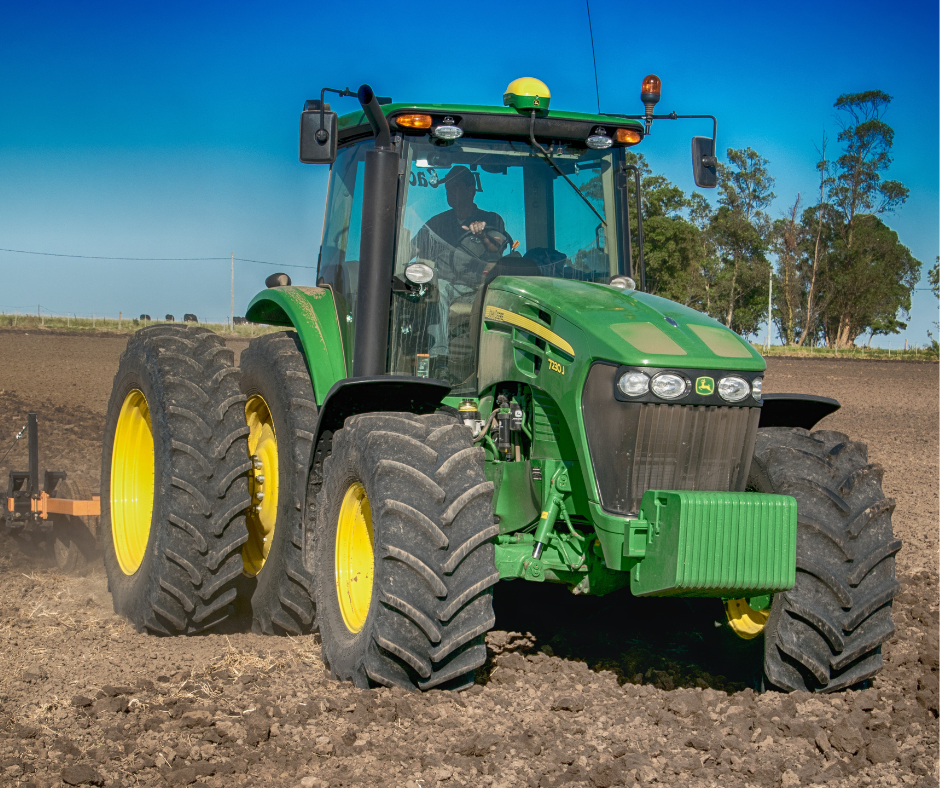
When John Deere arrived in Illinois in the 1830s, farmers on the American prairie were dealing with a problem so familiar that it had effectively become part of the job. The rich, heavy soil promised extraordinary agricultural potential, but the cast-iron plows commonly brought west from other parts of the country were poorly suited to working it. Earth clung stubbornly to their surfaces, forcing farmers to stop repeatedly, scrape the accumulated soil away and then begin again.
There was nothing irrational about this response. If a tool has a limitation and there is no obvious alternative, adapting the way you work is often the only sensible thing to do. Yet adaptation creates an interesting danger of its own, because the better people become at working around a problem, the easier it becomes to stop questioning why the problem exists in the first place.
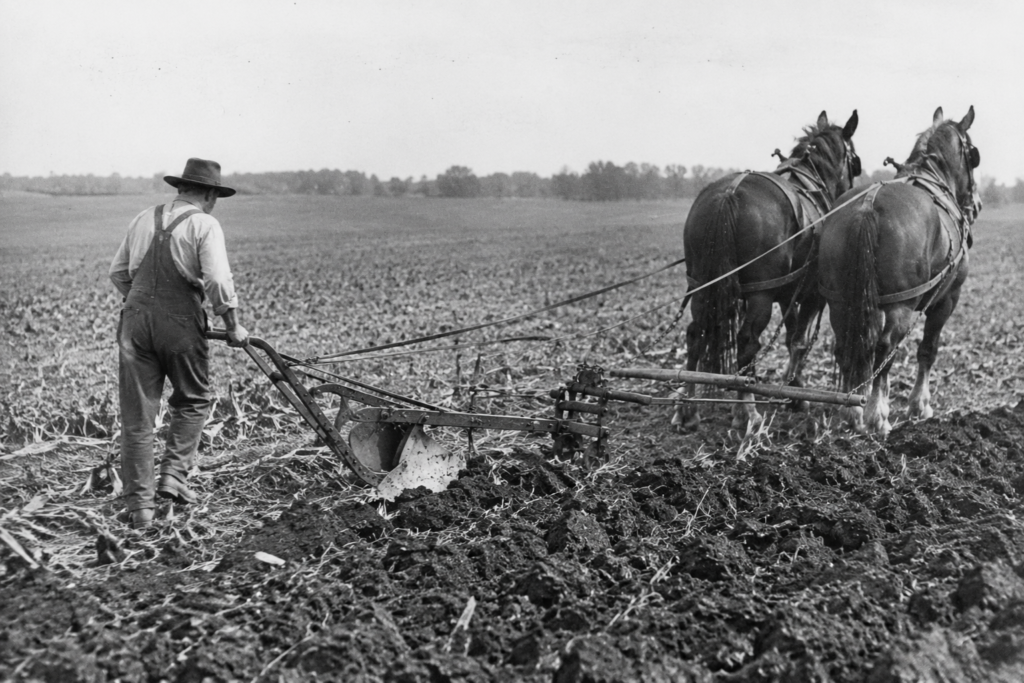
Farmers certainly knew their plows were causing difficulties; They experienced those difficulties every day. What they lacked was a practical alternative, and over time the repeated interruption had simply become another accepted part of prairie farming.
Deere saw the same frustration from a different perspective. As a blacksmith, he understood the materials and construction of the tool rather than merely the routine that had developed around using it, which allowed him to ask a subtly different question. Instead of wondering how farmers could become more efficient at stopping and cleaning their plows, he began considering whether they needed to stop at all.
That distinction reaches well beyond nineteenth-century farming. Businesses create extra procedures to compensate for inefficient systems, workers develop workarounds for software that doesn’t function as it should, and entire industries build routines around limitations that were once unavoidable. Eventually the workaround becomes so familiar that the original problem begins to look less like something that could be changed and more like an unavoidable rule of the system.
When everyone has learned to work around a problem, the problem itself can start looking like a rule.
For Deere, questioning one of those accepted problems would eventually lead to a better plow and the beginnings of one of America’s most enduring companies. But he had not travelled to Illinois looking for an invention that would change agriculture. He had gone there because his own life in Vermont was no longer working.
THE BLACKSMITH WHO STARTED AGAIN
John Deere had not travelled west because he had already identified an opportunity to revolutionise American farming. His reasons were considerably more immediate.
Born in Vermont in 1804, Deere trained as a blacksmith and established his own business, building the kind of practical skills that were valuable in a largely agricultural economy. By the middle of the 1830s, however, his circumstances had deteriorated. Business conditions were difficult, debts were accumulating, and supporting a growing family while trying to keep the operation alive was becoming increasingly precarious.
In 1836, Deere made the difficult decision to leave Vermont and travel west to Grand Detour, Illinois, while his wife and children initially remained behind. It is tempting to turn that moment into the familiar entrepreneurial story of a fearless risk-taker abandoning security to chase a dream, but Deere was not leaving behind a comfortable life because he had suddenly discovered his destiny. He was responding to circumstances that were no longer working and taking his existing skills somewhere they might be more valuable.
That distinction makes his story more useful rather than less inspiring. Starting again does not always begin with a grand vision or a carefully designed plan; sometimes it begins with recognising that continuing along the same path is unlikely to produce a different result.
Grand Detour was a developing agricultural settlement where a skilled blacksmith could quickly find work repairing the tools and equipment farmers depended upon. Deere therefore did not need to reinvent himself when he arrived in Illinois. He took something he already knew how to do and placed it in an environment where that knowledge could solve more valuable problems.
Working directly with farmers also gave him something he had not possessed in Vermont: close exposure to a different set of frustrations. The tools settlers had brought west had largely been designed for conditions elsewhere, and the prairie was revealing their limitations. Among those problems, the difficulty of plowing the heavy Illinois soil appeared again and again.
This is where Deere’s move west and his later innovation begin to connect. The financial difficulties that drove him from Vermont did not somehow cause him to invent a better plow, and failure itself should not be romanticised as though adversity automatically produces innovation. What the move did was place an experienced craftsman in a new environment, where the knowledge he already possessed allowed him to look differently at a problem other people had learned to accommodate.
Deere had changed his circumstances without abandoning the skills he had spent years developing. Now those skills were about to help him question something farmers had come to regard as part of the job.
WHAT IF THE TOOL WAS THE PROBLEM?
Working as a blacksmith in Grand Detour brought Deere into regular contact with farmers struggling to work the prairie, and the problem with their plows was difficult to miss. The heavy soil did not flow cleanly away from the cast-iron surfaces in the way farmers needed it to, so the equipment continually clogged and the work had to stop while the accumulated earth was scraped away.
Deere’s experience with metal gave him a different way of looking at the problem. Rather than treating the sticky soil as an unavoidable characteristic of prairie farming, he began considering whether the surface and shape of the plow itself were partly responsible. If the soil could move cleanly across a smoother surface, perhaps the farmer would no longer need to keep stopping to remove it.
In 1837, Deere developed a plow using steel associated with a broken saw blade, shaping and polishing the surface so that the prairie soil could slide away more effectively as the plow moved through the ground. It was not the invention of plowing, nor was Deere the first person ever to experiment with steel in agricultural equipment, but it was a practical response to the conditions confronting the farmers around him. What mattered to those farmers was not whether the idea could be described as revolutionary; it was whether they could spend more time plowing and less time cleaning the tool.
That distinction is worth remembering because invention stories often become tidier with age. We like to imagine a solitary genius suddenly seeing something nobody else had ever considered, but useful innovation frequently begins with something much less dramatic: a problem everybody can already see. The opportunity comes from questioning whether the accepted response to that problem is still the best one available.
In Deere’s case, farmers had adapted themselves to the limitations of their equipment. His breakthrough was to reverse that relationship and adapt the equipment to the needs of the farmers.
What if the people struggling with a problem aren't the part that needs to change?
That question reaches far beyond a nineteenth-century plow. Customers routinely develop workarounds for badly designed products, employees create additional processes to compensate for inefficient systems, and people alter their behaviour around technologies that were supposedly created to make their lives easier. Once those adaptations become familiar, businesses can make the mistake of treating them as evidence that the system works, when they may actually be evidence that the customer has become unusually good at compensating for something that doesn’t.
Deere’s solution attracted attention because it reduced a frustration farmers had already learned to live with, but producing a plow that worked was only the beginning. The next challenge was considerably larger : Turning a useful solution made by one blacksmith into a business capable of supplying a growing number of farmers without losing the qualities that had made the product valuable in the first place.
FROM BETTER PRODUCT TO TRUSTED NAME
Solving the prairie-soil problem gave Deere something farmers wanted, but one successful plow made by one blacksmith was only the beginning. As word spread and demand increased, he had to find a way to produce more without losing the qualities that had made farmers interested in his solution in the first place.
By the late 1840s, that challenge was becoming difficult to manage from Grand Detour. Deere needed better access to steel and transportation, so in 1847 he moved his growing operation to Moline, Illinois, where the Mississippi River provided better connections for bringing in materials and reaching customers.
As production expanded, Deere’s name increasingly represented more than the man who had originally made the plow. Farmers buying his equipment could not personally inspect every decision involved in its manufacture, so the reputation attached to the name became part of what they were buying. A Deere product was expected to perform because previous Deere products had given customers reason to expect that it would.
That gives greater meaning to the statement long associated with him :
“I will never put my name on a product that does not have in it the best that is in me.”
John Deere
It is easy to interpret those words as an argument for perfectionism, but that would take the lesson too far. Deere’s success did not depend upon making everything perfect regardless of cost; it depended upon protecting the qualities that made his solution valuable to the farmer. Once customers began trusting his name, maintaining that trust became as important as the original innovation that had earned it.
THE NORULEBOOK TRUTH
John Deere’s story is often told as one of persistence, craftsmanship and an uncompromising commitment to quality, and all of those things played a part. Yet the more useful NoRuleBook lesson begins earlier, with a problem that had become so familiar that the people experiencing it had learned to organise their work around it.
The farmers of the Illinois prairie knew their plows were poorly suited to the soil. They stopped, cleaned them and carried on because, with the tools available to them, that was the practical response. Deere’s contribution was not simply working harder at the same problem; his experience as a blacksmith allowed him to question whether the limitation belonged to the soil at all, or whether the tool itself could be changed.
That distinction matters because accepted problems are not necessarily unsolved because nobody has noticed them. Sometimes they remain unsolved because people have become remarkably good at living with them. A workaround develops, then becomes a routine, and eventually the routine becomes so embedded that the original limitation almost disappears from view.
This does not mean every inconvenience deserves disruption, or that every established process is waiting for someone to reinvent it. Some constraints are real, some workarounds are perfectly efficient, and changing them would create more complexity than value. The opportunity appears when the cost of repeatedly accommodating a problem has become greater than the cost of questioning the assumption beneath it.
Deere’s later emphasis on quality completes that idea rather than creating a separate lesson. Finding a better solution earned the attention of farmers; continuing to produce something they could depend upon earned their trust. Innovation removed an accepted limitation, while quality helped ensure that the alternative remained worth choosing.
The opportunity isn't always hidden in a problem nobody has noticed. Sometimes it's hidden in a problem everybody has stopped questioning.
Take The Next Step
Some of the most persistent unwritten rules begin as practical responses to real problems. We adapt, create a workaround and carry on, until eventually the workaround becomes so familiar that we stop noticing the limitation that created it.
NoRuleBook is about examining those assumptions again—not because every established way of doing something is wrong, but because occasionally the biggest opportunity is sitting inside a problem everyone else has become accustomed to solving the same way.
Click the NoRuleBook image below to explore the collection.
The NoRuleBook Collection
-
NoRuleBook
$9.95Original price was: $9.95.$7.95Current price is: $7.95. -
No Rules Start-Up
$19.95Original price was: $19.95.$9.95Current price is: $9.95. -
NoRuleBook Bundle
$22.90Original price was: $22.90.$14.95Current price is: $14.95.