The unwritten rule of commercial music making was clear : Stay grateful. Stay marketable and stay in your lane.
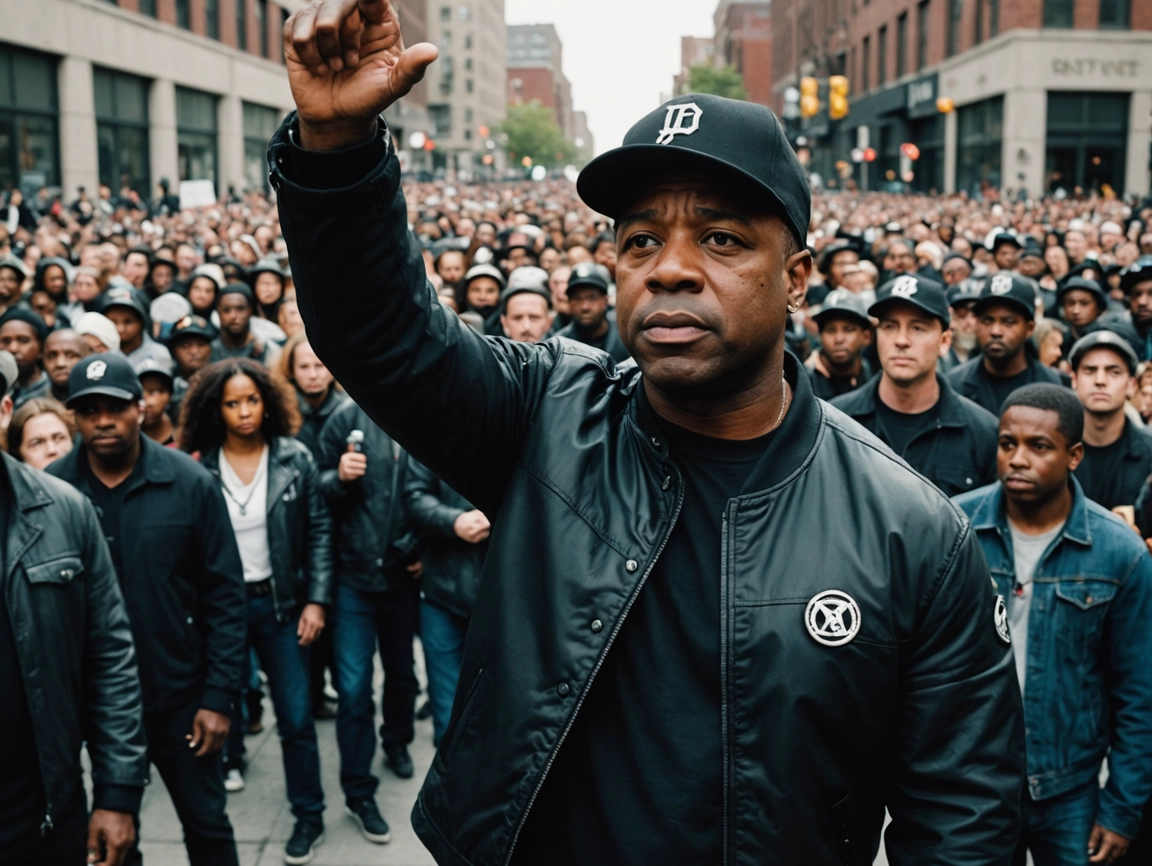
Chuck D did the opposite.
Before the world knew him as the voice of Public Enemy, he was Carlton Douglas Ridenhour — a quiet, observant kid from Roosevelt, Long Island. He watched all the things happening around him. He listened. He saw how Black communities were spoken about, ignored, misrepresented. And he also noticed something else : Music wasn’t just entertainment. It was power.
The unwritten rule in the 1980s was that rap was fun party music. Disposable and non-threatening. Labels liked it that way. Radio liked it that way. Executives wanted beats without brains.
But Chuck D didn’t want to make people dance. He wanted to make people think.
That choice alone made him dangerous.
Fighting the Gatekeepers
Chuck D went to Adelphi University and studied graphic design. He wasn’t trying to be a rapper. He was trying to understand systems. Media. Language. Influence. But his voice — deep, commanding, impossible to ignore — started traveling through local radio.
At the time, hip hop was either underground or manufactured into a novelty. The industry couldn’t figure out what to do with artists who had something to say beyond money, women, sex and parties.
But then came Rick Ruban, Co-founder of Def Jam Productions.
Rubin heard Chuck D’s track and knew immediately : this wasn’t just another rapper. This was a speaker. A teacher. A protest in human form.
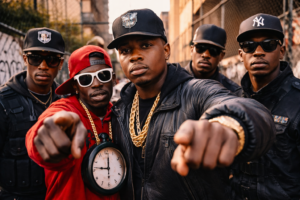
Public Enemy was born shortly after — a group built deliberately to look, sound, and move like the complete opposite of what America expected from black men in music.
Militant aesthetic. Military-style clothing. A crew called the S1W (Security of the First World). Malcolm X samples. News sirens. Uncomfortable truth layered over aggressive beats.
The industry didn’t know whether to sign them or silence them.
They chose to cash in and hope for the best.
Public Enemy: Built to Break Rules
Public Enemy didn’t fit the mould. But that was exactly the point.
While other artists chased crossover appeal, Chuck D doubled down on political commentary. Police brutality. Mass incarceration. Racism in the media. Black history erased or rewritten.
He didn’t soften the message. He amplified it.
The group name alone — Public Enemy — was a statement. Not against people, but against the system that labelled young black men as enemies by default.
Their album It Takes a Nation of Millions to Hold Us Back wasn’t just music. It was a manifesto.
They didn’t aim for comfort. They aimed for disruption. And disruption doesn’t win polite applause. It wins controversy.
Fight the Power : The Song That Drew the Line
Then came Fight The Power.
Created for Spike Lee’s Do the Right Thing, the track wasn’t subtle. It wasn’t metaphor-heavy. It was a direct call-out of systemic racism and cultural hypocrisy. It challenged American icons. It named names. It made White American’s uncomfortable, and many Black Americans nervous.
And that’s when you know you’ve broken the right rule.
The music industry panicked. Radio stations hesitated. Critics labelled it “too aggressive,” “too political,” “too much.”
But the streets knew exactly what it was.
Truth over politeness.
Reality over reputation.
Power over permission.
This is what society doesn’t like : People who refuse to dilute their message for approval.
Chuck D could have made more money by softening his stance. He could have pivoted into safer entertainment. He was smart enough. The industry would have welcomed it.
But NoRuleBook people don’t live for ease. They live for meaning.
The Cost of Not Complying
Chuck D’s path wasn’t the most profitable or the easiest. He didn’t get the same mainstream treatment as artists who stayed apolitical. He was criticized. Monitored and largely Misunderstood.
Public Enemy was even banned in some spaces. Venues refused to book them. Advertisers backed away. The pressure to “tone it down” never stopped. But he never flinched.
Because for Chuck D, success wasn’t numbers on a chart. Success was saying what everyone else was scared to say — and still standing afterwards.
That is NoRuleBook in action right there!
He once said that rap is the CNN of the Black community. Meaning that if mainstream media won’t tell your story, you tell it yourself.
That idea alone built an entire generation of artists who saw music as a weapon, not just a product.
More Than a Rapper
Chuck D is often boxed in as a “political rapper.” That label is just another rule to try to enforce control. It’s just a way of trying to impose limits on a multidimensional mind.
He is an author. A lecturer. A cultural historian. A speaker. A mentor. An architect of thought.
He turned hip hop into a platform for education.
He made it okay to question power.
He also proved you don’t have to be violent to be radical.
That you just have to be honest.
And honesty can be the most rebellious act there is.
Why Chuck D’s Story Belongs in NoRuleBook
NoRuleBook isn’t about fame.
It’s about defiance with purpose.
Chuck D rejected :
- Silence
- Dilution
- Respectability politics
- Entertainment without depth
- Success without integrity
He used his voice as a tool, not a ticket.
He never asked to be liked. He only cared about being heard. And in a world built on noise and distraction, that is one of the rarest forms of power.
Chuck D didn’t break the rules to be famous.
He broke them so others would realize they had choice. A choice to follow rules or lead.
That is legacy.
That is NoRuleBook.
-
-20%

No Rule Book
$9.95Original price was: $9.95.$7.95Current price is: $7.95. -
-35%
No Rule Book + No Rules Start-Up
$22.90Original price was: $22.90.$14.95Current price is: $14.95. -
-50%
No Rules Start-Up
$19.95Original price was: $19.95.$9.95Current price is: $9.95.


 Submitted 1.0
 Manual 5.0