

The Retirement Illusion : Why “Someday” Is the Biggest Lie We Tell Ourselves
From a young age most people are handed the same how-to script for living a ‘successful’ life.
Go to school. Get good grades. Get a job. Work hard. Be responsible. Save for retirement. Then, finally you will get to enjoy the fruits of your labor.
It sounds sensible and logical. Safe and risk free.
But it is also one of the most dangerous illusions in modern society.
The idea that your best years are waiting for you at some self-imposed finish line is not just flawed — it’s silently stealing your life while you’re not paying attention.
Yet the world has built an entire system around this narrative. Careers, mortgages, superannuation, promotions, job titles, weekend escapes, two weeks of annual leave, countdowns to retirement … Everything is structured around the belief that freedom is a future reward, not a present-day right.
So people wait.
They put their real interests on hold.
They delay travel.
They work instead of starting their dream business.
They ignore creative ideas.
They stay in relationships they’ve outgrown.
They stay in jobs that drain them.
They tolerate routines that suffocate them.
All because of that one soft lie they repeat to themselves : “One day, when I retire, I’ll finally live.”
That day is promised like a prize at the end of a very long, very obedient line.
But there’s a problem.
There are NO guarantees.
There is no contract signed by the universe promising you continued good health, perfect finances, perfect freedom, and unlimited energy when retirement finally arrives. Yet millions of people, around the globe bet everything on that assumption. They exchange their time, enthusiasm, curiosity, and dreams, for a future moment that technically does not exist yet.
And time, the most precious resource we all own, is the only currency we can never get back. No matter how rich you are you can’t buy more time.
Even if you do make it to retirement age, the reality often looks nothing like the dream.
Bodies ache in ways they didn’t before. Energy is lower. Friends are busy being grandparents or dealing with health issues. Partners may be unwell or gone. Days, once imagined as full of hobbies, adventure and joy, can feel strangely empty. Without deadlines or structure, many people feel lost. Without a role or contribution, they feel irrelevant.
They spent decades waiting to live, and when the time arrives, they don’t know how.
That’s the part that stings.
Purpose doesn’t magically appear at retirement. It isn’t included in your pension. It doesn’t land in your lap with your gold watch, your farewell cake, or your last email signature.
Purpose is something that must exist throughout your life, not just after your “working years” end.
Without purpose, time can quickly feel like a burden, not a gift.
The unwritten societal rules never mention this. They don’t warn you that relentless preparation for the future can quietly erase your present. They don’t tell you that meaning isn’t tied to age or employment but to connection, contribution, growth, creation, movement and curiosity.
Instead, you’re taught to endure.
And endurance is not living.
There is a deep cultural habit of glorifying suffering as virtue. “Toughen up and push through.” “That’s just how it is.” “Be grateful you have a job.” “One day you’ll thank yourself.”
But what if that day never comes?
In the NoRuleBook mindset, the question shifts from :
“How do I survive until retirement?”
to
“How do I actually live — now?”
This doesn’t mean being reckless. It doesn’t mean ignoring responsibility, bills, or planning. It means rejecting the idea that real life is postponed. It means remembering that today is not a warm-up round. Today is the main event.
You can pursue meaningful work now.
You can create side projects now.
You can travel in small ways now.
You can invest in friendships now.
You can change direction now.
You can reinvent yourself now.
Waiting for permission is part of the illusion.
The uncomfortable truth is : Nobody is coming to tap you on the shoulder at 65 and say, “Okay, your real life starts today.”
You either start it yourself, or it never starts.
Another dark side effect of the retirement illusion / fantasy is that it trains people to live in a constant state of “after.” After the promotion. After the house is paid off. After the kids are older. After the workload eases. After the next year, the next season, the next chapter.
Life becomes a to-do list that never gets checked off.
Even in retirement, this habit doesn’t disappear. People find new ways to postpone their happiness. “After we move.” “After winter.” “After our health improves.” “After the market settles.” The mind gets addicted to the idea that happiness belongs in the future, not in the present.
But there is only ever the present.
Even the word “retirement” deserves to be challenged. Retire from what? Growth? Contribution? Passion? Learning? Influence?
Living humans are not meant to become inactive storage units of memories.
People thrive when they feel useful. When they feel challenged. When they feel connected. When they feel like today matters.
That doesn’t expire with age.
Some of the most fulfilled people aren’t “retired” in the traditional sense at all. They simply shift. They consult. They mentor. They volunteer. They learn new skills. They explore new interests. They create new routines that energize them instead of exhausting them.
They stop following the script. Life does not come with a rule book. There is No Rule Book for life.
The real danger isn’t working too much.
It’s working blindly toward a future that never arrives instead of designing a present that actually matters.
The NoRuleBook philosophy isn’t anti-work. It’s anti-delusion. It’s anti-autopilot. It’s anti-sacrificing your entire life for a promise that might not be kept.
Life isn’t a reward for good behavior.
It’s happening whether you participate or not.
So instead of obsessing over retirement, ask yourself better questions :
- Do I have purpose right now?
- Do my days reflect what I actually value?
- Am I growing, or just aging?
- Am I living intentionally, or just surviving?
If retirement does come, let it be a continuation of a life already lived — not the beginning of one that never happened.
Don’t plan to finally start living in five, ten, twenty, thirty, or forty years time.
In fact, don’t plan at all.
That’s the greatest illusion of all.

-
-20%

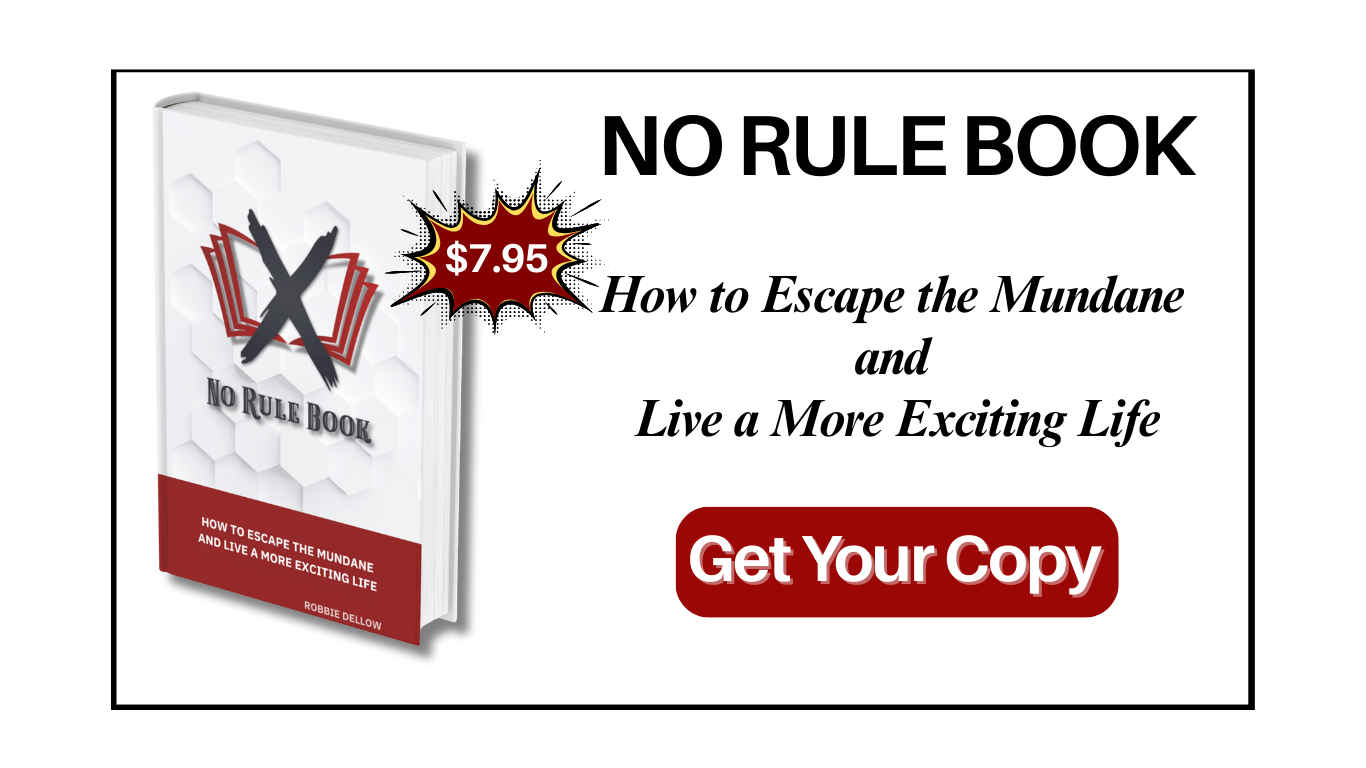
No Rule Book
$9.95Original price was: $9.95.$7.95Current price is: $7.95. -
-35%
No Rule Book + No Rules Start-Up
$22.90Original price was: $22.90.$14.95Current price is: $14.95. -
-50%
No Rules Start-Up
$19.95Original price was: $19.95.$9.95Current price is: $9.95.


 Submitted 1.0
 Manual 5.0