
When you have known someone only as your grandmother, it is surprisingly difficult to imagine that she once existed in a world in which you did not. The woman who remembers your birthday, asks whether you are eating properly and tells stories about relatives whose names you barely recognise once had an entirely different set of worries. She had friendships you know nothing about, ambitions that may have frightened her, people she loved before your family existed, mistakes she may never have told you about and decisions that helped determine the person she eventually became.
She was not born a grandmother. That is simply the version of her life you arrived in time to meet.
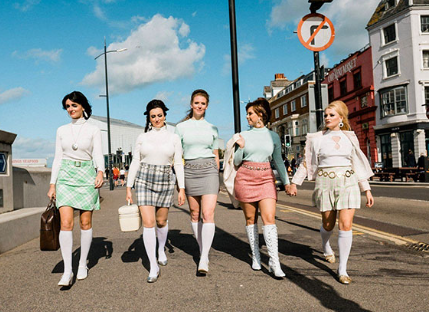 Long before that label existed, she was a girl trying to understand what the adults around her expected of her, and later a young woman making choices in a society that often offered women a much narrower definition of a successful life than the one available today. Depending on where and when she grew up, there may have been assumptions about the work she should do, the person she should marry, how she should dress, whether she should continue her education, how independent she ought to be and how much of her own ambition should be surrendered once she became a wife or mother.
Some women accepted much of that life because it genuinely suited them. Others accepted parts of it because the alternatives carried consequences that younger generations can easily underestimate. And some began pushing against those boundaries, sometimes loudly enough to appear in newspapers and history books, but much more often in decisions so ordinary by today’s standards that we have forgotten they were ever acts of defiance.
A woman did not have to attend Woodstock, march through the streets or ride away on a motorcycle to challenge the rules of her generation. She might have been the first woman in her family to attend university, taken a job her parents considered unsuitable, opened a bank account of her own, travelled without a husband, refused to remain in an unhappy marriage, decided not to marry at all, returned to work after having children or simply insisted that there was more than one acceptable way for a woman’s life to unfold.
Many of those decisions would barely attract attention now, and that is precisely what makes them so easy to overlook. Once a social boundary has been pushed far enough, the people who grow up on the other side of it can mistake their freedom for something that was always there.
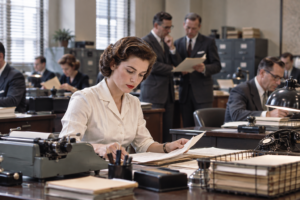 To understand what some of those choices meant, we have to resist looking backwards through the freedoms available today, because rules become remarkably difficult to see once they have disappeared. A young woman growing up now may reasonably assume that choosing a career, opening a bank account, travelling independently, deciding whether to marry or expecting to participate equally in decisions about money are simply ordinary features of adult life. Yet within the lifetime of many women who are grandmothers today, some of those choices were restricted by law while others were constrained just as effectively by expectations about what respectable women were supposed to do.
The precise rules differed enormously between countries, communities and families, and progress did not arrive everywhere at the same time. There was never one universal experience of being a woman in the twentieth century. Wealth mattered, race mattered, class mattered, geography mattered, and a woman raised in a liberal household might have encountered possibilities that another woman of exactly the same age had barely been encouraged to imagine.
But across much of the world there was a powerful assumption running beneath many of those differences: adulthood for a woman was expected to lead toward marriage, motherhood and responsibility for the home, while paid work, financial independence and public authority remained more naturally associated with men. A woman could work – and millions did – but there was often an expectation that her employment would fit around the larger role society had already written for her.
That is one reason historical change can be misleading when we reduce it to a list of dates on which laws were passed. A law can change in a day while an expectation survives inside families, workplaces and relationships for decades. Being legally permitted to do something does not necessarily mean being encouraged to do it, taken seriously when you attempt it or protected from the social consequences of choosing differently.
For a woman trying to build a life inside that environment, challenging convention therefore did not always involve standing opposite the establishment with a placard. Sometimes it meant becoming the first person in her family to question an assumption that everyone around her regarded as common sense.
And that is where the story becomes relevant far beyond women’s history, because unwritten rules are most powerful when the people following them no longer experience them as rules at all. They feel like reality. They become the things everybody knows, the choices sensible people make and the boundaries respectable people understand without needing to have them explained.
Until somebody crosses one.
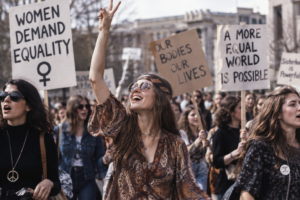 By the 1960s and 1970s, many of those boundaries were being challenged from several directions at once. The women’s movement was demanding greater equality in education, employment, law and family life, while the civil rights movement, anti-war protests and a broader counterculture were encouraging younger people to question institutions that previous generations had often been taught to respect. At the same time, new music, fashion and changing attitudes toward relationships were making that rejection of convention visible in everyday culture.
This is where the familiar images belong.
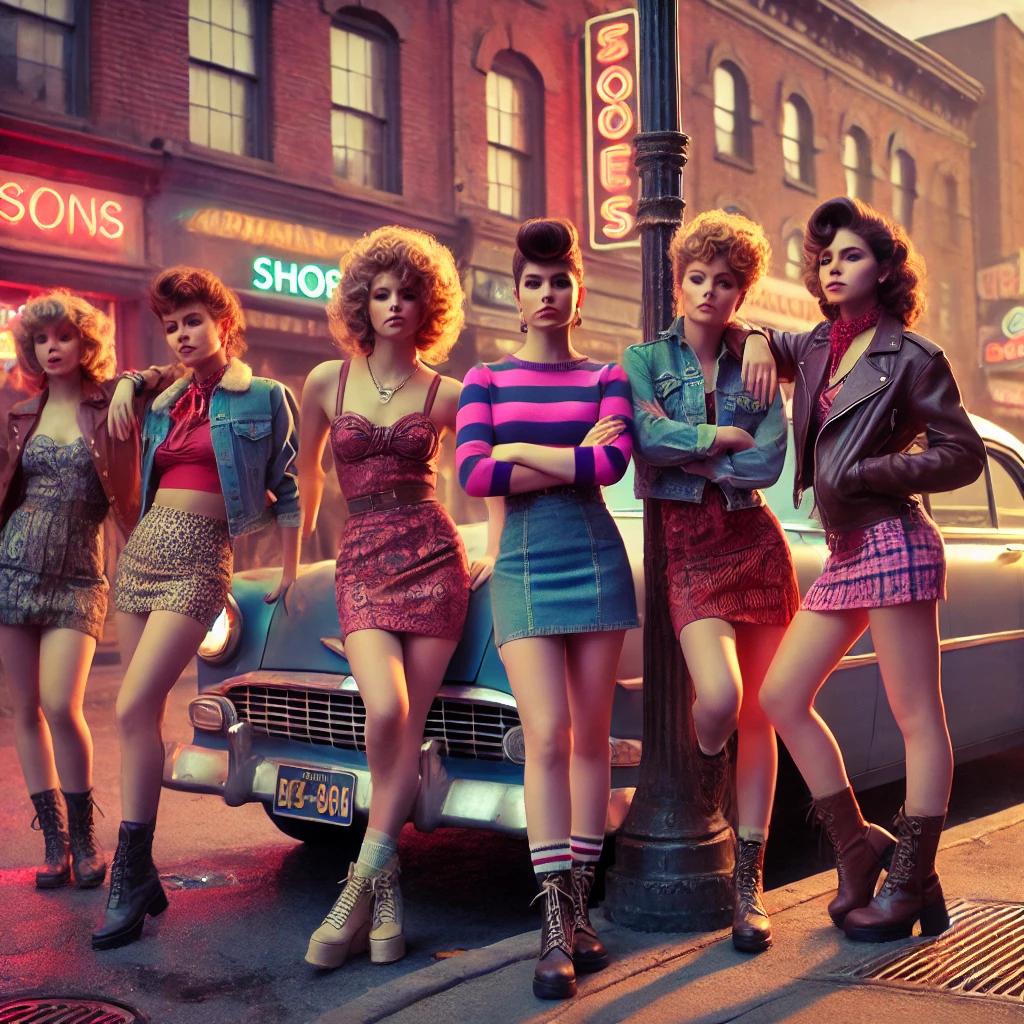
The miniskirt mattered not because every woman who wore one was making a political statement, but because clothing had become one visible battleground in a much larger argument over who had the right to decide how a woman should present herself. Rock music mattered not because listening to Led Zeppelin automatically made someone rebellious, but because popular culture was increasingly giving young people a language, identity and community that did not depend entirely upon the approval of their parents.
 And performers such as Janis Joplin mattered because she did not fit comfortably inside the conventional expectations surrounding female performers. Her voice was rough, vulnerable and ferocious, and the persona she presented was far removed from the carefully controlled femininity that audiences had often been encouraged to expect. Jimi Hendrix was challenging musical conventions from another direction, while artists across rock, soul and folk were helping create a culture in which questioning what had come before increasingly felt possible.
Woodstock eventually became one of the most recognisable symbols of that moment, but its significance was larger than hundreds of thousands of young people standing in mud listening to music. It represented, however imperfectly, the growing belief that the world inherited from one’s parents was not necessarily the world one had to reproduce.
That belief could be exhilarating, naïve, contradictory and sometimes self-destructive. The counterculture was not an enlightened generation arriving to correct everything its parents had done wrong, and romanticizing it that way would simply replace one historical myth with another. Many people who spoke about freedom carried their own prejudices and contradictions, women encountered sexism even inside supposedly progressive movements, and some experiments in rejecting convention produced consequences that were anything but liberating. Yet something fundamental had changed.
A generation was becoming increasingly willing to ask a question that sits at the heart of NoRuleBook :
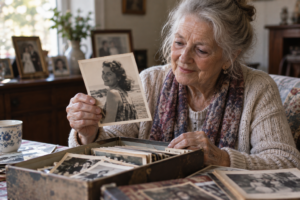 Nothing magical happens at sixty, seventy or eighty that erases all the people someone used to be. Age adds another chapter to a life; it does not retrospectively rewrite the chapters that came before it.
Yet our language encourages us to do exactly that. Once someone becomes a grandmother, the role can become so dominant that we unconsciously begin treating it as an identity rather than a relationship. We see the person in relation to ourselves—the grandmother who attends birthdays, asks questions, gives advice or sits at the end of the family table—without thinking very often about the woman who existed before any of us were there to observe her.
That younger woman may have been more cautious than we imagine, or far less cautious. She may have made decisions she remains proud of and others she would never repeat. There may have been careers abandoned, friendships lost, places visited, opportunities missed, relationships nobody mentions anymore and moments of courage that seem completely inconsistent with the person we think we know.
But there is no inconsistency. They are all the same life.
This is one of the strange consequences of knowing someone across only part of their story. We meet people in the chapter where our own character enters and unconsciously treat everything before that point as backstory.
There is an uncomfortable reason this article matters beyond the history it describes. Many of the people who can tell us what these changes actually felt like are reaching an age when their stories will disappear unless somebody thinks to ask for them.
Family history has a strange tendency to preserve events while losing experiences. We remember where someone lived, whom they married, what work they did and perhaps where they travelled, yet we often know remarkably little about what it felt like to be them before the roles we associate with them had formed. We know Grandma was a nurse, teacher, shop assistant, mother or homemaker, but perhaps nobody has ever asked whether that was the life she originally imagined for herself, what other possibilities she considered, which expectations she resented, what frightened her when she was twenty or which decision changed the direction of everything that followed.
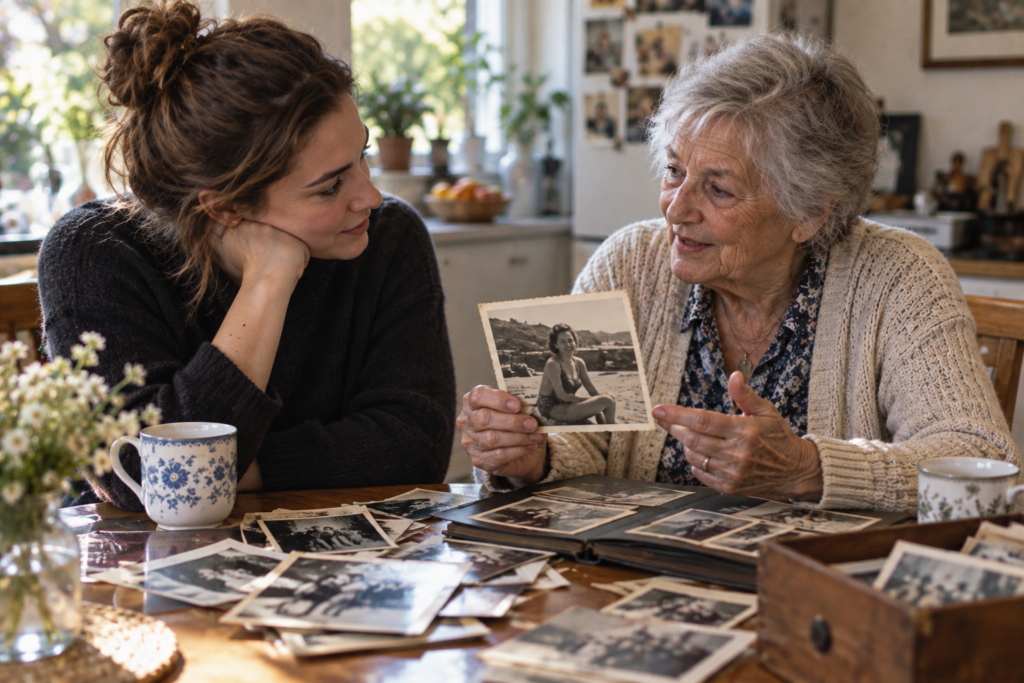 The loss is greater than nostalgia because these stories can reveal something that history books struggle to capture: what an unwritten rule feels like while people are still living inside it. Looking backwards, we can identify social expectations quite easily because we already know which ones eventually changed. Living through them is different. At the time, an expectation may simply have felt like adulthood, respectability, responsibility or common sense.
Your grandmother may remember that difference.
She may remember being told that a particular career was unsuitable for women, or that travelling alone was dangerous, or that getting married was simply what came next. She may remember being expected to leave work when children arrived, watching brothers receive freedoms she did not have, being discouraged from studying something she loved or discovering that financial independence was more complicated than younger generations now assume. Equally, she may tell you that some assumptions we make about her generation are completely wrong, that she had far more freedom than you imagined or that the life younger people might dismiss as conventional was precisely the life she wanted.
That possibility is important, because the purpose of asking is not to turn every older woman into evidence for a story about oppression or rebellion. It is to discover the person underneath the assumptions – including our own.
-
-20%

NoRuleBook
Original price was: $9.95.$7.95Current price is: $7.95. -
-50%

No Rules Start-Up
Original price was: $19.95.$9.95Current price is: $9.95. -
-35%

NoRuleBook Bundle
Original price was: $22.90.$14.95Current price is: $14.95.

 Submitted 1.0
 Manual 5.0