

A Story the Rules Were Never Meant to Allow
History likes its innovators to arrive in neat packages. Educated, approved, supported by the system that later celebrates them. Thomas Jennings didn’t arrive that way.
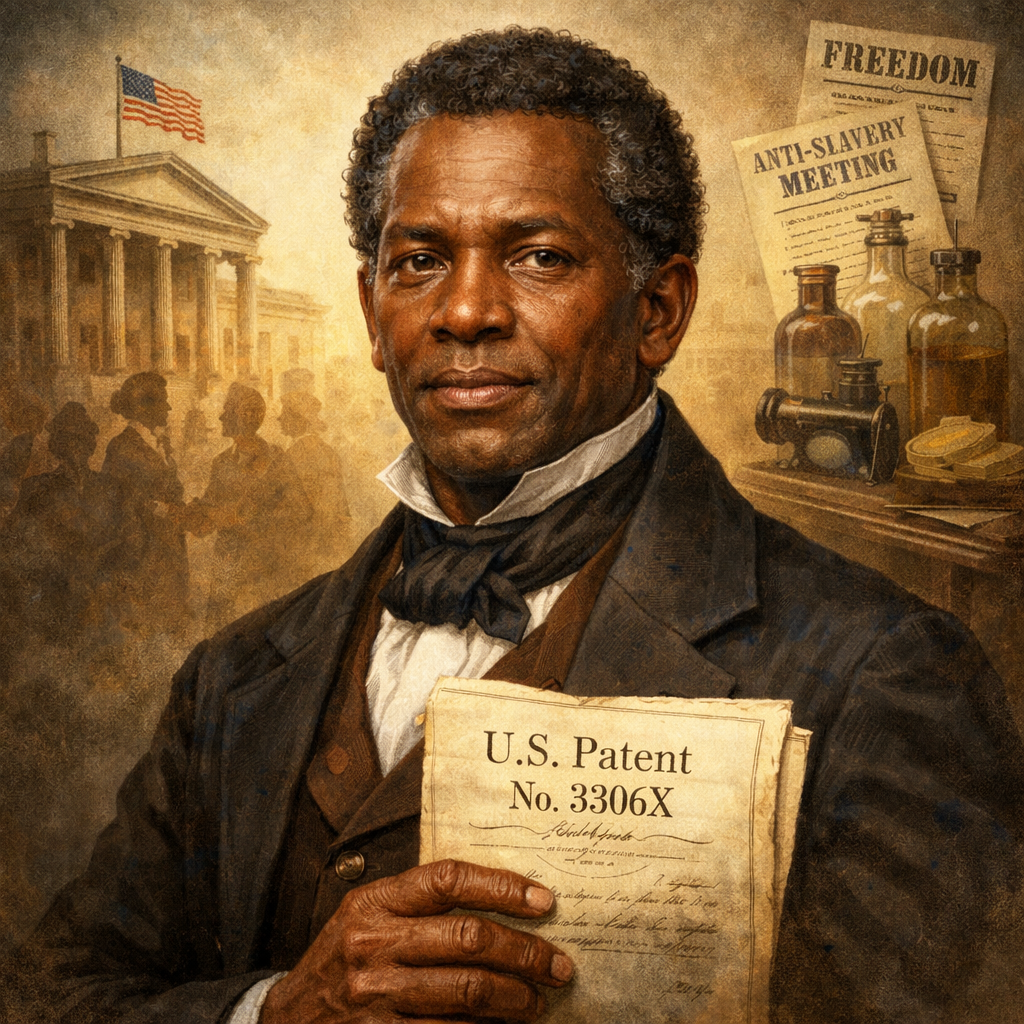
In 1821, Jennings became the first Black American inventor to receive a United States patent. This happened in a country where slavery was still legal and Black Americans were denied basic rights. The idea that a Black man could legally own an invention, profit from it, and be recognized by the federal government challenged the social order of the time.
Jennings’ achievement wasn’t just about innovation. It was about claiming space in a system that was never designed to include him.
The World Thomas Jennings Was Born Into
Thomas L. Jennings was born in 1791 in New York City. While New York was gradually moving toward abolishing slavery, equality was not part of the plan. Being free did not mean being protected. Black Americans could not vote, could not serve on juries, and could not rely on the legal system to defend their interests.
Economic opportunities existed, but they were narrow and fragile. Success required staying within clearly defined boundaries. Stepping outside them came with consequences.
Jennings learned a skilled trade as a tailor, working long hours with fine fabrics owned by people wealthier and more powerful than himself. This work gave him close exposure to a problem most others accepted as unavoidable.
The Problem No One Questioned
Delicate clothing was easily ruined during cleaning. Water-based washing methods damaged fabrics, weakened fibers, and often destroyed garments entirely. Stains were treated as a permanent loss, an accepted limitation of fine clothing.
Jennings did not see an unavoidable problem. He saw an unsolved one.
Rather than accept tradition, he began experimenting with alternatives. Through careful testing, he developed a method that used chemical solvents instead of water to clean clothing. The process removed dirt and grease while preserving the integrity of the fabric.
This innovation became the foundation of modern dry cleaning.
Claiming Ownership in a Hostile System
Inventing something useful was only part of the challenge. Claiming ownership was far more dangerous.
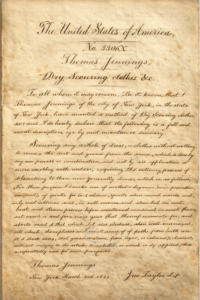
In 1821, Jennings applied for a U.S. patent for his dry-cleaning process. The patent was granted, making him the first Black American to legally hold one. This moment mattered far beyond the invention itself.
At the time, enslaved people were prohibited from owning patents, and even free Black Americans had limited legal protection. Many inventions created by Black individuals were stolen, ignored, or credited to others. Jennings’ patent established a precedent that ownership was possible, even within a system built to deny it.
Turning Innovation into Leverage
Jennings licensed his invention and generated income from it, something rare for inventors of his era and almost unheard of for Black inventors. But he did not treat financial success as an endpoint.
He used his resources deliberately and strategically. Jennings supported abolitionist causes, contributing financially to efforts aimed at ending slavery and expanding freedom. He was involved in early civil rights associations that worked to protect the legal and social standing of Black Americans at a time when such advocacy carried real risk.
Jennings also funded legal advocacy, understanding that lasting change required confronting unjust laws directly. When his daughter Elizabeth was forcibly removed from a segregated streetcar, he helped finance the legal challenge that led to one of the earliest victories against racial segregation in public transportation in the United States.
Beyond the courtroom, Jennings invested in education and supported The Black Press, recognizing that access to knowledge and independent media was essential for long-term progress. He saw education, legal power, and information as inseparable tools in the fight for equality.
Why Thomas Jennings Embodies the NoRuleBook Philosophy
Thomas Jennings did not overthrow the system. He outgrew it.
He worked within reality as it existed, identified its contradictions, and moved decisively through them. He didn’t wait for permission, fairness, or validation. He focused on competence, ownership, and action.
This is the core of the NoRuleBook philosophy. Not rebellion for attention. Not blind defiance. But refusing to let inherited rules define what is possible.
Jennings didn’t ask whether he was allowed to invent. He simply solved a problem. He didn’t wait to be told he could own his work. He claimed it.
Lessons That Still Matter Today
Seeing Opportunity Where Others Accept Limits
Jennings’ innovation began with observation. Most people tolerated ruined garments as inevitable. He questioned the assumption. Progress often starts not with grand ideas, but with quiet dissatisfaction.
Understanding Where Systems Bend
The same government that denied Black Americans basic rights still issued Jennings a patent. That contradiction was the opening he used. Every system has gaps, and meaningful change often comes from understanding where they exist.
Ownership Changes Outcomes
Without legal ownership, Jennings’ invention would have had limited impact. Ownership allowed him to build wealth, influence, and leverage. Ideas matter, but control over those ideas determines their reach.
Using Success as a Tool. Not as a Trophy
Jennings understood that success carried responsibility. He treated wealth not as validation, but as leverage. His financial gains were used to fund abolitionist movements, support civil rights associations, back legal challenges against discriminatory laws, and strengthen education and The Black Press.
Success did not soften his values. It sharpened them. His legacy is not only that he was first, but that he used being first to create structural opportunities for others.
Why His Story Is Still Overlooked
Thomas Jennings is rarely mentioned in standard history education, and that omission is revealing. His story disrupts the comforting belief that progress only happens when society is ready for it. Jennings shows that progress often happens because someone forces the system to confront its own inconsistencies.
Uncomfortable stories tend to be forgotten. They are also the ones worth remembering.
Final Thoughts
Thomas Jennings proved that permission is not a prerequisite for impact. He showed that rules are often less solid than they appear, and that ownership, when claimed with clarity and purpose, can change outcomes far beyond the individual.
His life reminds us that innovation is not just about ideas, but about the courage to claim them.
What the Reader Can Consider Doing
You may never file a patent or invent a new industry. But you can examine the rules you follow without question. Look closely at your life, work, your industry, and your assumptions about what is allowed. Notice inefficiencies that everyone else has normalized and traditions that survive only because no one challenges them.
That is where Thomas Jennings began. Not with rebellion, but with observation. Not with permission, but with ownership.
Rules rarely disappear on their own. More often, they are outgrown by people who refuse to let them define what is possible.