
THE TIE THAT LEFT TWO FRIENDS COMPETING FOR SECOND
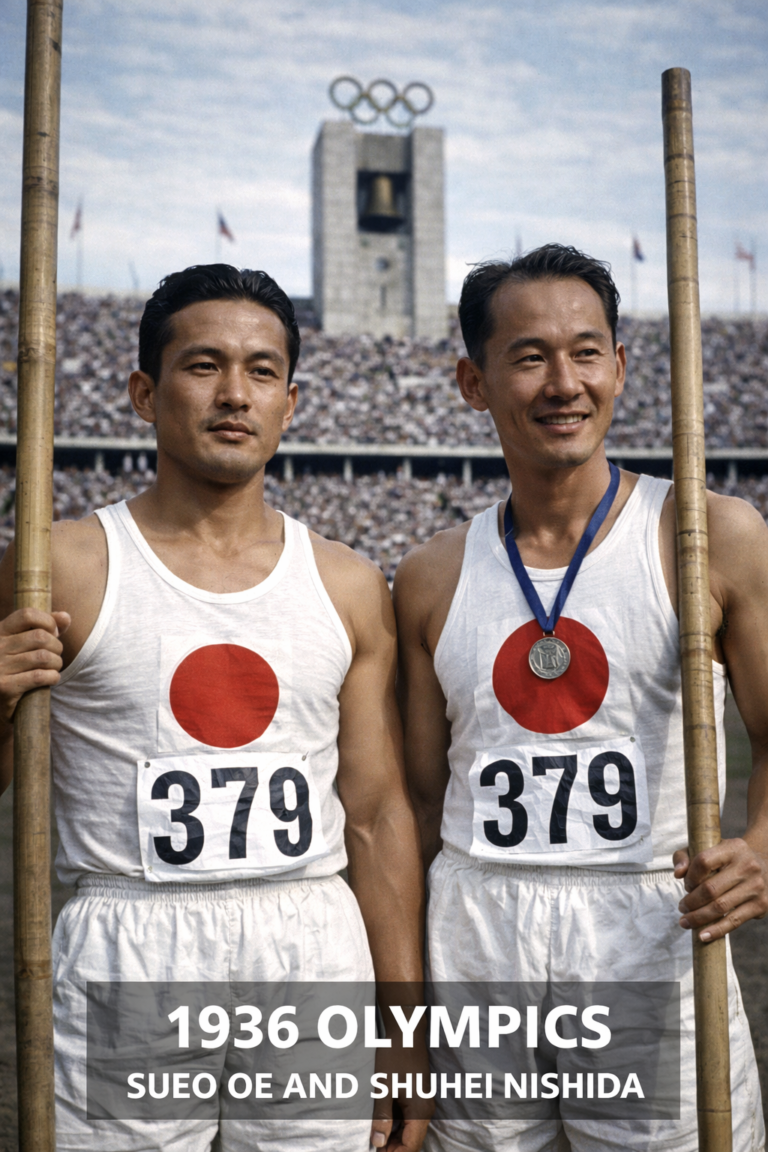
At the 1936 Berlin Olympics, Japanese pole vaulters Shuhei Nishida and Sueo Oe arrived as teammates but, like everyone else in the competition, they were also rivals. Nishida was already an Olympic silver medalist from Los Angeles four years earlier, while Oe was the younger athlete, competing at his first Olympic Games.
American Earle Meadows eventually won gold, but behind him the competition became unusually complicated. Nishida, Oe and another American, Bill Sefton, had all cleared 4.25 metres, leaving the officials to determine who would take silver and bronze. A jump-off followed, Sefton was eliminated, and the two Japanese teammates were left to continue against each other for second place.
That was when the competition took an unexpected turn.
Nishida and Oe declined to continue jumping against one another. They had achieved the same height and, as far as they were concerned, there was little value in continuing simply to establish which friend would stand one step higher than the other. The Olympics, however, still required an official result, so the Japanese team eventually submitted Nishida for second place and Oe for third.
Nishida received silver. Oe received bronze.
Officially, the problem had been solved. Yet the two athletes were about to demonstrate that an official ranking and a personal definition of achievement do not necessarily have to be the same thing.
The system can decide your ranking. However, it doesn't get to decide what that ranking means to you.
THE OFFICIAL RESULT WASN'T THEIR RESULT
There was nothing inherently unreasonable about the Olympics requiring second and third place to be separated. Competitive sport depends upon measurements, rankings and results, and Nishida and Oe had entered the competition knowing that those rules existed.
What they resisted was not competition itself, but the idea that the distinction created by the result had to define how they viewed one another.
That distinction matters, because their story can easily be turned into a simple tale about two men rejecting competition in favour of friendship. They did nothing of the sort. Both had spent years becoming elite athletes, both had travelled to Berlin to compete at the highest level, and both wanted to perform as well as they possibly could. Their friendship did not make achievement meaningless; it simply meant that the difference between silver and bronze did not carry the same significance for them that the official medal table required it to carry.
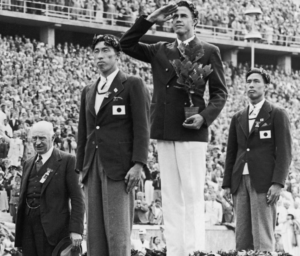
Even at the medal ceremony, Nishida reportedly encouraged the younger Oe to take the second-place position on the podium, looking ahead to the Olympic Games that were expected to be held in Tokyo in 1940.
The official record would continue to say that Nishida finished second and Oe third. Neither man tried to rewrite it.
Instead, when they returned home, they rewrote something much more personal: What those medals would mean.
THE MEDALS THEY ACTUALLY WANTED
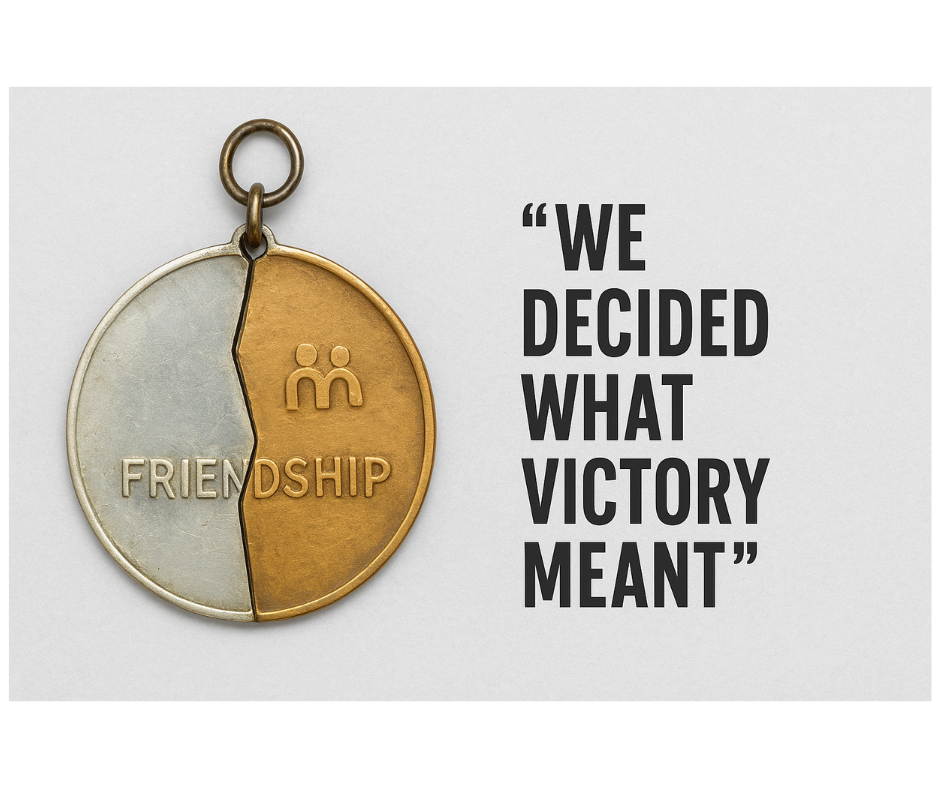
Back in Japan, Nishida and Oe found a way to express something the official results could not. They took their silver and bronze medals to be cut in half, then joined one half of each together so that both men ended up with the same thing: a medal that was half silver and half bronze.
They became known as the Friendship Medals.
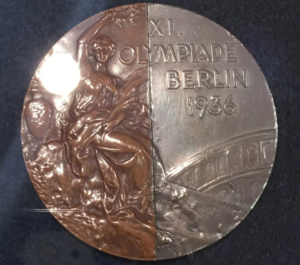
What makes the gesture so powerful is how little drama surrounded it. Nishida and Oe did not demand that the Olympic records be changed, argue that medals should no longer exist or insist that everyone else adopt their view of competition. The official result remained exactly as it was: Nishida second, Oe third.
They simply decided that the official result did not have to become the final definition of what they had achieved together.
That distinction is important to NoRuleBook because many of the systems we live within need ways of measuring us. Schools give grades, employers create job titles, sporting competitions produce rankings, businesses measure performance and societies develop countless other ways of deciding who appears to be ahead. Those measurements can be useful, but a problem begins when we allow a measurement designed for one purpose to become a measurement of who we are.
Nishida and Oe did not destroy the scoreboard. They just refused to let it tell the whole story.
WHO GETS TO DEFINE WHAT WINNING MEANS?
Almost ninety years later, the Friendship Medals remain compelling because the question behind them reaches far beyond sport. Much of modern life comes with a scoreboard, even when nobody explicitly tells us that we are competing.
We compare salaries, houses, careers, qualifications, businesses, follower counts and achievements, often absorbing the assumption that moving higher on whichever scale surrounds us must also mean moving closer to success. Yet those measurements usually tell us only what the system was designed to measure; they cannot tell us whether the thing being measured is what matters most to us.
This does not mean rejecting ambition or pretending outcomes do not matter. Nishida and Oe were Olympic athletes precisely because they cared deeply about achievement. Their story suggests something more useful: We can participate in a system without surrendering to it the right to define what success means.
There is a poignant final chapter to their friendship that neither man could have foreseen in Berlin. Tokyo was scheduled to host the 1940 Olympics, and Nishida had encouraged his younger teammate toward those Games, but war meant they never took place. Oe later served in the Japanese military and was killed in the Philippines in 1941.
Seen with hindsight, the decision to divide two Olympic medals into equal halves feels even less like a rejection of winning and more like a recognition of something a medal table could never measure.
The ranking survived in the record books. The friendship became the story people remembered.
THE NORULEBOOK TRUTH
The story of Shuhei Nishida and Sueo Oe is not powerful because they proved that rankings do not matter. In an Olympic competition, rankings clearly do matter; they tell us who jumped highest, ran fastest or performed best according to an agreed set of rules. Without them, much of competitive sport would cease to make sense.
What their Friendship Medals revealed was the boundary of what a ranking can tell us.
The officials could record Nishida as the silver medalist and Oe as the bronze medalist, but that result could not measure the respect between them, decide how they should view their performances or determine whether one man should consider himself more successful than the other. The ranking was accurate within the competition, yet Nishida and Oe understood that it did not have to become a judgement about their worth.
The same distinction is easy to lose in everyday life. A salary can measure what an employer pays you without measuring the value of your life; a job title can describe your position without defining who you are; a follower count can measure the size of an audience without measuring the quality of what you contribute. Problems begin when we take a measurement designed for a particular purpose and quietly allow it to become a definition of ourselves.
Nishida and Oe found a beautifully simple way to separate the two. They accepted the Olympic result, then created medals that represented what the result could not.
Some scoreboards are useful for measuring performance. None of them were designed to measure a life.
That may be the most enduring lesson of the Friendship Medals. You do not have to reject every system that measures you, nor pretend that achievement and ambition are unimportant. You simply need to remember that the system’s definition of winning does not automatically have to become yours.
Take The Next Step
Much of NoRuleBook begins with learning to recognise the difference between the measurements society uses and the values you consciously choose for yourself. Grades, salaries, titles, possessions and status can all tell us something, but none deserves to become the unquestioned rule by which an entire life is judged.
The Friendship Medals are a reminder that you can participate in the world as it exists while still deciding for yourself what achievement, success and ultimately a life well lived actually mean.
Click the NoRuleBook image below to explore the collection.
The NoRuleBook Collection
-
NoRuleBook
$9.95Original price was: $9.95.$7.95Current price is: $7.95. -
No Rules Start-Up
$19.95Original price was: $19.95.$9.95Current price is: $9.95. -
NoRuleBook Bundle
$22.90Original price was: $22.90.$14.95Current price is: $14.95.