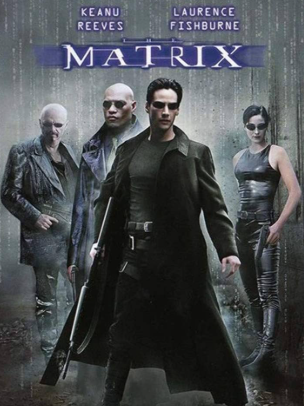

The red-pill and blue-pill scene became one of the most recognisable moments in modern cinema because the choice Morpheus offers Neo is extraordinarily simple. The blue pill allows him to return to the familiar world he already understands, while the red pill allows him to discover what lies beyond it.
Yet the real choice is not simply between ignorance and knowledge. Neo is being asked to choose between Certainty and Uncertainty.
The blue pill offers a world that may be incomplete, but it is familiar. Neo knows how to function inside it, understands what is expected of him and can return to a life whose boundaries already make sense. The red pill offers no comparable reassurance because discovering that your understanding of reality is wrong does not automatically provide a comfortable replacement.
That is why the metaphor works so well beyond the film. Questioning an assumption sounds easy when the consequences remain theoretical, but it becomes much harder when the answer might require you to reconsider decisions you have already made, ambitions you have spent years pursuing or definitions of success around which you have organised your life.
Most of us like to imagine that we would always choose the truth, but certainty has genuine value. Familiar structures reduce risk and provide direction, which means the useful lesson isn’t that we should reject them simply because they are familiar. It is that comfort should not become proof that the assumptions supporting them are correct.
The word ‘system’ can easily become vague enough to mean almost anything, but The Matrix gives us a more useful way of thinking about it. A system can influence behavior without dictating every decision because it can establish the frame within which those decisions take place.
Imagine being offered twenty different career options and freely choosing among them. That appears to be meaningful choice, and it is, but there is another question sitting underneath it: Who decided that those were the twenty options worth considering?
 The same applies far beyond careers. We make decisions about how much money is enough, what constitutes achievement, when someone should settle down, what risks are sensible, what possessions signal success and even when in life we are supposed to become free enough to spend our time as we choose. None of these expectations completely removes our ability to choose, but they can influence which choices become visible enough to consider.
This is why the strongest systems do not necessarily operate through force. They can operate through framing, making some paths appear sensible and others unrealistic, some ambitions respectable and others irresponsible, until people begin making decisions that feel entirely personal while rarely examining the boundaries around them.
The literal Matrix is a technological simulation, but translating the film into everyday life does not require believing that modern society is secretly controlled by some single hidden force. Reality is much messier than that, with countless institutions, incentives, technologies, traditions and communities influencing what we see and how we interpret it.
 Social media can repeatedly expose us to lifestyles that make particular definitions of success appear universal. Algorithms can decide which information reaches us often enough to feel important. Advertising can turn consumption into identity, while workplaces, schools, families and peer groups can reinforce assumptions about what responsible or successful people are expected to do.
None of this means those influences are necessarily malicious or that we are powerless against them. It means that our perception of what is normal is partly constructed from what we repeatedly encounter, and modern technology has become extraordinarily effective at deciding who receives that repetition.
The danger is not simply misinformation. It is Invisible Narrowing: Reaching the point where the world presented to us feels so complete that we stop wondering what has been left outside the frame.
-
-20%
NoRuleBook
Original price was: $9.95.$7.95Current price is: $7.95. -
-50%
No Rules Start-Up
Original price was: $19.95.$9.95Current price is: $9.95. -
-35%
NoRuleBook Bundle
Original price was: $22.90.$14.95Current price is: $14.95.

 Submitted 1.0
 Manual 5.0