

 Fight Club pushes this idea further through the narrator’s relationship with what he owns. His possessions don’t merely make his apartment comfortable; they help tell him who he is, which means losing them threatens something more important than their monetary value.
That distinction matters because consumer culture rarely sells objects purely for their practical function. Cars can communicate status, clothing can communicate belonging, furniture can communicate taste and technology can communicate the kind of person we imagine ourselves to be. None of this is necessarily deceptive, because people have always used possessions to express identity, but it becomes limiting when the identity available to us is increasingly assembled from choices somebody else has already packaged and presented.
The narrator believes he is expressing himself, yet much of that expression has been selected from a catalogue.
This is one of Fight Club’s most enduring observations because it asks us to consider whether having more ways to customise a life necessarily means having more freedom to determine what that life is for. Choosing between thousands of products may create enormous consumer choice while leaving much larger assumptions about success, work and identity almost completely untouched.
The narrator can choose exactly which table belongs in his apartment. What he has never really chosen is the life the table belongs inside.
Tyler Durden initially appears to offer everything the narrator’s controlled existence lacks. Where the narrator is cautious, Tyler takes risks; where the narrator seeks approval, Tyler appears indifferent to it; and where the narrator has built his identity around possessions and professional respectability, Tyler treats both with contempt.
It is easy to understand why this feels like freedom.
For someone who has spent years moving through a life shaped by expectations he never consciously examined, doing the opposite can feel extraordinarily liberating. Tyler provides permission to stop caring about the apartment, the job, the possessions and the social conventions that have quietly organised the narrator’s world, which is why he can initially appear to represent the authentic person buried underneath all that conformity.
But Fight Club becomes far more useful when we resist that interpretation.
Tyler isn’t simply the answer to the narrator’s problem. He is another extreme.
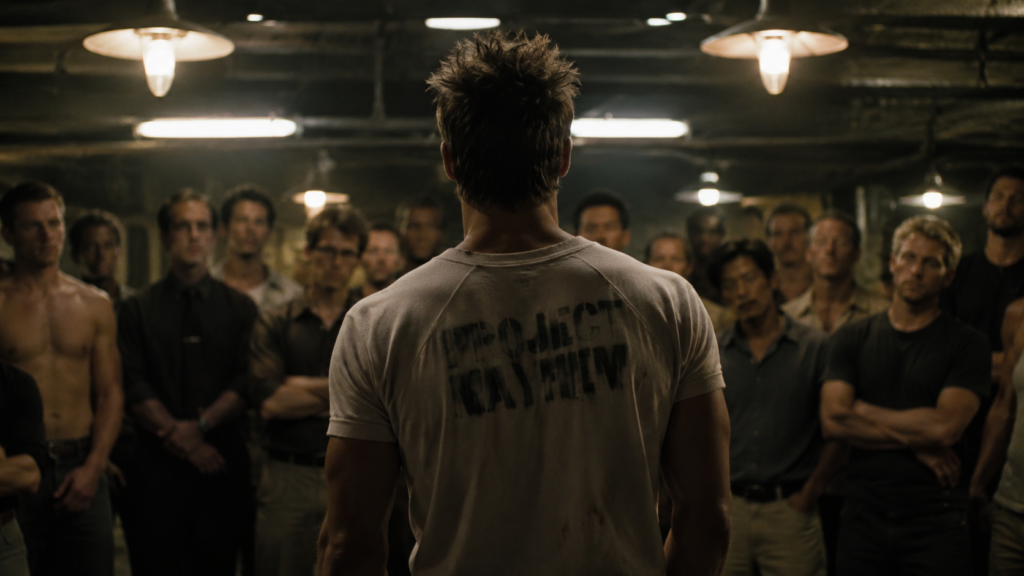 As the story progresses, rebellion develops its own rules, hierarchy, rituals and demands for obedience. Project Mayhem eventually requires individuals to surrender much of the identity and independent judgment that Tyler supposedly liberated them from in the first place. The narrator has escaped one system of expectations only to discover that rejecting everything can create another system just as capable of deciding how people should think and behave.
That is where Fight Club becomes particularly relevant to NoRuleBook, because questioning conventional rules is not the same as automatically doing the opposite.
If society says accumulate possessions and your response is that possessions must therefore be rejected, the original rule is still controlling the decision. If the expected path says behave one way and rebellion requires you to behave in precisely the opposite way, neither position necessarily represents independent thought.
Real freedom requires something harder than obedience or rebellion. It requires choosing.
-
-20%
NoRuleBook
Original price was: $9.95.$7.95Current price is: $7.95. -
-50%
No Rules Start-Up
Original price was: $19.95.$9.95Current price is: $9.95. -
-35%
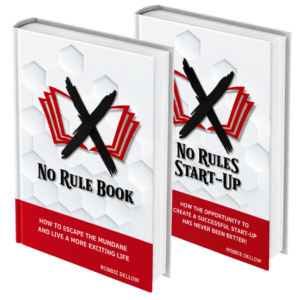
NoRuleBook Bundle
Original price was: $22.90.$14.95Current price is: $14.95.

 Submitted 1.0
 Manual 5.0