

Rosetta Tharpe and the Cost of Being First
Rosetta Tharpe didn’t set out to challenge an industry, a church, or a culture. She wasn’t interested in movements or labels. She was interested in sound. In feeling. In what happened when music stopped behaving and started telling the truth.
That instinct would place her years ahead of her time, and permanently outside the system that later profited from what she created.
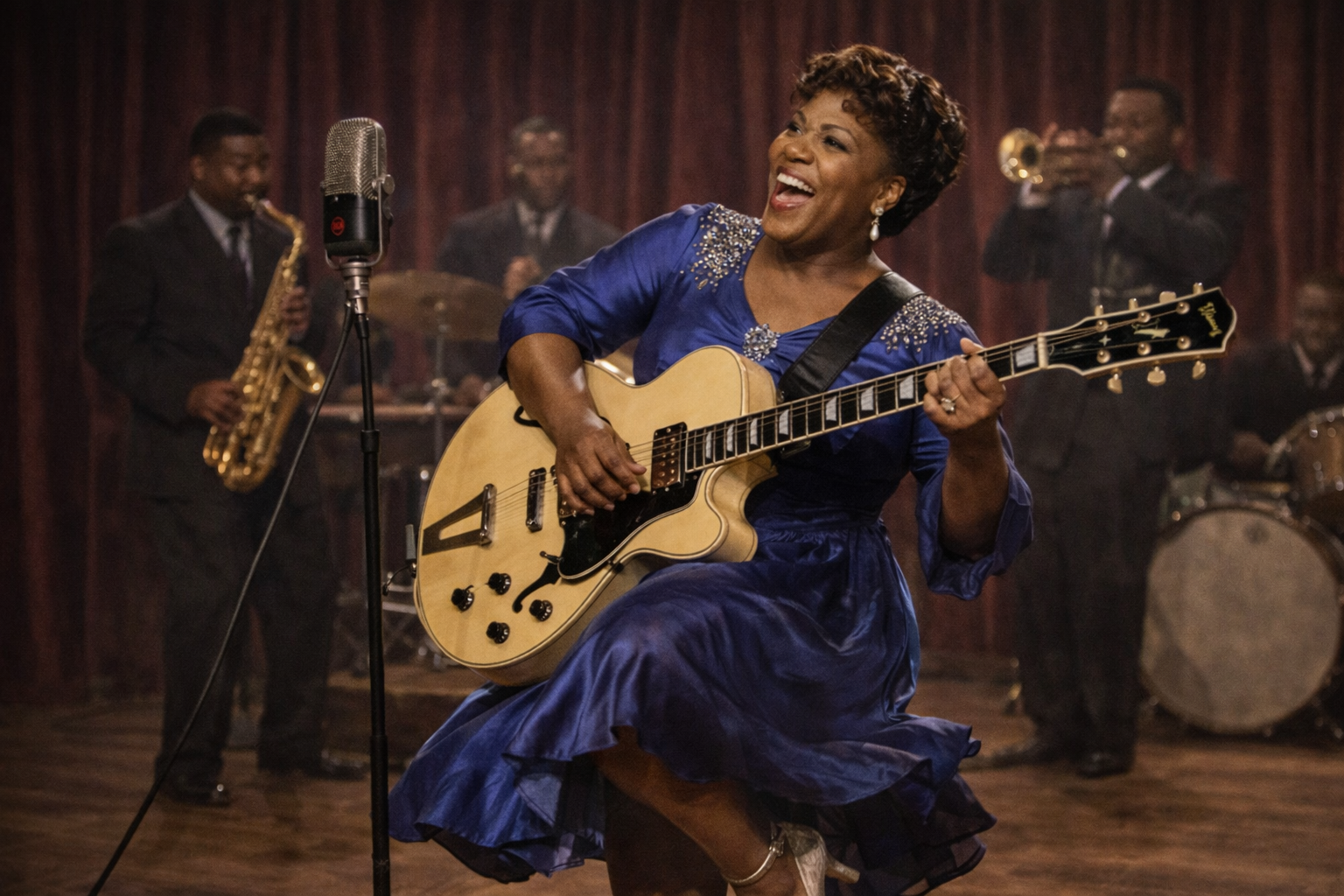
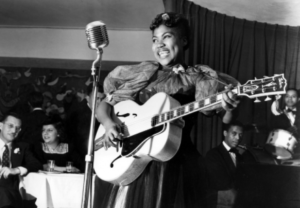
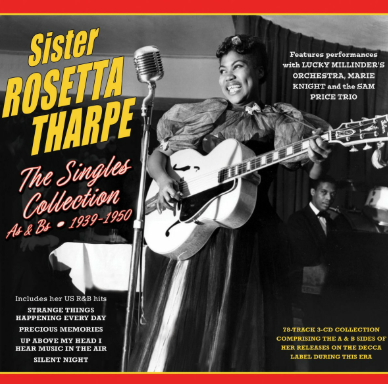
Before rock and roll had a name, before it had stars, before it had rules of its own, Rosetta Tharpe was already there. Electric guitar in hand. Gospel fire in her voice. Rhythm and distortion woven together in a way that made people uncomfortable because they didn’t know where to put it. And when systems don’t know where to put something, they tend to resist it first, then quietly take it later.
The World Rosetta Tharpe Walked Into
Music, when Tharpe emerged, was tightly policed. Gospel belonged in church. Blues belonged in clubs. Sacred and secular were not meant to mix. And women, especially Black women, were expected to perform within narrow boundaries that left little room for experimentation, let alone defiance. Tharpe broke all of those expectations at once.
She played gospel music with an electric guitar at a time when the instrument itself was viewed with suspicion. Electric guitars were loud, unruly, and associated with nightlife, not worship. Many church leaders saw them as vulgar. To bring one into gospel music was seen as disrespectful at best and sinful at worst.
Rosetta didn’t see it that way. She saw the guitar as a voice. And she used it to preach.
When the Church Turned Against Her
The resistance came quickly and harshly.
Traditional gospel audiences accused her of corrupting sacred music. Church leaders criticized her for performing in nightclubs and theatres, spaces they believed no gospel singer should ever enter. Some accused her of selling out. Others claimed she was using religion as entertainment rather than devotion. What unsettled them most was not just the venue, but the sound.
Tharpe’s playing was physical and joyful. She bent notes. She pushed rhythm forward. She played with a confidence and swagger that felt dangerously close to pleasure. For many in the gospel community, that crossed an invisible line. Worship, they believed, should be reverent and restrained. Rosetta made it loud and alive. She didn’t back down.
Creating Music Outside the System
Instead of choosing sides, Rosetta Tharpe refused the categories altogether. She played gospel songs in clubs and secular songs with gospel intensity. She sang about faith without softening the music, and she played electric guitar without apologizing for its power.
This was not rebellion for attention. It was instinct.
She wasn’t trying to shock the church or seduce the mainstream. She was simply creating music that reflected who she was. And in doing so, she created something the system had no framework to handle.
That is often where real innovation lives.
Systems are built to reward improvements within existing rules, not to recognize entirely new frameworks. Tharpe wasn’t tweaking gospel or blues. She was colliding them. The result sounded wrong to purists and confusing to executives. So it was tolerated, then sidelined.
But it didn’t disappear.
The Sound That Wouldn’t Go Away
As younger musicians came up, they heard something in Rosetta Tharpe’s playing that spoke directly to them. The rhythm. The attack. The way her guitar didn’t sit politely behind the song but drove it forward. This was the blueprint for rock and roll.
Years later, when rock became the dominant force in popular music, many of its biggest stars openly acknowledged where that sound came from.

Elvis Presley named her as one of his favorite singers. Chuck Berry credited her influence on his guitar style. Little Richard spoke about learning how to bring church energy onto the stage by watching her perform. Johnny Cash called her one of the greatest musicians he had ever known. Eric Clapton referred to her as the godmother of rock and roll. Keith Richards spoke openly about how her playing reshaped his understanding of what a guitar could do.
They knew. Musicians often do.
How the System Rewrites the Story
The industry, however, tells history differently.
When rock and roll became commercially viable, the system needed faces that fit its preferred narrative. It needed artists who could be packaged, promoted, and sold without challenging too many social norms at once. Rosetta Tharpe did not fit that mold.
So the system kept the sound and quietly discarded the source.
This is one of the most consistent patterns in innovation. Systems often reward the output of rule-breakers while erasing the rule-breakers themselves. The value survives. The credit shifts.
Tharpe’s influence was absorbed, diluted, and rebranded. Her techniques became standard. Her sound became familiar. But her name faded from the center of the story.
Not because she failed, but because she succeeded too early and too honestly.
The NoRuleBook Life She Lived
Rosetta Tharpe never waited for validation. She never reshaped herself to fit what audiences or institutions expected. She trusted her instincts over acceptance and expression over approval.
That choice came with a cost.
She faced resistance from the gospel community, suspicion from the secular world, and indifference from an industry that didn’t know how to market someone who broke so many rules at once. But she also left behind something more durable than recognition. She left behind a foundation.
Rock and roll did not emerge from nowhere. It was built by people who ignored the rules long enough for new ones to become inevitable.
Rosetta Tharpe was one of them.
What Her Story Teaches
The NoRuleBook lesson in Rosetta Tharpe’s life is not comforting, but it is useful.
If you create value outside the system, the system may not thank you. It may resist you, criticize you, and question your legitimacy. And if your work proves valuable enough, it may eventually adopt it without acknowledging where it came from.
The choice is not between rule-breaking and reward.
The choice is between integrity and permission.
Rosetta Tharpe chose integrity. She played the music she believed in, in the way she believed it should be played, long before the world was ready to call it something new.
That is what a NoRuleBook life looks like. Learn more by getting your copy of the NoRuleBook eBook here