

HOW 'THE SECOND SEX' EXPOSED THE RULES THAT DIDN'T LOOK LIKE RULES
In 1949, Simone de Beauvoir published a book that asked a deeply unsettling question about the way society understood women. What if many of the characteristics described as naturally feminine were not simply the inevitable consequences of biology, but had also been shaped by generations of expectations about how women should behave, what they should want, whom they should serve and what kind of lives they were supposed to lead?
It was a much more confronting argument than simply demanding better treatment for women, because Beauvoir was questioning something deeper than individual laws or obvious discrimination. She was questioning the assumptions underneath them – The ideas that had been repeated for so long that they no longer sounded like rules at all :
- A woman should marry.
- A wife should organise her life around her husband.
- Motherhood should provide a woman’s deepest fulfilment.
- Ambition was masculine / Dependence feminine.
- Men acted upon the world while women supported the men who did.
These expectations varied across class, culture and circumstance, but many were presented not merely as social preferences but as expressions of what women naturally were.
That distinction mattered enormously. A rule that everybody recognises as a rule can be debated, resisted or changed. But once a rule is mistaken for nature, questioning it begins to look absurd. You are no longer challenging a convention; You appear to be challenging reality itself.
Beauvoir’s The Second Sex attempted to reopen that distinction. Across two enormous volumes, she examined women’s lives through biology, history, philosophy, psychology, economics, literature, sexuality, marriage and motherhood, asking how much of women’s position in society was genuinely inevitable and how much had been created, reinforced and eventually accepted as normal.
Her conclusion would help change the way generations thought about gender, but its importance to NoRuleBook reaches beyond the particular rules imposed upon women. Because Beauvoir had identified one of the most powerful ways an unwritten rule survives :
It stops looking like a rule.
THE WORLD SHE WAS BORN INTO
Simone Lucie Ernestine Marie Bertrand de Beauvoir was born in Paris on January 9, 1908, into a bourgeois Catholic family whose circumstances changed dramatically during her childhood. Her father, Georges, valued literature and intellectual achievement, while her mother, Françoise, was deeply religious and raised Simone and her younger sister Hélène within a strict Catholic environment. The family’s finances deteriorated, particularly after the First World War, leaving the two daughters without the substantial dowries that might otherwise have helped secure the conventional marriages expected of women of their social class.
For Beauvoir, that financial decline had an unexpected consequence. The disappearance of one traditional route through life made education and professional independence increasingly important, and the girl who might once have been prepared primarily for marriage instead began developing the intellectual abilities that would eventually give her an entirely different future.
She was an intensely religious child before experiencing a crisis of faith during adolescence and becoming an atheist. What followed was not simply the rejection of one belief but the beginning of a habit that would shape much of her later work: ideas she had inherited as unquestionable truths became things she was willing to examine.
That does not mean everything Beauvoir rejected was therefore wrong, any more than rejecting convention automatically makes someone an independent thinker. The important shift was that inherited answers were no longer exempt from questioning merely because they had arrived before she was old enough to choose them.
Education opened that process further. Beauvoir studied philosophy at the Sorbonne and prepared for the fiercely competitive agrégation in philosophy, finishing second in the 1929 examination behind Jean-Paul Sartre. She was only twenty-one, and the achievement placed her among an extraordinarily small group of women entering the highest levels of French academic philosophy at a time when intellectual life remained overwhelmingly male.
Even the compliments she received could reveal the assumptions surrounding her. Beauvoir recalled that her father praised her intelligence by telling her that she had “the brain of a man.” The remark was intended affectionately, yet its underlying logic was revealing: exceptional intellectual ability in a daughter could be admired by mentally moving the quality into the masculine category.
This was the world Beauvoir was learning to examine—not one in which every man consciously gathered to design rules against women, but something more complicated and therefore harder to change. Men and women inherited ideas about femininity, marriage, work, sexuality, respectability and success from institutions, religion, family, literature and one another, often reproducing expectations whose origins they had never considered.
The rules survived partly because they felt normal.
FREEDOM FROM THE EXPECTED LIFE
Beauvoir’s relationship with Sartre would eventually become one of the most famous intellectual partnerships of the twentieth century, although describing it simply as a rebellious rejection of marriage misses much of what made it significant.
They met while preparing for the agrégation and developed a relationship built around intellectual companionship as much as romance. Sartre proposed what amounted to marriage, but Beauvoir refused. They instead formed a lifelong partnership without marrying or establishing the conventional household expected of a couple, while also allowing relationships with other people.
Their arrangement was complicated, controversial and at times damaging to others involved with them, and there is no reason for NoRuleBook to romanticise it merely because it was unconventional. Choosing a non-traditional arrangement does not automatically make the arrangement wiser, fairer or more honest than a traditional one. An unconventional life deserves exactly the same scrutiny as a conventional life.
What matters for Beauvoir’s story is that she refused to accept marriage simply because marriage was the expected destination for a woman who had found a lifelong partner.
That distinction would eventually become central to her philosophy. Beauvoir was not interested merely in reversing society’s instructions so that women who married were conformists while women who rejected marriage were liberated. Freedom meant something more demanding: having sufficient economic, intellectual and personal independence to participate meaningfully in deciding the shape of your own life.
This is where her story begins to move beyond feminism alone and directly into the NoRuleBook philosophy.
There is a considerable difference between choosing a conventional life because you genuinely want it and living that same life because you were never encouraged to imagine an alternative. The outward result might look identical, yet the process that produced it is entirely different.
The question is not whether the life looks conventional. It is whether the person living it ever had a meaningful opportunity to choose.
THE QUESTION BEHIND THE SECOND SEX
By the time Beauvoir began seriously investigating the position of women in the 1940s, she had already established herself as a writer and philosopher. Yet when she started asking what it had actually meant for her to live as a woman, the question expanded far beyond autobiography.
She began examining the explanations societies had used to account for women’s position. Biology mattered, but could biological differences alone explain the enormous range of expectations built around them? Psychology offered theories, but were those theories describing women independently or interpreting them through assumptions already embedded within society? History showed women occupying particular roles, but did the longevity of those arrangements demonstrate that they were inevitable, or simply that institutions and economic structures could reproduce themselves across generations?
The deeper Beauvoir looked, the harder it became to separate the description of what women supposedly were from the social world that had spent centuries teaching women what they were expected to become.
That inquiry eventually became The Second Sex, published in France in two volumes in 1949. Beauvoir ranged across biology, psychoanalysis, history, mythology, literature, childhood, sexuality, marriage, motherhood, work and ageing, trying to understand not merely which restrictions women faced but how an entire conception of womanhood had been constructed around them.
At the centre of the book was an idea that would become one of the most famous sentences in modern philosophy:
“One is not born, but rather becomes, a woman.”
The line is sometimes reduced to the claim that biology is irrelevant, but Beauvoir’s argument was more interesting than that. She did not need to deny biological difference in order to question whether biology could dictate the enormous social meaning attached to it. The fact that bodies differ does not by itself tell us who should hold authority, whose career should take priority, who should be economically dependent, what ambitions are appropriate or what kind of personality somebody ought to develop.
Between biological reality and social destiny, Beauvoir found an enormous collection of assumptions.
And once those assumptions became visible, another question became unavoidable :
Which of the things society called natural were actually rules that had been repeated for so long that people had forgotten they were rules?
WHEN CONVENTION DISGUISES ITSELF AS NATURE
This was the point at which The Second Sex became far more disruptive than a conventional argument for women’s rights. Beauvoir was not simply compiling a list of freedoms women had been denied and demanding that they be granted. She was examining the ideas that made those inequalities appear reasonable in the first place, because laws and institutions are easier to challenge once people recognise them as human creations; assumptions presented as natural truths are much harder to see.
For generations, women’s greater responsibility for children had been used to justify a much larger collection of conclusions about the lives they ought to lead. Because women gave birth, it could seem natural that motherhood should dominate their identity; because motherhood required care, it could seem equally natural that women belonged primarily in the home; and once domestic responsibility became feminine, economic dependence on men could be presented as an appropriate division of roles rather than as an arrangement with consequences for freedom and power. Each conclusion appeared to support the next until a social structure that had developed over centuries could be experienced as though biology itself had designed it.
Beauvoir’s challenge was to separate those layers. She did not need to pretend that bodies were identical or that pregnancy and motherhood were imaginary in order to ask whether society had attached far more meaning to biological differences than biology itself could justify. A biological fact might create a circumstance, but it could not by itself determine who should receive an education, whose ambitions should matter, who should control money, whose work should be valued or which person in a relationship should possess greater authority.
This is one of the most important distinctions in the NoRuleBook philosophy because it applies far beyond gender. Human beings inherit countless arrangements that may have begun for understandable reasons before accumulating assumptions around them. Eventually the original reason can disappear while the behaviour survives, and because each generation encounters the arrangement already established, what began as a response to particular circumstances gradually acquires the authority of permanence.
We see versions of this whenever somebody says that a career must progress in a particular sequence, that adulthood should contain certain milestones by certain ages, that retirement belongs at the end of working life, that a successful business must operate according to the conventions of its industry, or that particular ambitions are inappropriate for someone because of their age, background or circumstances. Some of those expectations may contain genuine wisdom, while others may reflect constraints that once existed but no longer do. The problem begins when we stop asking which is which.
Beauvoir’s work therefore offers NoRuleBook something more useful than an instruction to reject tradition. It demonstrates why we need to understand the difference between a constraint and a convention. A constraint remains true whether we approve of it or not; a convention exists because people have collectively decided, explicitly or otherwise, that this is how something is normally done. Conventions can be enormously useful, but they become dangerous when their familiarity allows them to masquerade as constraints.
The hardest rules to question are the ones society has stopped describing as rules and started describing as reality.
Once Beauvoir began pulling those categories apart, the argument could no longer be confined to philosophy. If some of the qualities society regarded as naturally feminine had been shaped by education, economic dependence, social expectations and institutions, then changing those conditions might also change the possibilities available to women.
And that possibility threatened far more than an abstract theory.
A BOOK THAT MADE PEOPLE ANGRY

When the first volume of The Second Sex appeared in France in June 1949, followed by the second later that year, Beauvoir was already a recognised writer and intellectual, but nothing she had previously published produced a reaction on this scale. The book entered a society still recovering from war, in which arguments about family, sexuality, motherhood and women’s independence touched institutions that regarded themselves as guardians of social order as much as personal morality.
The controversy was intensified by Beauvoir’s refusal to discuss women only in the respectable language expected of a female intellectual. She wrote openly about menstruation, sexual desire, contraception, abortion, lesbian relationships, marriage and motherhood, subjects that were rarely examined together with such philosophical seriousness and directness. Readers could disagree with her conclusions, and many did, but ignoring the questions became considerably harder once she had placed them in public view.
Religious authorities objected strongly, and in 1956 the Vatican placed The Second Sex on its Index Librorum Prohibitorum, the list of works Catholics were prohibited from reading. The book also encountered censorship elsewhere, including restrictions under Franco’s Spain, while prominent intellectuals attacked Beauvoir’s arguments from very different ideological positions.
Yet controversy itself can tell us very little about whether an idea is correct. That point matters for NoRuleBook because stories about people who challenged convention can easily become distorted into another simplistic rule: If the establishment hates your idea, you must be onto something. History provides plenty of examples demonstrating otherwise. Bad ideas can be unpopular. False ideas can be censored. People can provoke outrage because they are courageous, because they are mistaken, or because they are deliberately offensive, and sometimes several of those possibilities can exist within the same argument.
The significance of The Second Sex therefore does not come from the fact that people tried to suppress or condemn it. It comes from the questions Beauvoir forced into the open and the influence those questions had on the generations that followed.
The book sold rapidly in France and eventually reached readers far beyond it, although its international influence was complicated by translation. The first English-language edition, published in 1953, was heavily abridged and has since been criticised for removing substantial portions of Beauvoir’s argument, meaning that many English-speaking readers encountered a version of the work that did not fully represent what she had written. Even so, its central ideas travelled.
Women reading Beauvoir did not all respond in the same way, nor did The Second Sex single-handedly create the feminist movements that followed. Social change rarely has such tidy origins. But the book supplied language and intellectual structure for questions that increasing numbers of women were already beginning to ask about education, employment, marriage, sexuality, economic independence and the lives they had been told would fulfil them.
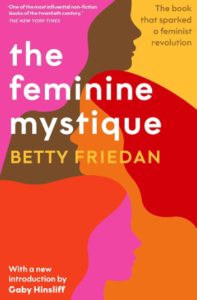
That influence reached thinkers who would themselves shape later debates. Betty Friedan encountered Beauvoir’s work before publishing The Feminine Mystique in 1963, a book that examined the dissatisfaction experienced by many American women whose supposedly ideal lives as suburban wives and mothers had failed to provide the fulfilment they had been promised. Different country, different circumstances and a different book, but beneath both was a similar disturbance : Perhaps a life can appear completely normal while being built upon assumptions nobody thought to question.
That was the dangerous possibility The Second Sex had released.
Not that every conventional life was a prison, but that a life could not meaningfully be called freely chosen if the alternatives had been made invisible.
QUESTIONING A RULE DOESN'T AUTOMATICALLY DISPROVE IT
There is a temptation, when looking back at Beauvoir from a world transformed by many of the debates she helped advance, to divide the story neatly between outdated rules on one side and liberation on the other. But that would miss one of the most useful lessons her work can offer NoRuleBook.
Questioning an assumption is the beginning of an inquiry, not the end of one.
Beauvoir’s conclusions have themselves been questioned, revised and challenged by later feminist thinkers. Her treatment of motherhood, her philosophical framework, the extent to which her analysis represented women outside her own social and cultural circumstances, and aspects of her personal conduct have all attracted serious criticism. Some later thinkers built upon her ideas, while others argued that parts of her analysis carried assumptions of their own.
That does not diminish the importance of asking the original question. It demonstrates why questioning must remain available even after a once-radical idea becomes influential.
This is the distinction between Contrarian Thinking and Critical Thinking that runs through the NoRuleBook philosophy. Contrarian thinking allows us to reopen a question that consensus may have prematurely closed, while critical thinking requires us to examine the evidence and reasoning behind whatever answers emerge. If we challenge an old orthodoxy only to make the new answer immune from examination, we have not escaped the rulebook mentality; we have merely printed another edition.
Beauvoir herself spent much of her intellectual life reconsidering ideas about freedom, responsibility and women’s liberation as circumstances changed around her. By the 1970s she was participating directly in the French women’s movement, including signing the 1971 Manifesto of the 343, in which hundreds of women publicly declared that they had undergone abortions at a time when abortion remained illegal in France. The philosopher who had once primarily analysed women’s situation was now placing her name and reputation behind attempts to change it.
Her evolution is important because ideas do not have to remain frozen at the moment we first encounter them. Neither do we.
The freedom to question inherited assumptions must include the freedom to question the conclusions we reached after questioning them.
THE RULES WE STILL DON'T NOTICE

The easiest rules to identify are usually the ones that belong to another time. Looking back at societies in which women were denied financial independence, excluded from professions or expected to organise their lives around husbands, we can see assumptions that once appeared ordinary and wonder how they were ever accepted so widely. Historical distance makes the rule visible because we are no longer standing inside it.
Beauvoir’s work presents us with a more uncomfortable challenge: if people in 1949 could mistake conventions for reality, there is little reason to assume that people today have somehow become immune to the same mistake.
The particular rules may change, but the process by which they acquire authority remains remarkably familiar. We grow up surrounded by expectations about education, careers, relationships, money, success, ageing, parenthood and retirement, and because most of those expectations are already present before we begin making serious decisions about our lives, they rarely arrive with a label announcing themselves as rules. They arrive through what our parents consider sensible, what schools encourage, what employers reward, what friends regard as normal and what the people around us appear to be doing.
Some of that inherited guidance is extraordinarily useful. Human beings would waste enormous amounts of time if every generation had to rediscover everything from first principles, and a convention should not be dismissed merely because it is conventional. The problem arises when accumulated experience quietly becomes unquestionable instruction, particularly when circumstances have changed since the instruction was formed.
This is why the useful question is not simply “What rules should I break?” It is “Which parts of the life I regard as normal have I actually examined?”
That is a harder question because the answer may not lead anywhere dramatic. You might examine an expectation and decide that it still makes sense. You may question marriage and still choose to marry, reconsider university and still decide that a degree is the best route to the career you want, or examine the traditional sequence of work and retirement and conclude that it suits you perfectly. NoRuleBook does not require the unconventional answer, because automatically choosing the opposite of convention still allows convention to determine your choice.
What matters is becoming able to distinguish between a life you have consciously chosen and one that has gradually assembled itself around you.
That was the deeper disturbance contained within The Second Sex. Beauvoir was asking women to examine possibilities that society had often presented as predetermined, and once those possibilities became visible, the question was no longer simply whether women should follow the traditional path. It was whether they should have meaningful access to alternatives and sufficient independence to decide among them.
Freedom, in that sense, is not measured by how unusual your life looks. It is measured partly by whether the choices available to you were real enough for your decision to mean something.
THE NORULEBOOK TRUTH
The lasting importance of The Second Sex is not that Simone de Beauvoir supplied a new set of instructions for how women should live. Replacing the expectation that a woman should marry, become a mother and organise her life around a husband with an expectation that a liberated woman should reject those things would simply exchange one prescribed life for another.
The more important shift was in who should have the authority to decide.
Beauvoir’s argument helped move the discussion away from asking whether women were successfully performing the roles society had prepared for them and towards asking whether they had sufficient freedom, independence and opportunity to determine those roles for themselves. A woman could choose marriage, motherhood and domestic life, pursue a profession and remain unmarried, combine elements of both, or construct a life that fitted none of the familiar categories. The particular answer mattered less than whether the alternatives were genuinely available and the choice meaningfully belonged to her.
That principle extends far beyond the circumstances Beauvoir was writing about in 1949. We can have more options than previous generations and still measure ourselves against inherited definitions of success; we can gain freedoms our grandparents never possessed and then use those freedoms to pursue lives we have never seriously considered whether we want. Greater choice creates possibility, but it does not automatically create conscious choice.
This is why NoRuleBook is not an argument for living unconventionally. An unconventional life can be every bit as unexamined as a conventional one if it is built primarily in reaction to what everybody else expects. Rebellion can become its own form of conformity when being different becomes more important than understanding why you are choosing differently.
Beauvoir’s story points towards something more demanding: ownership of the decision itself. That means being able to hear the expectations surrounding you without automatically obeying them, while also being able to recognise wisdom in tradition without automatically rejecting it. It means accepting that freedom includes the right to choose an ordinary life just as much as it includes the right to build an extraordinary one.
Freedom isn't choosing the unconventional life. It's having a genuine choice over which life becomes yours.
That is perhaps the most enduring connection between The Second Sex and NoRuleBook. Beauvoir helped expand the range of lives women could imagine for themselves, but the ultimate purpose of expanding those possibilities was never to dictate which one they should choose.
A larger menu of acceptable lives means very little if we still allow somebody else to make the selection.
Take The Next Step
Think about an important area of your life where the choices available to you may be wider than the choices you have seriously considered. It could involve work, relationships, family, education, money, where you live or simply what you believe someone at your age or stage of life should be doing. Rather than beginning by asking whether your current choice is right or wrong, consider how much of the decision genuinely belongs to you.
Imagine, for a moment, that nobody whose opinion mattered to you would be disappointed, surprised or impressed by what you chose. Remove the need to appear successful, sensible, ambitious, respectable or unconventional, and notice whether your preferred direction changes. You may find that it doesn’t, which can be reassuring because it suggests that the life you are building genuinely reflects what you value. But if a different possibility immediately appears, it may be worth understanding why that possibility has been so easy to dismiss.
This does not mean ignoring responsibilities, consequences or the legitimate needs of people whose lives are connected to yours. Freedom is not the absence of responsibility, and conscious choice is not permission to treat every obligation as somebody else’s rule. The purpose is simply to separate the consequences that genuinely matter from the expectations that have acquired influence mainly because you have spent years trying to satisfy them.
Beauvoir’s life was radically different from the life expected of a French woman born in 1908, but copying her choices would miss the point of her story. The useful challenge is not to become more like Simone de Beauvoir. It is to become more capable of recognising when your own decisions are being made for reasons you have consciously accepted rather than expectations you have merely absorbed.
You do not need to choose the unusual path. You just need enough freedom to know that the path you choose is genuinely yours.
If you want to explore more stories, ideas and practical ways of questioning the assumptions shaping your decisions, the NoRuleBook collection takes these ideas further.
Click the NoRuleBook image below to explore the collection.
The NoRuleBook Collection
-
NoRuleBook
$9.95Original price was: $9.95.$7.95Current price is: $7.95. -
No Rules Start-Up
$19.95Original price was: $19.95.$9.95Current price is: $9.95. -
NoRuleBook Bundle
$22.90Original price was: $22.90.$14.95Current price is: $14.95.