NoRule Book Banner

Helen’s Story – Who Gets to Decide What Risks You’re Allowed to Take?

by Robbie Dellow
Breaking rules image

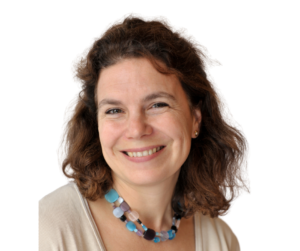
When I first spoke with Helen, what struck me was that she was not someone who had spent her life distrusting doctors, rejecting conventional medicine or looking for alternative treatments. Quite the opposite. She had worked within New Zealand’s health sector, understood the importance of medical evidence and, at the time, held strongly negative views about cannabis.

Then, in 2018, she was diagnosed with two aggressive brain tumors.

The diagnosis was glioblastoma, one of the most aggressive forms of brain cancer. Suddenly, questions about medical treatments, acceptable risks and what she was legally permitted to put into her own body were no longer abstract debates. They were decisions being made in the context of a disease that threatened her life.

Helen initially followed the conventional medical pathway. She underwent months of chemotherapy and radiation, accepting the physical and emotional toll because this was the treatment available to her and because, like most of us would probably do in the same situation, she trusted the people treating her. But the tumors did not shrink.

As the available options narrowed, Helen found herself in a position few people can properly imagine. The question was no longer simply which treatment had the strongest evidence behind it. It was what she was prepared to try when the established options had given her little reason for optimism.

That distinction would eventually force Helen to reconsider not only the rules surrounding her treatment, but some of her own beliefs as well.

WHEN YOUR ATTITUDE TO RISK CHANGES OVERNIGHT

Most healthcare rules are created for good reasons. Before a medicine becomes widely available, we expect evidence that it works, information about its side effects and some assurance that the potential benefits justify the risks. Without those safeguards, desperate patients would be extraordinarily vulnerable to ineffective treatments, dangerous products and people willing to profit from their fear.

Helen’s situation did not make those protections meaningless. What it changed was her tolerance for risk.

A regulator considering whether a treatment should be available has to think about an entire population. A doctor has professional and ethical responsibilities that extend beyond simply providing whatever a patient requests. But someone confronting an aggressive cancer with limited treatment options approaches the same calculation from a very different position, because the consequences of doing nothing—or continuing with something that does not appear to be working—belong to them.

For Helen, that changed the question from “Has this treatment been proven enough for general use?” to something much more personal:

“Given the alternatives available to me, is this a risk I am willing to take?”

Those two questions can produce very different answers without either being irrational.

THE FINAL PLACE ON A CLINICAL TRIAL

Helen’s search for another option eventually took her to Australia, where researchers were conducting a clinical trial involving medicinal cannabis and patients with recurrent high-grade gliomas, including glioblastoma.

The irony was difficult to miss. Helen had previously been strongly opposed to cannabis, but facing a life-threatening illness gave her a reason to examine whether those beliefs were based on evidence relevant to her situation or assumptions she had absorbed over many years.

Medical trial consent formShe applied for the trial and was accepted.

What followed should not be confused with abandoning conventional medicine for an untested treatment bought from an unknown source. Helen had entered a controlled clinical study in which medicinal cannabis formulations were being investigated in people with serious brain cancers. The published research from the Australian trial later reported that the treatments were generally well tolerated and examined outcomes including quality of life, sleep and disease response, although the study did not establish medicinal cannabis as a cure for glioblastoma.

For Helen, however, the scientific question and the personal question were never quite the same thing. She wasn’t trying to establish whether the treatment should become standard therapy for thousands of other patients. She was trying to decide what she should do about her own cancer.

During and after the trial, the results Helen received gave her reason to want to continue using the treatment. That created a problem that would turn an intensely personal medical decision into a question about rules, law and individual autonomy. The trial was in Australia, but Helen lived in New Zealand.

And continuing the THC treatment she wanted to use was not legally straightforward.

WHEN THE SYSTEM'S RISK IS DIFFERENT FROM YOUR RISK

This is where Helen’s story becomes much more interesting than a debate about whether medicinal cannabis works.

From the system’s perspective, restrictions around medicines exist because individual desperation cannot be the standard by which treatments are approved. History contains more than enough examples of supposed cures that proved ineffective or harmful, and seriously ill people are precisely the people most vulnerable to promises unsupported by good evidence.

But Helen was not making policy for everyone else. She was making a decision about herself.

When she returned to New Zealand, she chose to continue obtaining the THC oil she believed was worth taking, despite the legal risk involved. She understood that what she was doing could have consequences, but the calculation looked very different to someone who had already been forced to confront the possibility of dying from an aggressive cancer.

This is where phrases such as ‘risk-averse’ become almost meaningless, unless we ask which risk?

There was the potential medical risk of taking something that had not been established as a standard treatment for her cancer. There was the legal risk associated with obtaining and possessing it. But from Helen’s perspective there was also another risk: Stopping something she believed might be helping, when the alternatives available to her were extremely limited.

The system could evaluate the first two. Only Helen could decide how she felt about the third.

When the consequences belong to you, how much authority should somebody else have over the risks you're prepared to accept?

HELEN HAD TO QUESTION HER OWN RULEBOOK TOO

There is another part of Helen’s story that matters just as much as her willingness to challenge the rules surrounding her treatment. She had to challenge herself.

Before becoming ill, cannabis was something she strongly opposed. Had someone presented her with the same arguments years earlier, she might have dismissed them. But when circumstances changed and the subject became personally relevant, she was willing to examine evidence that conflicted with what she already believed.

That is an important distinction because independent thinking is often presented as questioning governments, institutions, experts or society. Those are the easy targets. Some of the hardest rules to question are the ones inside our own heads.

Helen could have remained loyal to her previous position because changing it might have felt inconsistent or uncomfortable. Instead, she allowed new information and radically different circumstances to alter her view.

That does not prove her earlier beliefs were foolish, nor does it prove every conclusion she subsequently reached was correct. It demonstrates something more useful: Being willing to change your mind when the evidence and circumstances change is not weakness. It is part of thinking independently.

And that may be one of the most NoRuleBook parts of Helen’s story. Not that she broke a rule. But that she was prepared to question all of them – including her own.

WHEN BREAKING THE RULES DOESN'T PROVE THE RULES WERE WRONG

It would be tempting to end Helen’s story by treating what happened next as proof that she had been right and the system had been wrong. Her subsequent scans showed no tumor regrowth, she continues living far beyond the future she had initially been told to prepare for, and the treatment she had once been legally unable to access became part of the path she chose for herself. But this conclusion would go further than Helen’s experience can prove.

Her outcome cannot tell us with certainty what role the THC treatment played, just as one person’s experience cannot establish whether the same treatment would benefit another person with glioblastoma. That is precisely why clinical trials exist and why medicine demands more than individual success stories before declaring that a treatment works.

Yet acknowledging that uncertainty does not make Helen’s decision meaningless. In many ways, it makes the question at the centre of her story more important.

Helen did not have the luxury of waiting years for medical research to produce a definitive answer. Her decisions had to be made with the evidence, options and time available to her then, and that is a very different situation from looking back afterwards and asking what can now be scientifically proven.

We often talk about risk as though the safest decision is simply the one with the least uncertainty, but serious illness exposes the weakness in that assumption. Doing nothing carries risk. Continuing with an unsuccessful treatment carries risk. Trying something experimental carries risk. Even waiting for better evidence can carry risk when time itself is one of the things you may not have.

In circumstances like those, there may be no risk-free option waiting to be chosen. There are simply different risks, accompanied by different levels of evidence and different consequences.

That is why Helen’s story should not be read as an argument that patients should disregard doctors, ignore medical evidence or assume that an experimental treatment is better because it sits outside conventional medicine. It raises a narrower and much harder question: When the available choices are all uncertain, how much of the final decision should belong to the person who will actually live – or die – with the consequences?

THE RULES AROUND HELEN CHANGED TOO

There is another reason Helen’s experience is worth looking back on now. The legal environment surrounding medicinal cannabis in New Zealand did not remain where it was when she first confronted these decisions. New Zealand’s Medicinal Cannabis Scheme came into effect on 1 April 2020, creating a regulatory framework intended to improve access to quality medicinal cannabis products. THC containing products did not simply become freely available – they remained controlled drugs and access continued through medical prescribing – but the regulatory boundaries Helen had encountered were changing.
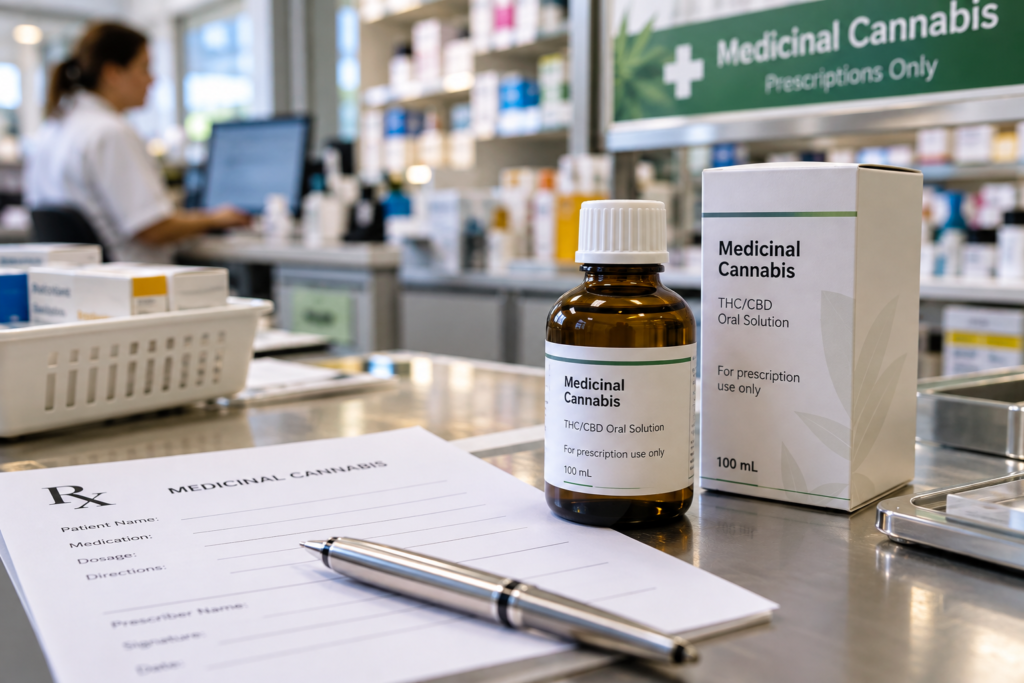
Medicinal cannabis laboratoryThat does not prove the earlier rules were foolish. Regulation often moves slowly because governments are expected to consider evidence, safety, consistency and consequences across an entire population. But it does illustrate something that appears repeatedly throughout NoRuleBook: Rules that feel permanent when you encounter them may actually represent a particular society’s judgment at a particular moment in time.

Sometimes those judgments change because the evidence changes. Sometimes technology changes what is possible, public attitudes shift, or regulators find a way to manage a risk that previously seemed too difficult to accommodate. The rule that once appeared fixed can eventually be rewritten without the underlying need for safety disappearing at all. Helen happened to face her illness while that boundary was still moving.

For someone writing policy, a few years of cautious change may be understandable. For someone confronting an aggressive cancer, those same few years can represent an entirely different calculation. That tension cannot be resolved with a slogan about freedom or authority. Both sides have something legitimate at stake. Society needs safeguards against treatments that are dangerous, fraudulent or unsupported by evidence, while individuals facing extraordinary circumstances have a powerful interest in retaining meaningful control over decisions involving their own bodies.

Helen’s story sits precisely in that uncomfortable space between the two.

WHO SHOULD HAVE THE FINAL SAY?

When I think back to my conversations with Helen, I don’t think the most important part of her story is that she was willing to break a law. Nor is it that she changed her mind about cannabis, survived far beyond the future she had initially been given, or found an option she wanted to continue when conventional treatment had offered her little encouragement. What stays with me is the situation she was forced to confront.

A regulatory system designed to protect people from uncertain medical treatments was being applied to someone for whom uncertainty had already become unavoidable. The system was asking whether there was enough evidence to permit access. Helen was asking whether there was enough reason for her to take the risk.

Those are not the same question, because the people asking them carry different consequences if the decision turns out to be wrong.

Personal autonomy does not make evidence irrelevant, just as medical authority does not make an individual’s tolerance for risk irrelevant. What Helen’s experience challenges is the assumption that authority should end the conversation simply because authority has established a rule.

Sometimes questioning a rule will reveal exactly why it deserves to exist. At other times, it exposes a genuine conflict between the risk a system is prepared to permit and the risk an individual is prepared to accept for themselves.

NoRuleBook thinking does not require that conflict to have an easy answer. It requires us to recognise that the conflict exists.

A rule designed to protect you should still be open to the question: Protect you from what - And at what cost?

THE LESSON FROM HELEN'S STORY

Helen’s story is not an instruction to follow her choices. It would be irresponsible to turn one person’s experience with a life-threatening illness into medical advice for somebody else, particularly when the evidence surrounding experimental treatments continues to develop.

What her story offers instead is a powerful example of why rules deserve to be understood rather than simply obeyed or rejected.

Helen initially trusted the established pathway. When that pathway gave her little reason for optimism, she looked further. When she encountered an option she had previously opposed, she reconsidered her own beliefs. When the law stood between her and something she wanted to continue, she made her own judgment about the risks involved and accepted responsibility for that decision.

Whether someone else would have made the same choices is almost beside the point.

The deeper lesson is that independent thinking becomes most important when there is no perfectly safe answer and no authority capable of carrying the consequences on your behalf. In those moments, questioning the rule does not mean assuming the rule is wrong. It means understanding why it exists, understanding what happens if you follow it, understanding what happens if you don’t, and then recognising whose life will ultimately absorb the result.

Helen’s circumstances were extreme, but the principle reaches much further than medicine. We encounter rules throughout life that are designed to reduce risk: rules about careers, money, relationships, business and what sensible people are supposed to do. Many are worth following. Some may protect us from mistakes we do not yet understand.

But avoiding one risk can sometimes create another, and no system can decide what you value without making assumptions about the life you want to live.

Helen was confronted with that reality more starkly than most of us ever will be.

Which brings us back to the question in the title:

“Who gets to decide what risks you're allowed to take?"

Perhaps the most useful answer is not you or the system. It is that whenever possible, the system should provide the best evidence it can, explain the risks honestly and protect people from exploitation – whilst leaving as much informed choice as reasonably possible with the person who must live with the consequences.

Take The Next Step

Many of the unwritten rules shaping our lives also present themselves as protection: choose the secure career, avoid uncertainty, follow the established path and don’t take unnecessary risks. Sometimes that advice is excellent. Sometimes it prevents us from making mistakes we would deeply regret.

But protection and restriction can look remarkably similar until you understand what a rule is protecting you from. The NoRuleBook eBook is about learning to make that distinction for yourself: understanding why a rule exists, recognizing the real risks on both sides and making conscious decisions rather than allowing inherited assumptions to make them for you.

If you want to start identifying the unwritten rules shaping your own decisions, click the NoRuleBook image below to get your copy.

The NoRuleBook Collection

Facebook

Related Articles

Leave a Comment